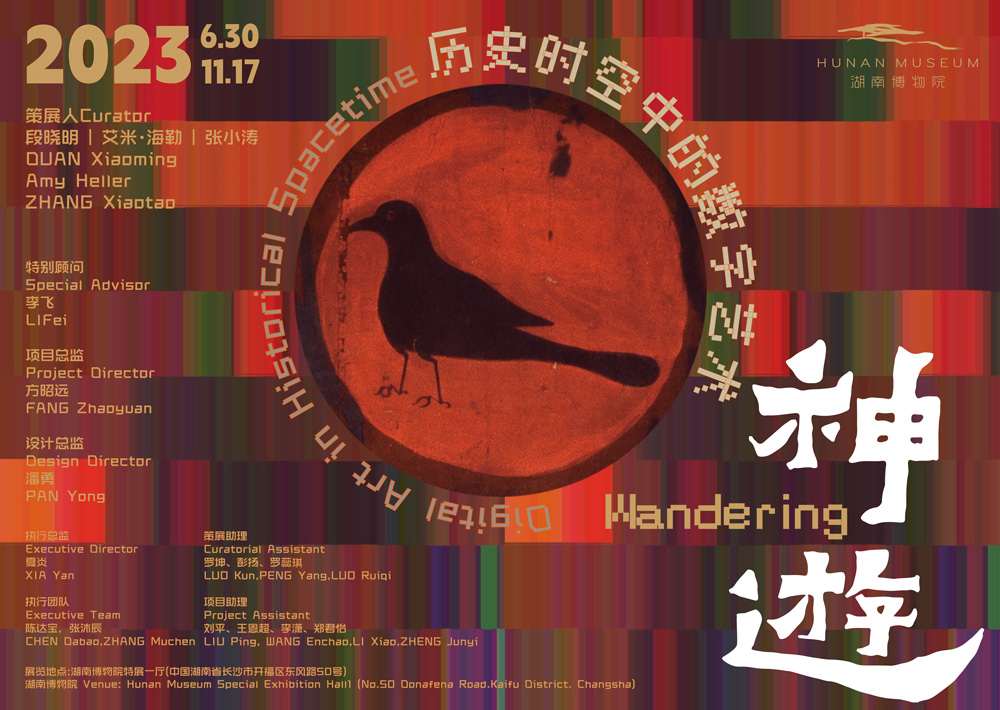
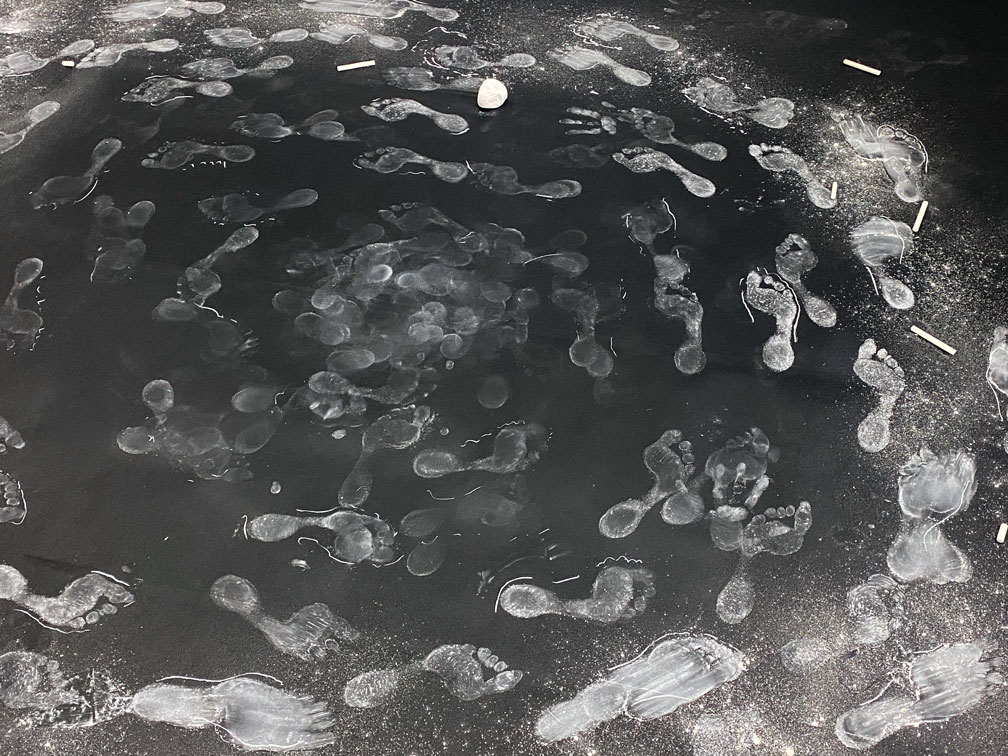
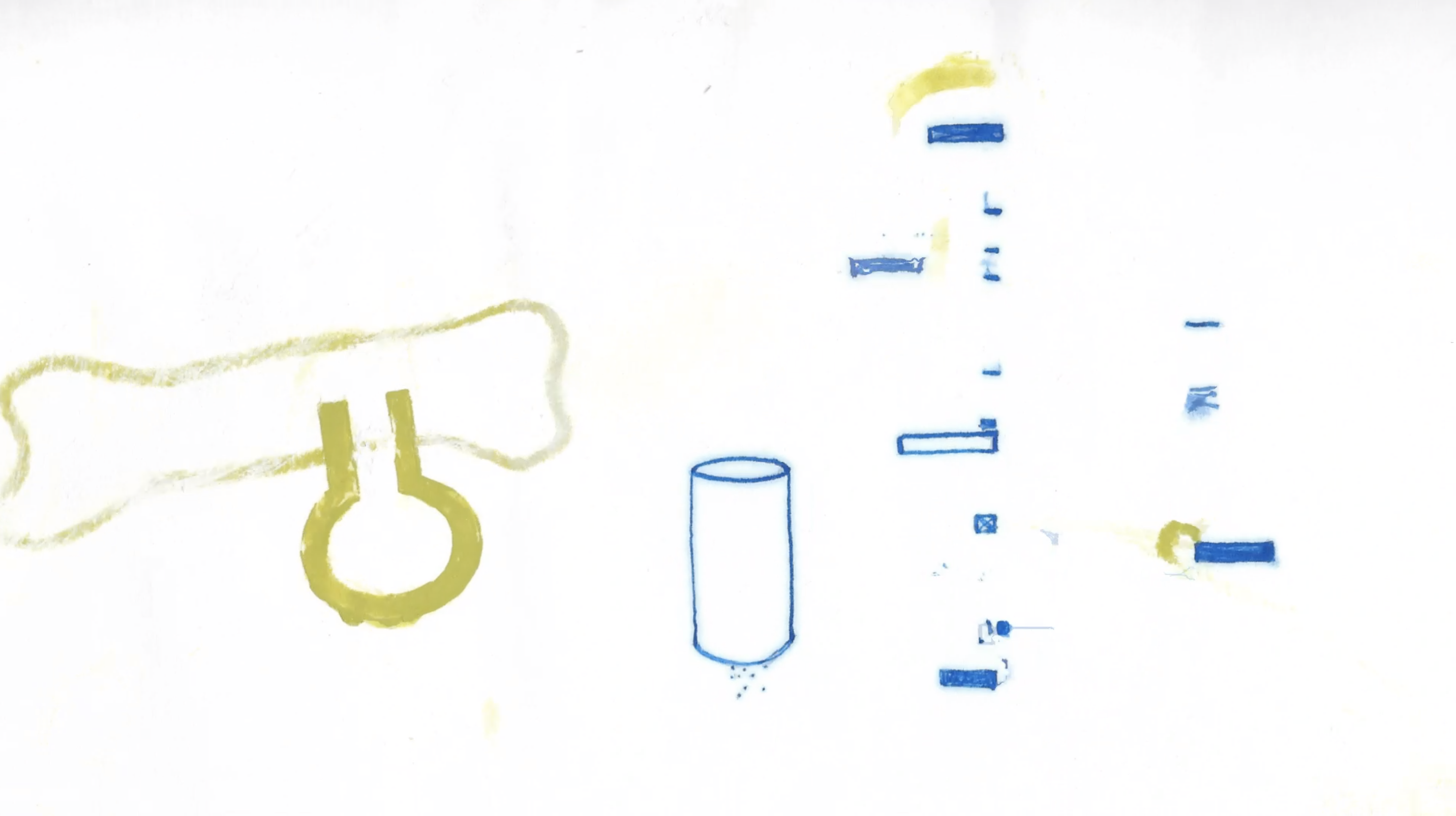
In this installation originally commissioned by Hunan Museum, an animated series of chalk footprints are projected downwards on a slate surface.
The exhibition, Wandering: Digital Art in Historical Space Time, was themed around contemporary artists responding to ancient, historical artworks. [Download catalogue essay]
This installation was subsequently included in Animation as Art: A Multi-Sensory Experience, an exhibition about the materiality of animation curated by Jorgelina Orfila, Francisco Ortega, Christine Veras for the Museum of Texas Tech, Lubbock, Texas, USA.
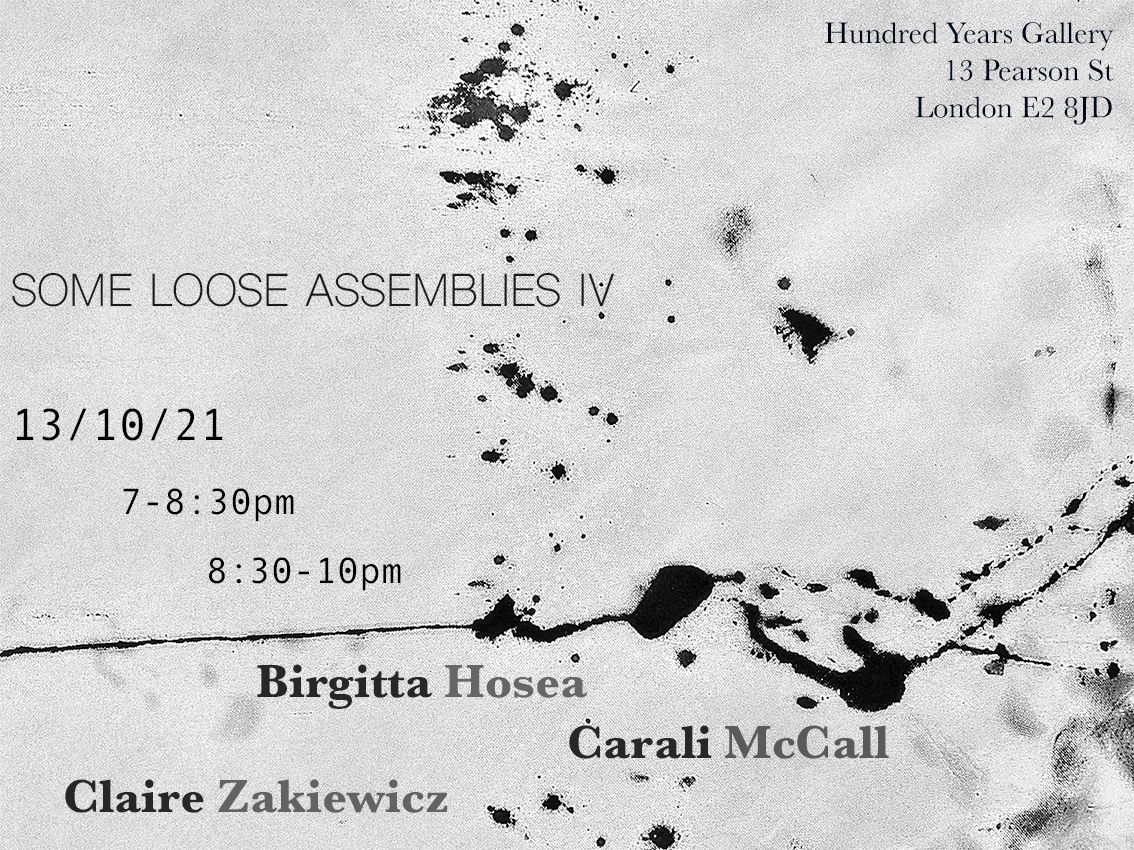
Performance by Birgitta Hosea at Hundred Years Gallery as part of her exploration of chalk as a material during her residency at the Centre for Recent Drawing (as part of the Performance Drawing 2021 exhibition events).
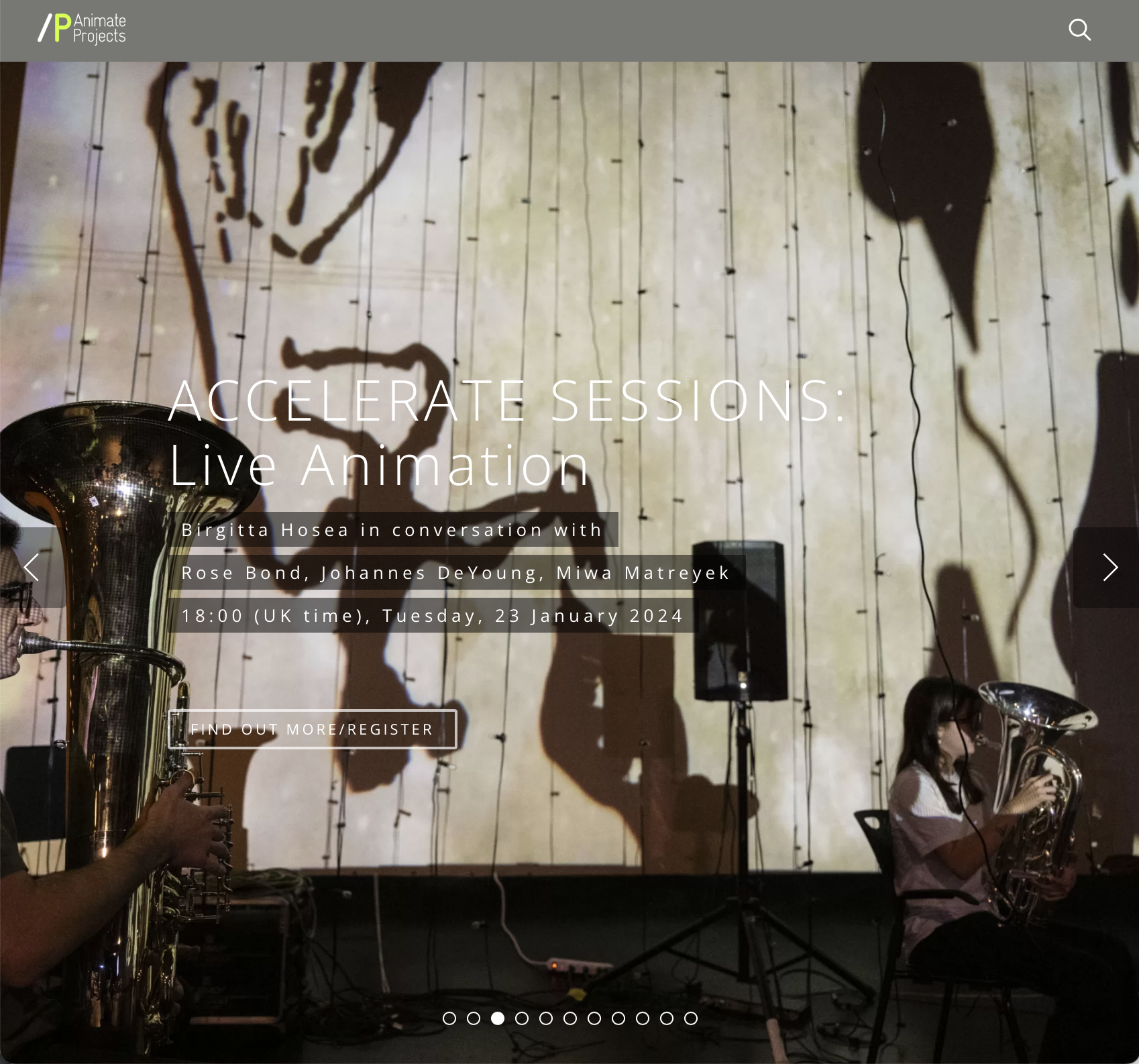
Rose Bond. Earths to Come. Interdisciplinary collaboration with composer inti figgis-vizueta and Roomful of Teeth, Barishnikov Arts Centre, 2022
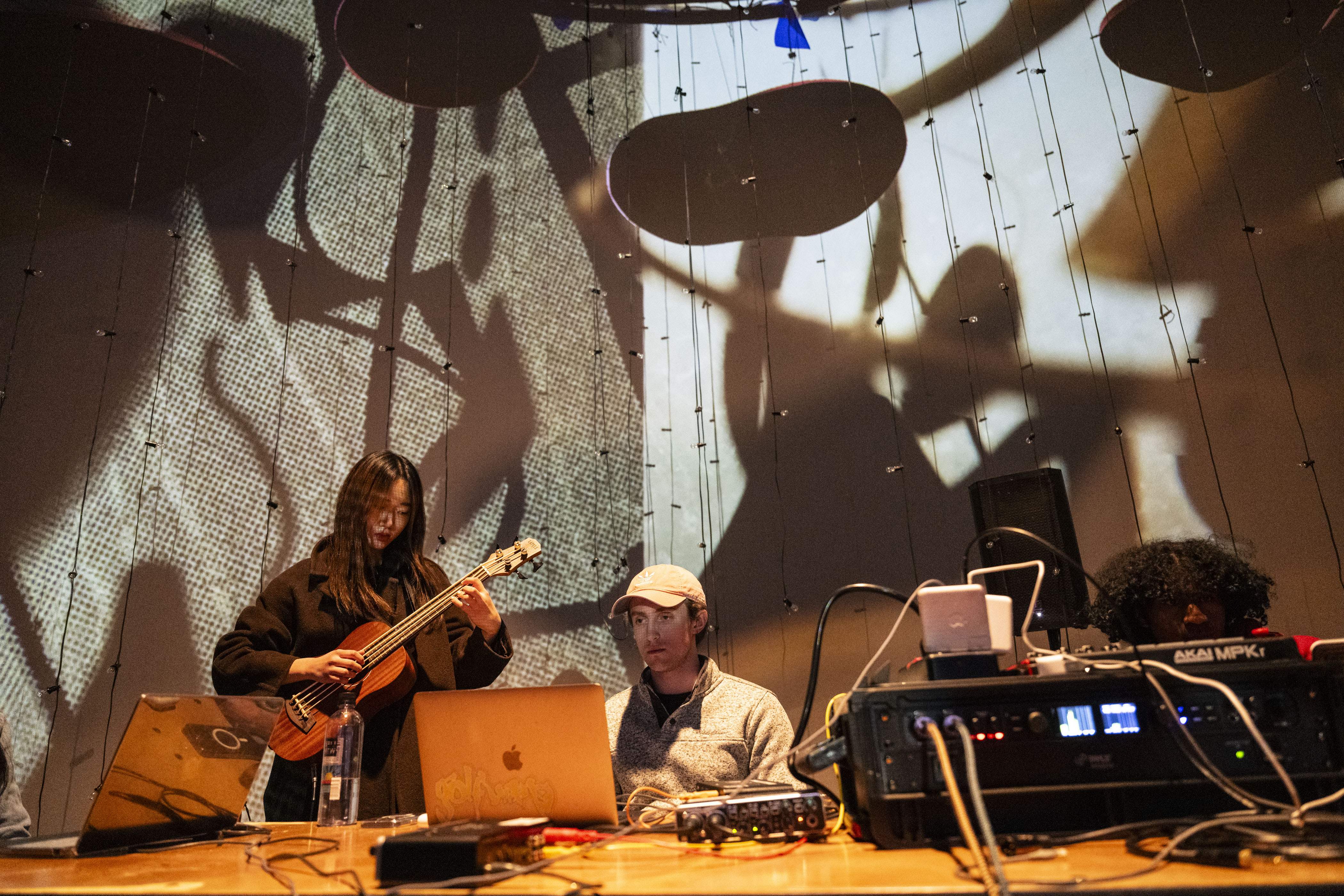
Johannes DeYoung. Exploded Ensemble performing with The Endless Mile in A Road with Trees, an intermedia performance exhibition at WQED Studios. Procedurally animated video scroll and sound performance at WQED Studios, Pittsburgh, PA: photography by Kevin Lorenzi, 2023
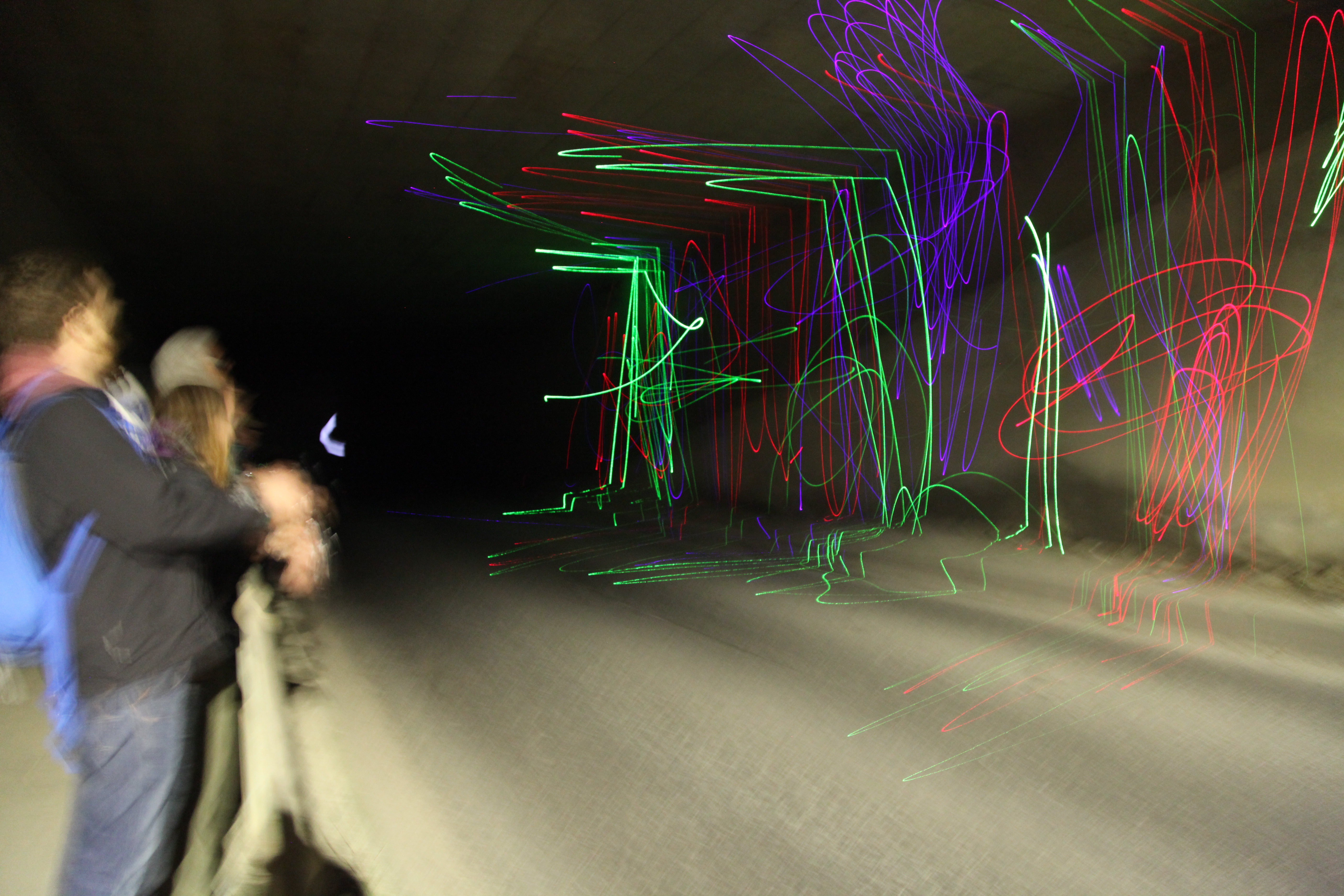
Birgitta Hosea. dotdot dash. Live performance with InspiralLondon in a tunnel, Ebbsfleet, Kent. Photographed by Gemina Broadbridge. 2018
Miwa Matrayek.Infinitely Yours. Live performance with animation. Golden Nica for Computer Animation at Ars Electronica, 2020
In this presentation, Birgitta Hosea talks about the collaboration between herself, Maryclare Foá, Jane Grisewood and Carali McCall that resulted in the book Performance Drawing: New Practices Since 1945 (Bloomsbury, 2000).
Using material from chapter 3, in itself a collaboration between herself and Foá, she considers the score as a form with which to invite participation and unexpected results when working with others. The presentation concludes with an overview of a participatory project in live animation.
Here is ‘Expanding Animation and Other Queer Goings On’, my inaugural professorial lecture at the University for the Creative Arts in which I relate how I developed a post-medium approach to animation and much more besides.
On Thursday 2 July at 6pm, artists Jessica Ashman, Anna Bunting-Branch, Birgitta Hosea and Michelle Kranot will present their work and discuss the opportunities and challenges of working with live performance and technology. All four work with animation in their practice and are going beyond the single screen to create immersive worlds where performance is integrated into their work. More info here: https://animateprojects.org/accelerate-sessions-female-figures
Beg, Steal and Borrow opens Tuesday (25th) at Bermondsey Project Space, 183 Bermondsey Street, London SE1 3UW. Artists in the show:
Andreas Schmidt, Birgitta Hosea, Gavin Turk, Haley Morris Cafiero, Jessica Voorsanger, John Stezaker, Melinda Gibson, Ori Gersht, Philip Colbert, Simon Patterson, Steffi Klenz, Stuart Hilton, Yinka Shonibare.
Curated by Jean Wainwright
The artists in Beg, Steal and Borrow, remix and inventively recreate, they use what is already out there to fashion new work and raise questions. Interconnected in their dynamic engagement their work is multi-layered, mining references to other art works or contemporary issues, from art history to archival material, colonial history to online bullying.
Works by Birgitta Hosea that will be showing in the exhibition and include snippets of sound appropriated from classic films:
Out There in the Dark (2008) Video documentation of my first live performance of this work at Lethaby Gallery, old Central Saint Martins. Possessed by the spirit of Gloria Swanson’s performance in Sunset Boulevard (1950), I become half animator and half animated.
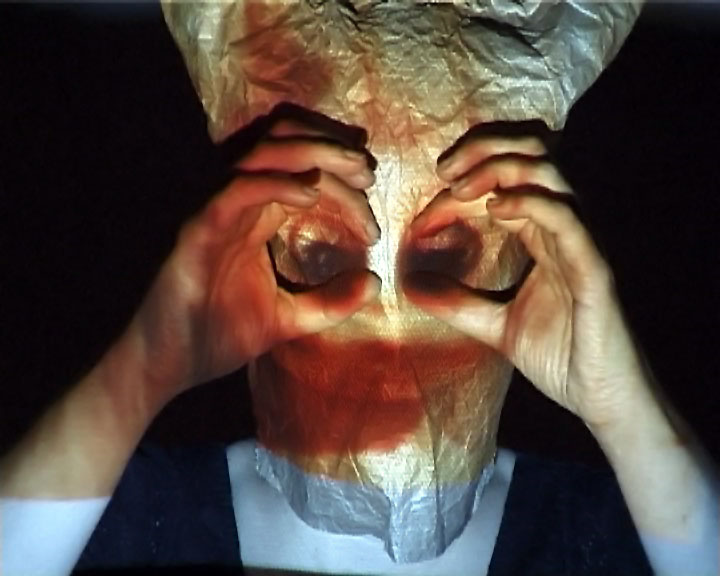
Medium (2010) Video documentation of my second series of live performances of this work curated by Sarah Sparkes at St John’s Church in which I channel mediated spirits and electronic ectoplasm.
As part of the exhibition there will be two round table discussions with some of the artists to discuss their work in the show:
29.02.20 2pm to 3pm Followed by drinks
Jessica Voorsanger
Jean Wainwright
Birgitta Hosea
Simon Patterson
07.02.20
Melinda Gibson
Haley Morris-Cafiero
Stuart Hilton
Philip Colbert
Jean Wainwright
Catalogue essay: ‘Performing the memetic’, Birgitta Hosea, 2020
All through Camera Lucida, the French writer Roland Barthes, writing in 1980 in his influential book on photography mourns for his recently departed mother. After her death, alone in the apartment they shared together, he studies all the old photographs of her that he can find – trying to find a particular image that will recapture her for him, trying to find out about the life she led, trying to know her. How disappointing the images seem to him as he searches, how incomplete, for how could these photographs re-animate the dead. These fleeting images preserve a mere shadow of time that has passed. The photograph contains a ‘defeat of time’ (Barthes 2000, p.96) – we see once living beings, but we are reminded that they are mortal, impermanent and that one day they will die. They are removed from their living, breathing, evolving context and embalmed in one pose, mortified for one brief moment of time.
Barthes argues that a photograph is indexical. It is defined through being a trace of that which once was. A photograph is a historical document, a ‘certificate of presence’ (Barthes 2000, p.87) a testament that something once existed. The correlation between truth and the visual has deep seated roots in our culture. Tom Gunning notes the original visual meaning of Eidos, the Greek word for idea (Gunning 1995, p.42), whereas Marina Warner points out that underpinning Western thought comes the deep rooted Christian notion that while magic and illusion are the work of the devil , the truth needs to be witnessed, to be seen with the naked eye. (Warner 2006, p.54) However, because something was once present in front of the camera and now appears in the photographic image, we are reminded that, although it was once true, it is from the past. Now the subject is absent and that time is no longer here.
Contrary to this idea of the documentary ‘truth’ of photography, the photographs and films included in Beg, Steal and Borrow certificate no presence. Rather they are testament and witness to borrowing, to stealing, to fakery. They do not attempt to present historical authenticity. In their re-presentation and re-performance of appropriated images and sounds, these works defy the logic of the indexical. Their reference is not to nature but to culture, not to self but to Other: to the ghosts of pervasive media that saturate our waking lives.
Interviewed in ‘Ghost Dance’ (dir. Ken McMullen, 1983, UK / West Germany, Channel 4 Films), Jacques Derrida is asked if he believes in ghosts. He replies that in the film in which he appears he is the ghost. Furthermore, he says he himself is haunted by ghosts – haunted by the ghost of Marx, the ghost of Freud, the ghost of Kafka, the dematerialised body of their ideas, the disembodied representations of who they once were. The works gathered together in Beg, Steal and Borrow show artists haunted by images and sounds from the mediated networks that surround them. From popular culture – the image of the rock star, the celebrity artist, the cartoon alter-ego, the classic Hollywood movie; from social media – the internet troll, the amateur adventurer; from history – the traumatic archival image, national or colonial symbol; from art history – the canonical work of art, these contemporary memes from Western consumer culture are echoed through the distorting mirror of the artists’ perspective and transmitted to the viewer.
The term ‘meme’ comes from Richard Dawkins book The Selfish Gene (1970) and is taken to mean a ‘unit of culture’ that behaves like a virus. A meme could be a visual symbol, a gesture, an idea, a belief, etc. It is a construct, not a truth and may have little basis in fact or evidence. The meme is hosted in the mind of an individual and then replicated and spread through culture until it is propagated in the minds of others as if it were a plague with a life force of its own. Transmitted via culture, the meme is, therefore, culturally (and historically) specific. Constantly infiltrating our consciousness, memes infect us to the extent that we internalise and embody them through repetitive rituals until they become real and idea becomes flesh.
The repetitive processes by which we form our gender identity from the cultural context we are part of has been theorised by Judith Butler as ‘performativity’. For Butler, performance is an act that defines our very being. The concept comes from her reading of linguistics in which a performative speech act is a phrase that has an audience and performs the act it describes, e.g. “I apologize”, “I bet you”, “I thee wed”, “I come out to you”. Butler develops this idea further. A performative act, in Butler’s terms, is an existential act in which one seeks to become that which one enacts. Butler further argues that our sense of self is a fragile construct that must be constantly performed as a role in order to be maintained.
Becoming celebrity, becoming artist, becoming imposter, becoming bully, becoming female, becoming cartoon – many of the works in this show directly engage with the physical re-performance of memes. The artist’s body becomes possessed by the meme: performatively embodying it rather than externalising it as representation.
References
Barthes, R., 2000. Camera Lucida, London: Vintage Classics.
Butler, J., 1995. “Burning Acts, Injurious Speech”. In A. Parker & E. Kosofsky Sedgwick , eds. Performativity and Performance, London; New York: Routledge, 1995.
Gunning, T., 1995. “Phantom Images and Modern Manifestations: Spirit Photography, Magic Theater, Trick Films, and Photography’s Uncanny.” In P. Petro, ed. Fugitive Images: From Photography to Video. Bloomington and Indiana: Indiana University Press.
Warner, M., 2006. Phantasmagoria: Spirit Visions, Metaphors, and Media in the Twenty-first Century, Oxford; New York: Oxford University Press.
Selected shots from the Show
Curator Jean Wainwright setting up
Carriage Clock, Yinka Shonibare, 2019
Carriage Clock, Yinka Shonibare, 2019
Fake Fake Art, Andreas Schmidt, 2012-20
Fake Fake Art, Andreas Schmidt, 2012-20
Photomontage, Melinda Gibson, 2012-20
Mikrokosmos, Simon Patterson, 2019
Whale Watching, Haley Morris-Cafiero, 2018
Gavin Turk with his Pop Head, 2011 (image by Jean Wainwright)
Untitled from the Series Beun, Steffi Klenz, 2015-6
Andy Warhol (Amanda Root), Jessica Voorsanger, 2010
Video works by Birgitta Hosea and Stuart Hilton
Video works by Birgitta Hosea and Stuart Hilton
Injured Expert (still), Stuart Hilton, 2020
Injured Expert (still), Stuart Hilton, 2020
Injured Expert (still), Stuart Hilton, 2020
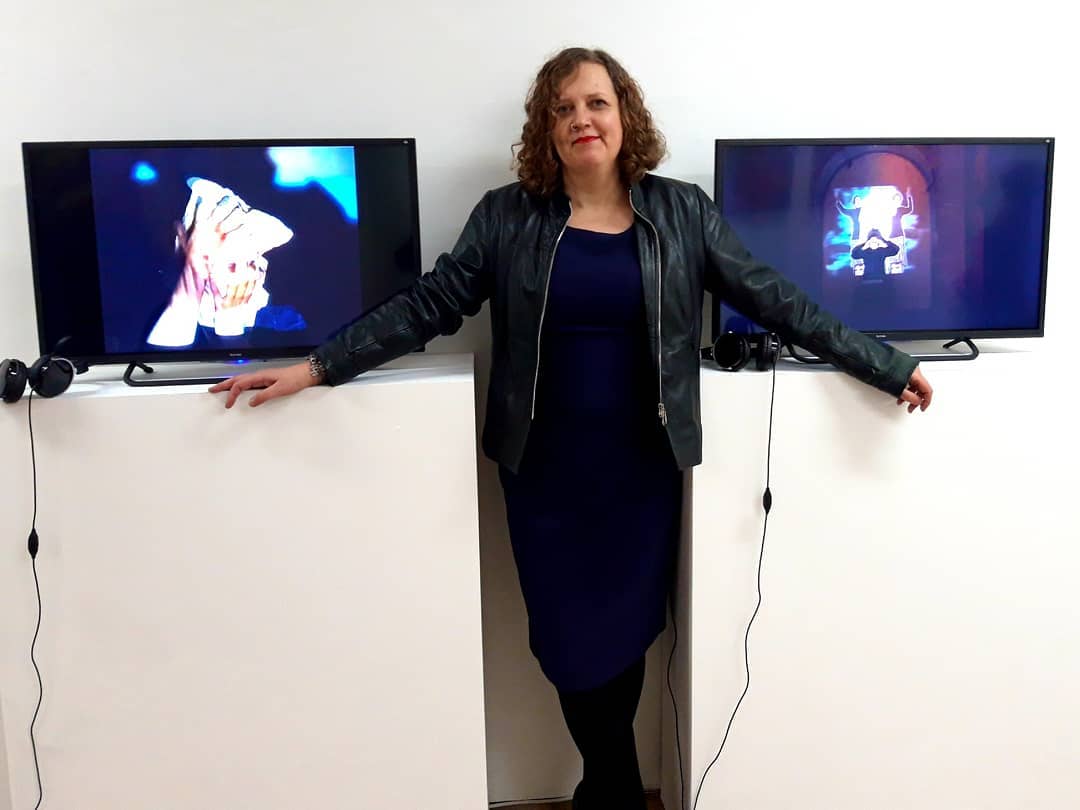
Birgitta Hosea with Medium and Out There in the Dark (image by Sandra Louison)
6-8pm Thursday 17th January 2019
Cello Factory, 33-34 Cornwall Road, Waterloo, London SE1 8TJ
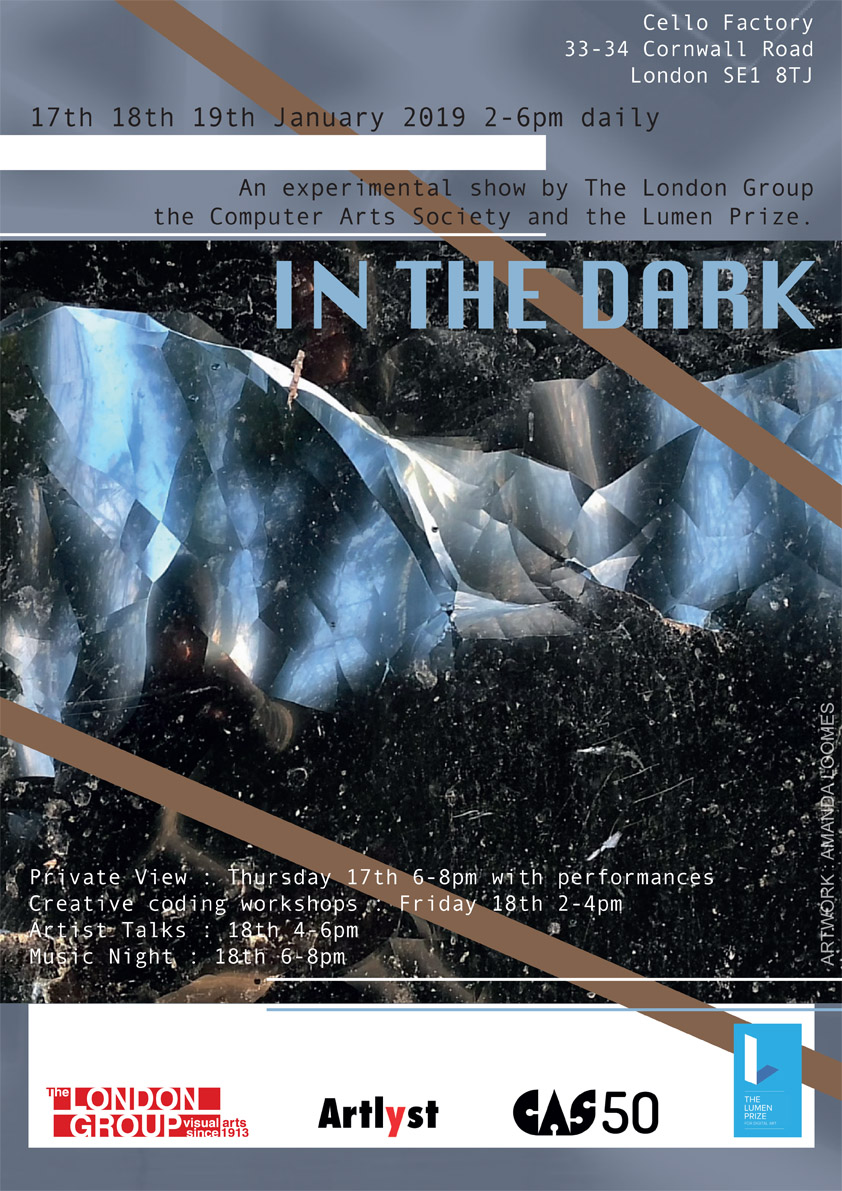
New performance as part of the opening of In the Dark, an experimental show by the London Group, the Computer Arts Society and the Lumen prize
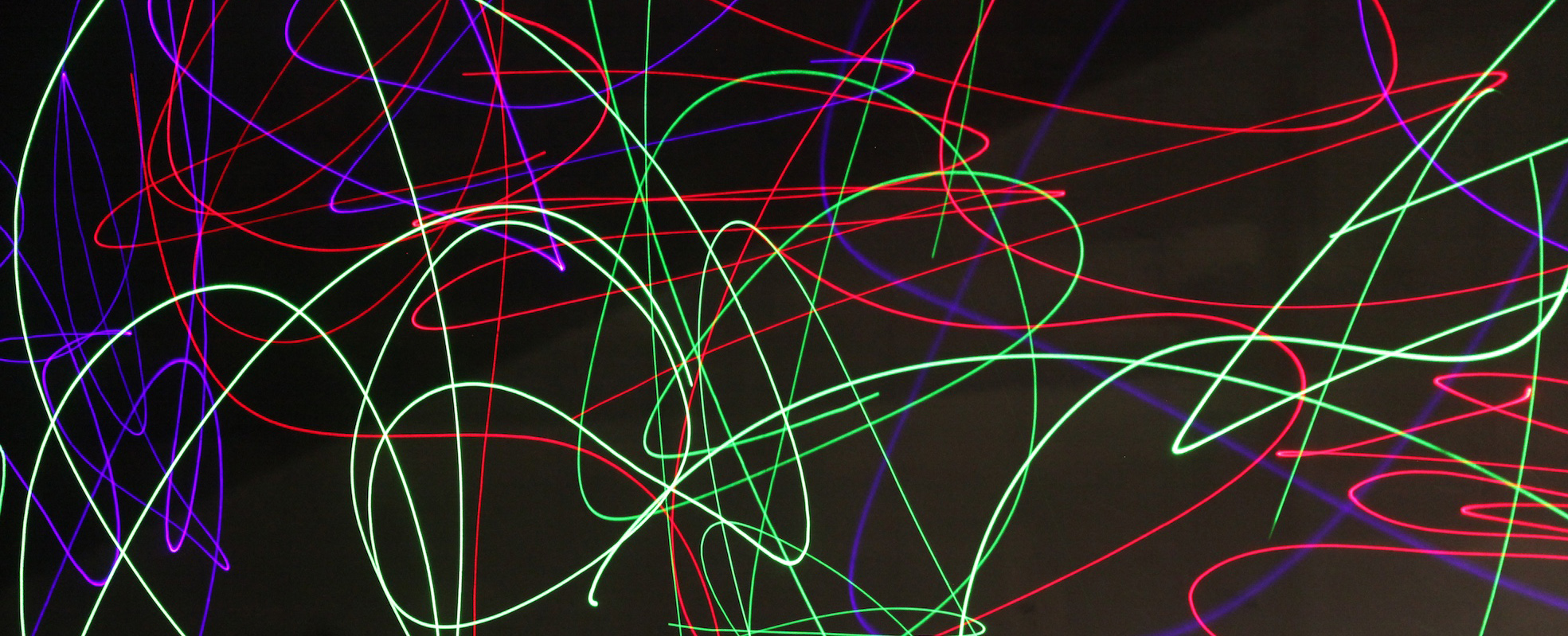
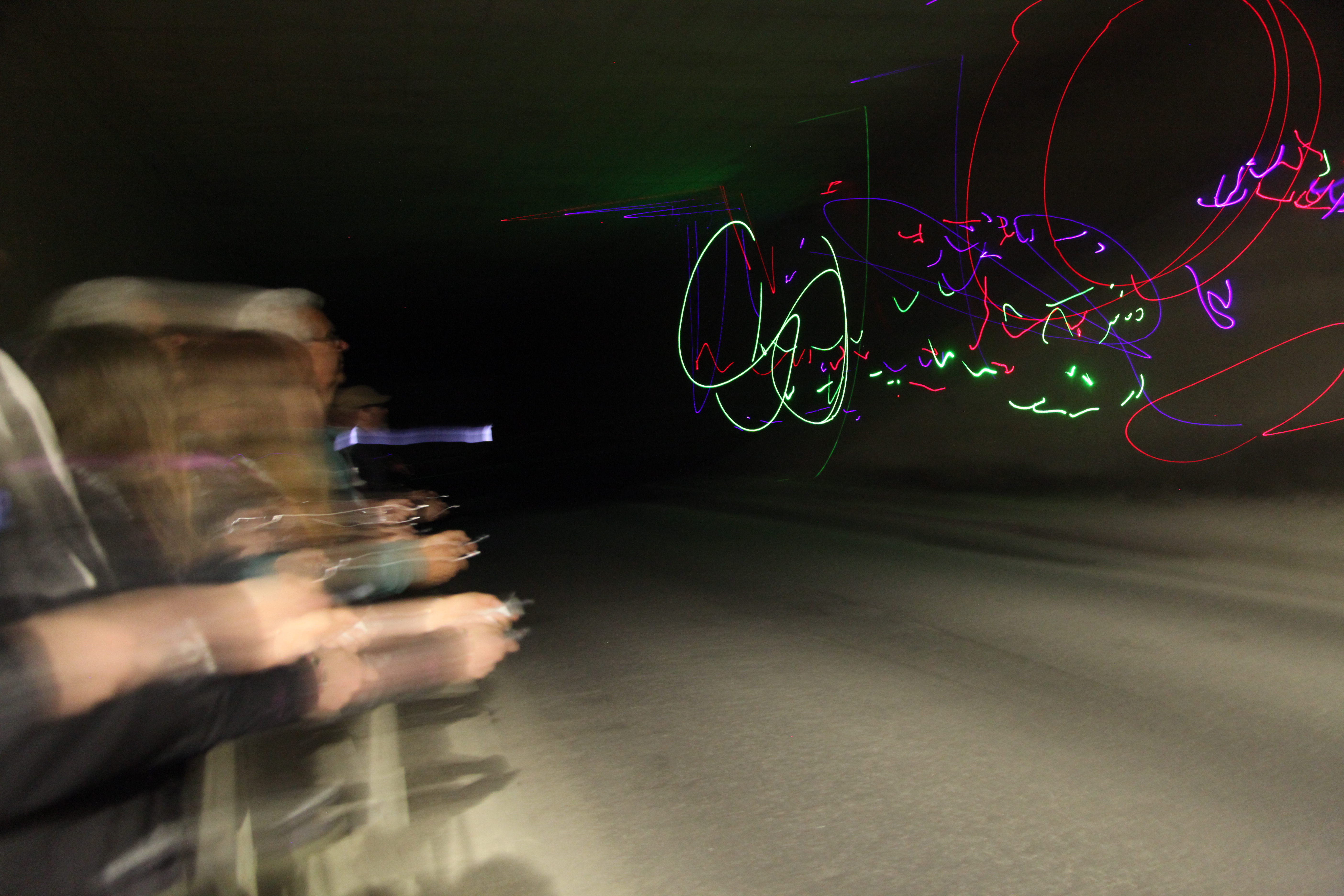
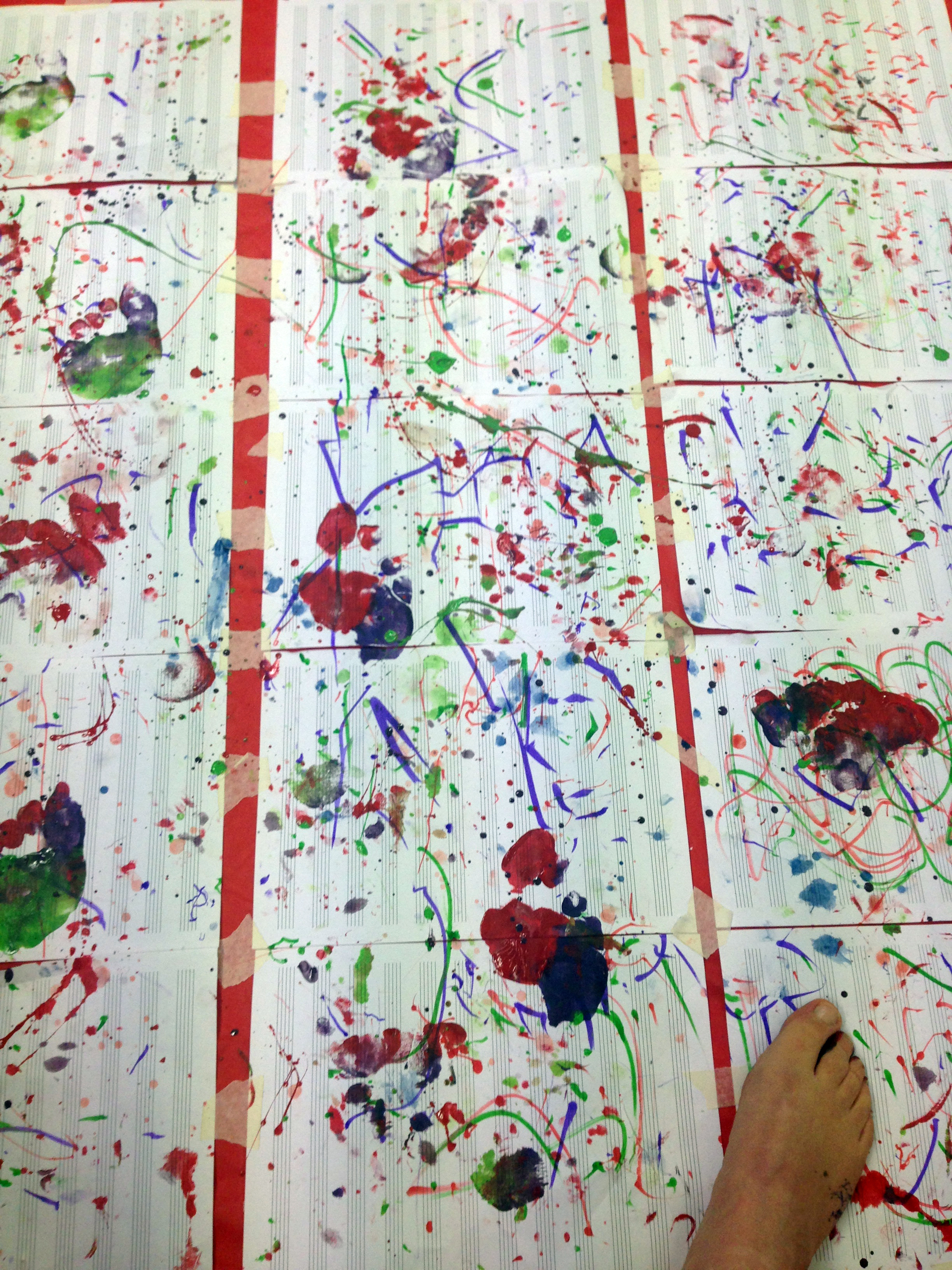
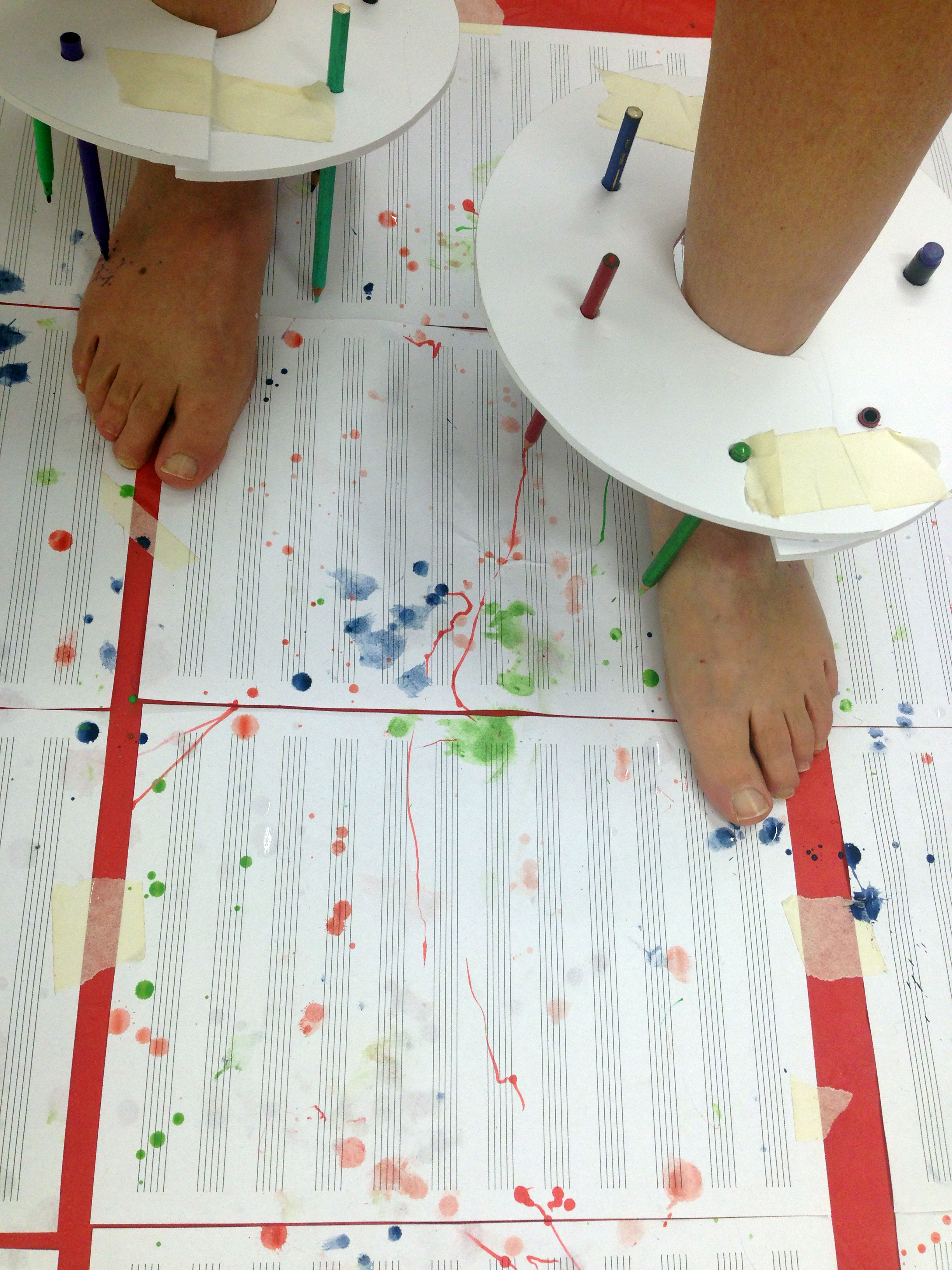
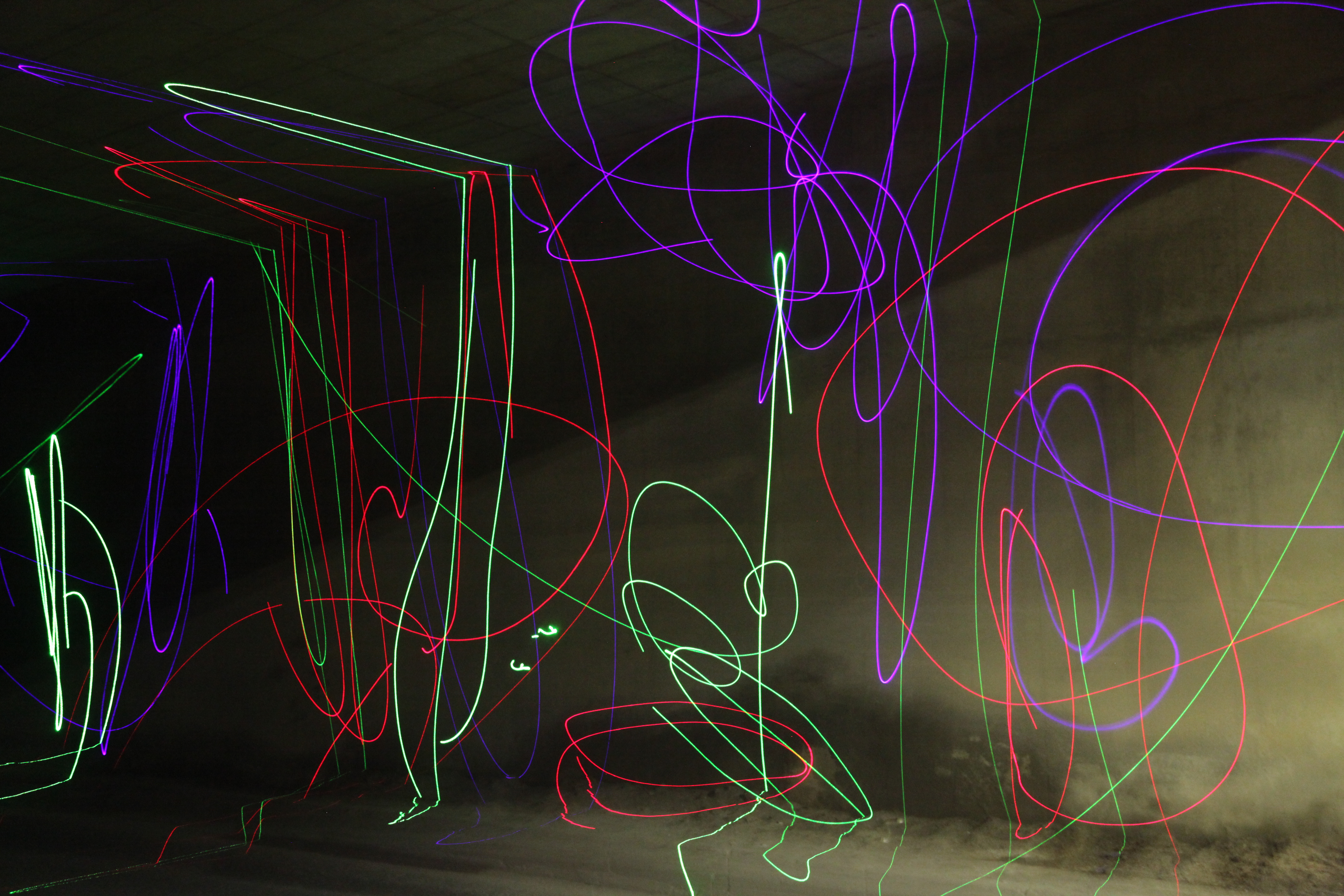
dotdot dash is a participatory light action with laser pointers and voice directed by Birgitta Hosea. The performance is orchestrated around a chance-based score made through walking with paint-covered feet over musical paper. Coming together in a choral collaboration, participants are directed to explore the colours and mark making possibilities made by drawing with laser pointers and to accompany this with the sounds of their own voices. The effect is a live audio visual performance of animated lines in red, green and purple reminiscent of a scratched-on film, abstract animation such as those made by Len Lye.
Although many other artists such as Pika Pika and even Picasso have done light painting before, this is not the same. It is not a set up to be recorded on a slow exposure for a photograph, but a live animation of lights and sound that is created communally and experienced in the present moment.
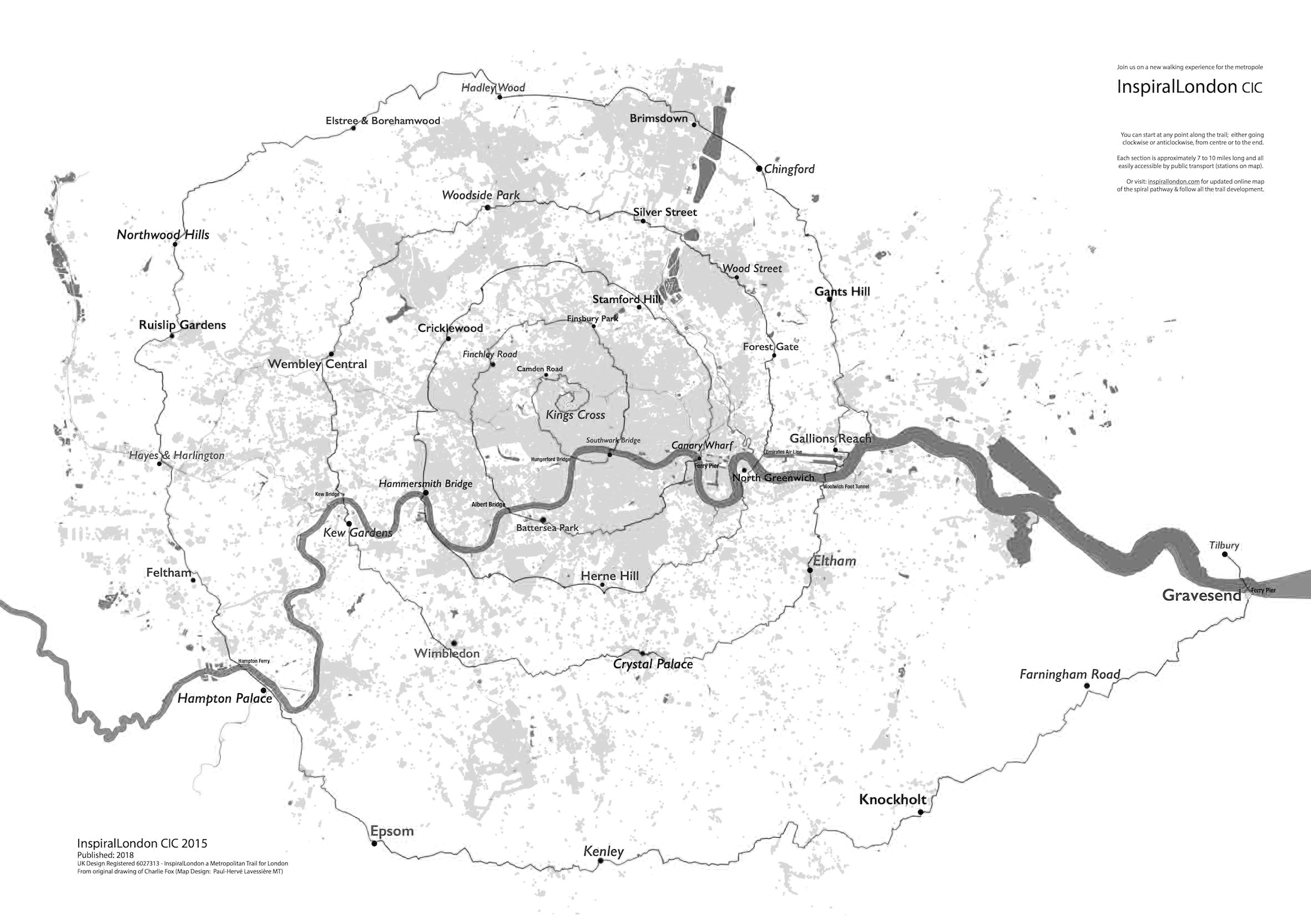
dotdot dash was originally commissioned in 2018 for the Night Walking North Kent festival by InspiralLondon, a collaborative artists’ project led by Charlie Fox of Counterproductions. The project is based on a 300-mile walking trail around London in the shape of a spiral created by Charlie Fox and divided into 36 sections.
Determining a route by chance through this drawing of a line means that the walk cuts through many unpredictable parts of London. dotdot dash was created to be experienced by walkers as part of a series of site specific artworks at the end of the trail in Gravesend. My intention was to create a work of animation that could be made collectively by the participants on the walk; that was mobile and would not involve carrying any heavy equipment.
Additionally, following discussions with the InspiralLondon group about privilege and who is able to walk around freely in the dark at night, dotdot dash is a collective action to reclaim the night through light and noise for people who may not normally feel safe to walk at night in the city.
The route involved going through light industrial areas that are desolate and deserted at night, walking through a caged walk way over a sheer drop to a chalk pit, through bushes and undergrowth, past burnt out motor bikes, across another caged walkway over a railway line and then to a tunnel through a disused chalk pit near Ebbsfleet International station. Everyone on the walk was given two laser pens and with around 30 people present together we created a live performance of animation. With the help of brass megaphone, I gave instructions as to what colors and types of marks they should make. With the excellent acoustics provided by the tunnel, I encouraged people to sing along with the instructions too.
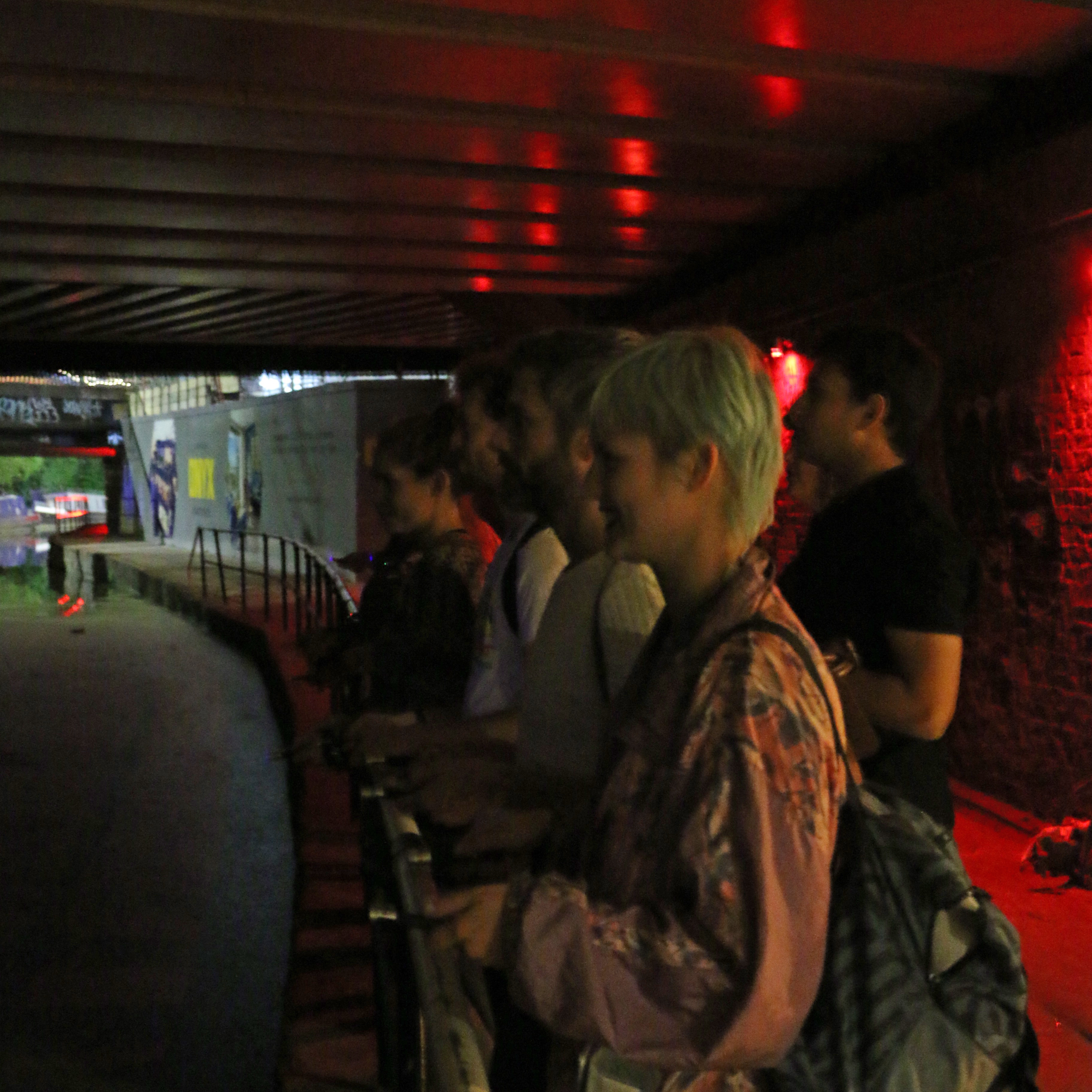
The work was repeated in a tunnel on the Regents Canal at Kings Cross, London for another InspiralLondon night walk for the London as Park City Festival, Friday 20th July 2018. A different group of walkers participated in the work. The addition of the water going through the tunnel added an extra element of bounced light and reflection to the mark making possibilities.
Chance-based score made by walking, Birgitta Hosea, 2018
The same score interpreted by participants with lasers!
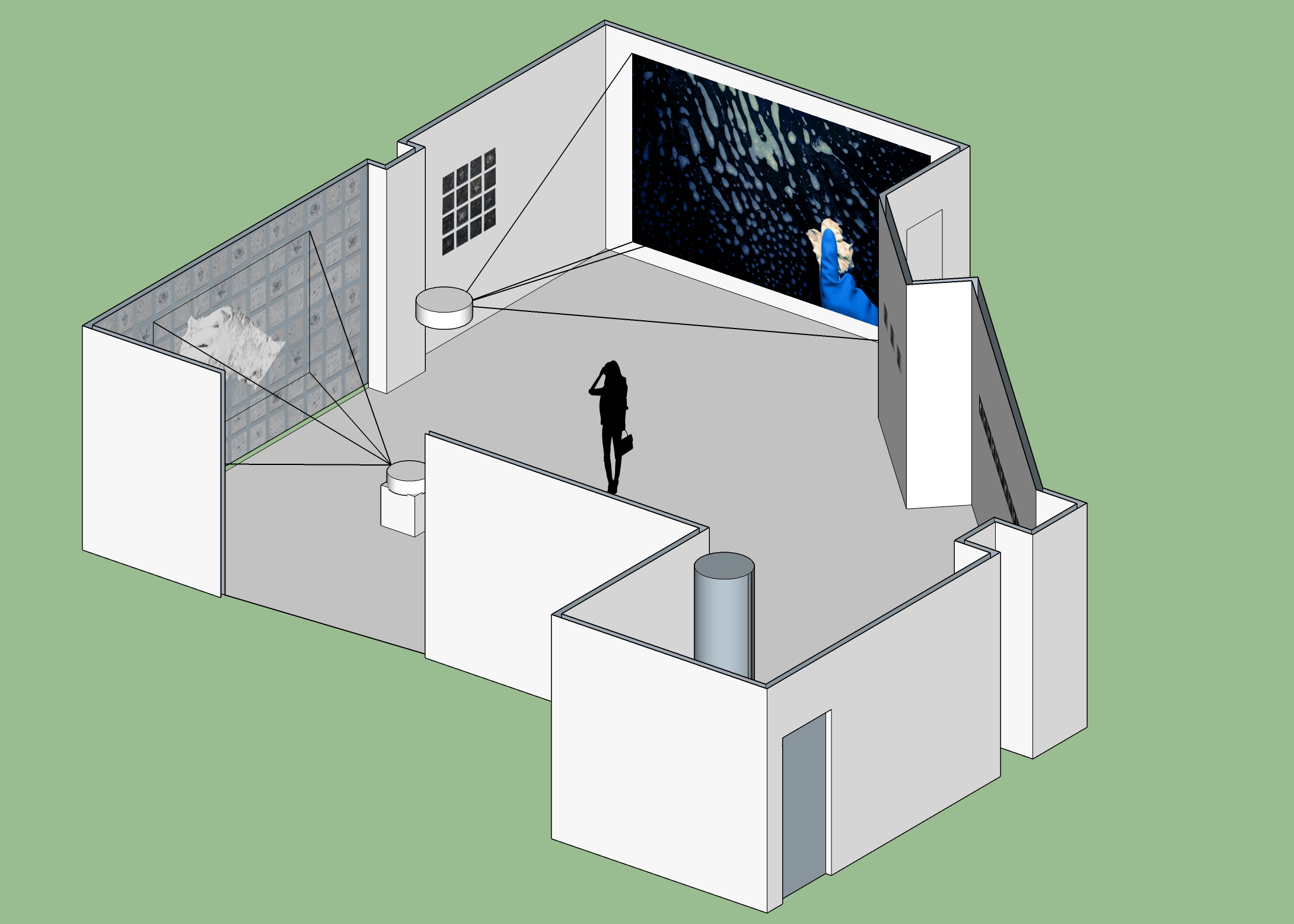
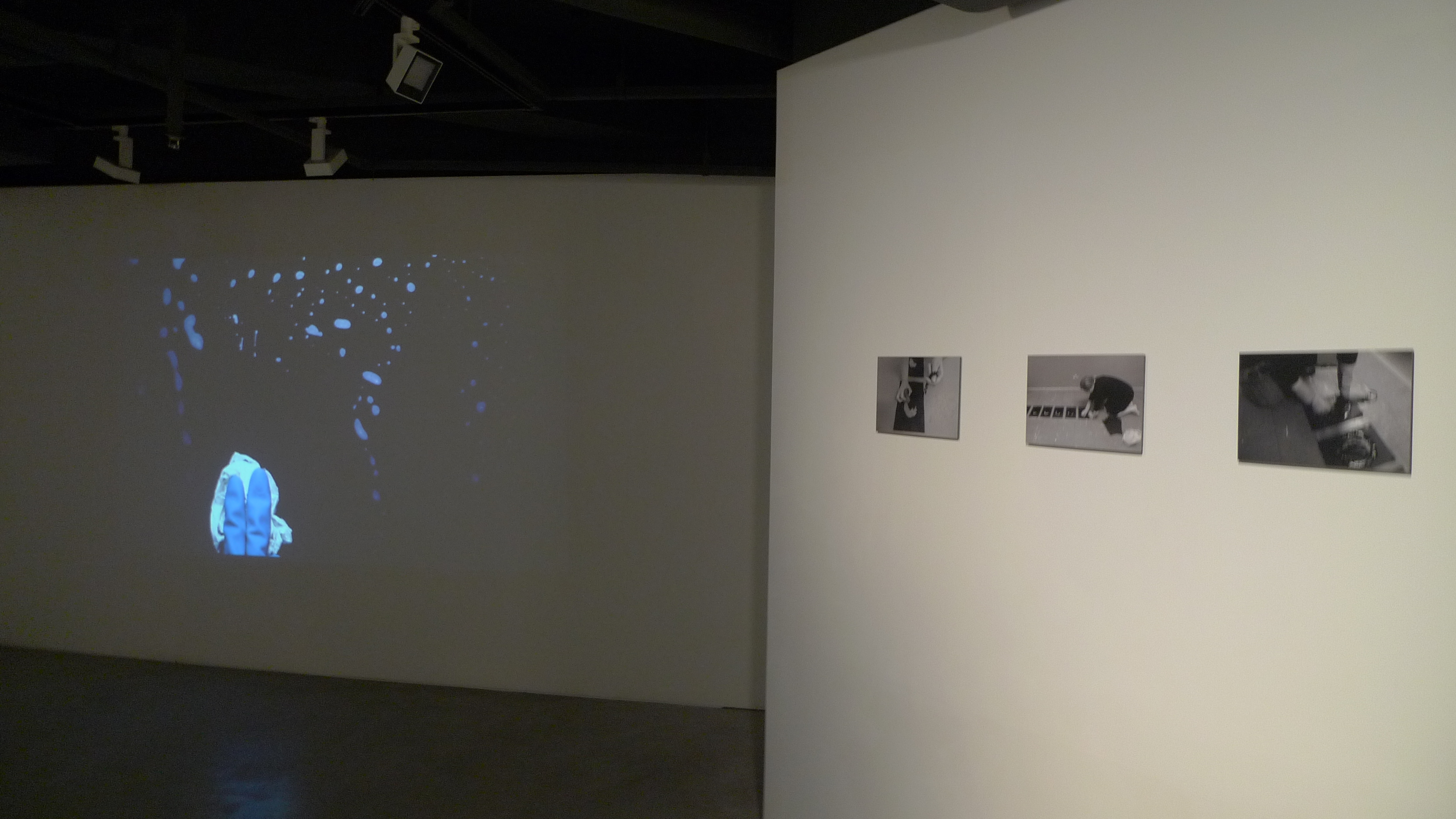
Erasure brings together a body of work from the last three years that addresses the erasure of women’s voices in society and visualises the invisibility of labour. The exhibition is named after my short film in which dirt, ink, bleach and other cleaning products are animated. It includes sequential drawings, performance and animated installation. Here are some of the plans that I have done in Sketchup.
I have many people to thank – Heashin Kwak and Soo Yeon Kim from Hanmi Gallery have done so much to make this happen; Sandra Nutmeg, Anne Pietsch and Maryclare Foa have given me so much support; very grateful to Calum F. Kerr for allowing me to share his studio; thanks to Lilly Husbands for writing the catalogue essay; a number of curators included pieces from this series in group shows or screenings which allowed me to develop the ideas further – Vanya Balogh, Tianran Duan, Rebecca Feiner, Lu Tingting, Gerben Schermer, Zhang Xiaotao; I was also supported by going on a number of residencies that enabled me space to progress at a time when I had no studio thanks to Susan Allen, Regine Bartsch, Rose Bond and Rekha Sameer; and finally I am so thankful to my employer, the University for the Creative Arts, for supporting the exhibition catalogue and my trip to Korea.
Some images from the show:
A video overview of the final exhibition filmed by Soo Yeon Kim:
Melania the Stepback Wife was a character I created for the Mind Your Head Art Cabaret in Peckham this summer, curated by Calum F Kerr and Caroline Gregory.
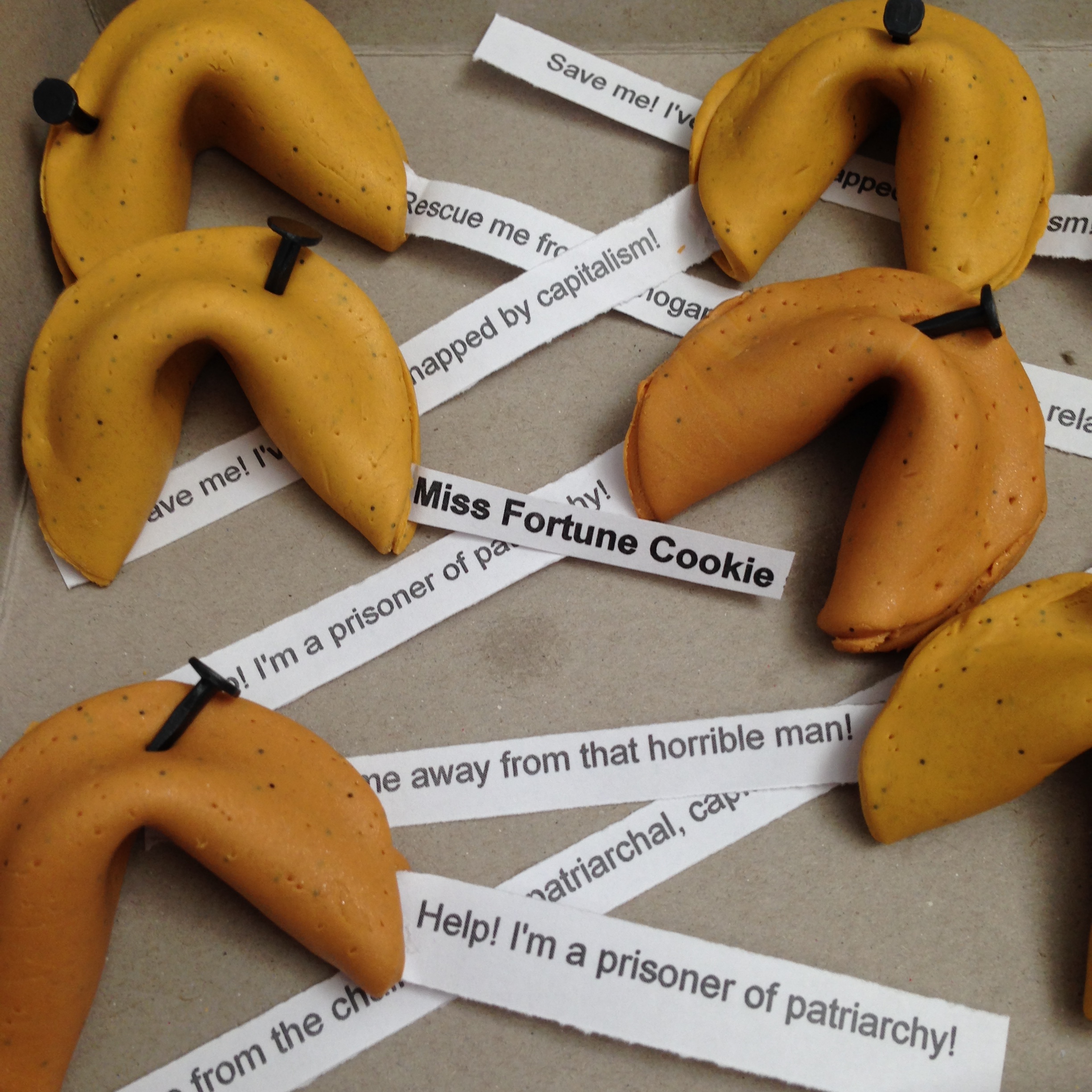
Based on a hideous hybrid of Melania Trump and the 1970s Stepford Wives, Melania launched her new product line in MissFortune cookies, a wholesome new brand of home baking based on the very same pure, gentically modified, bleached ingredients her momma used to use.
She just wanted to share her own beautiful life and very own misfortune.
Melania tries to interest the audience in her cookies [Picture by Calum F Kerr]
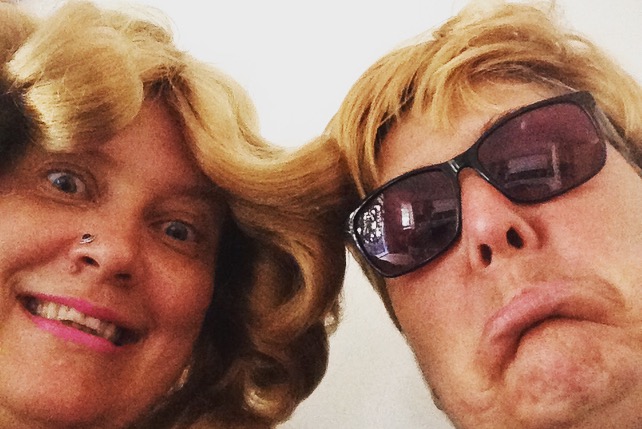
Accompanied by her loyal and real friendly husband Donny Pantsdown
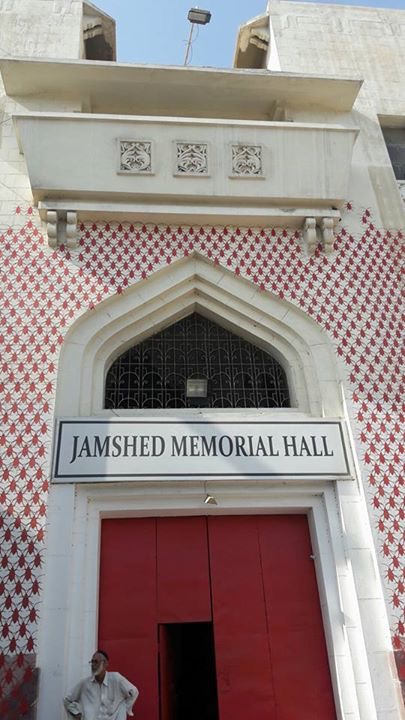
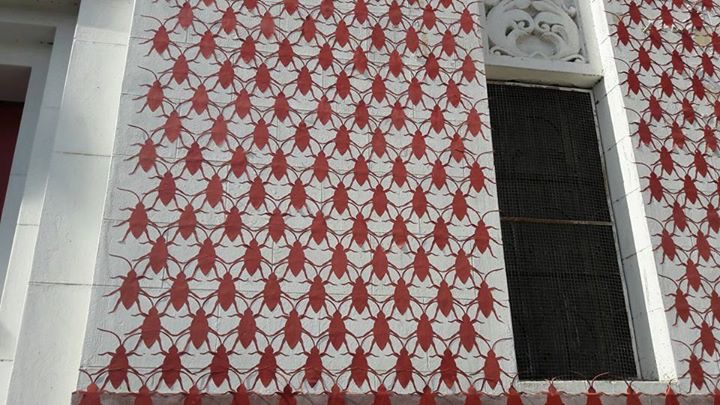
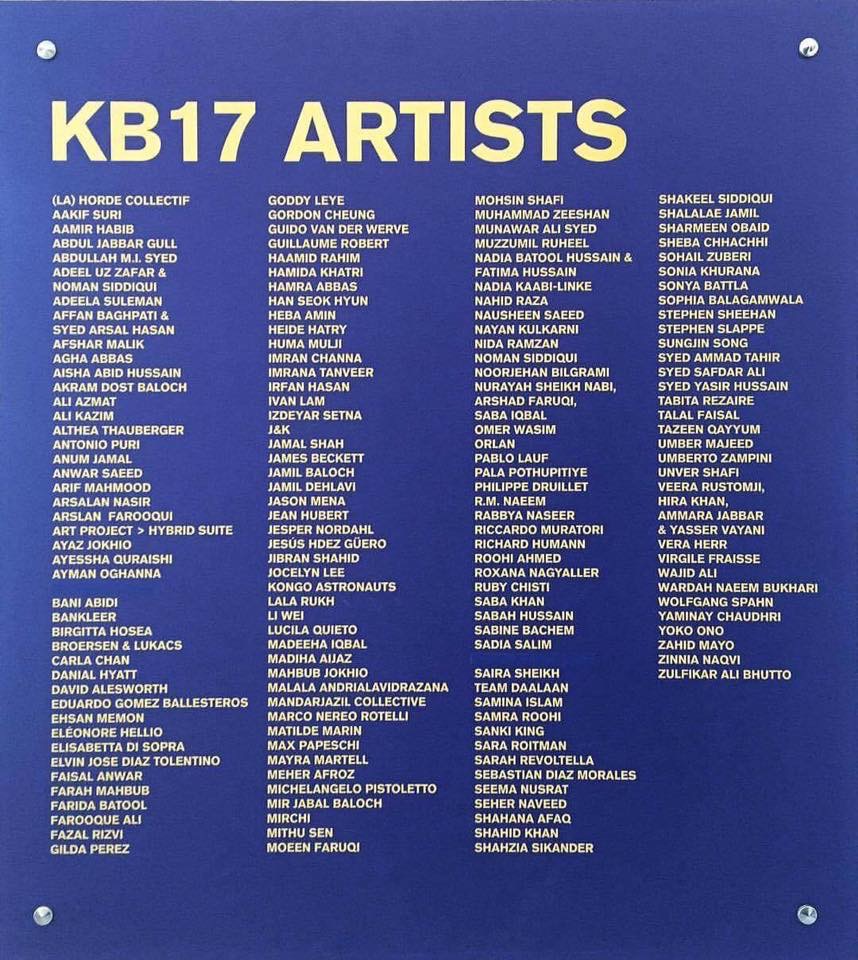
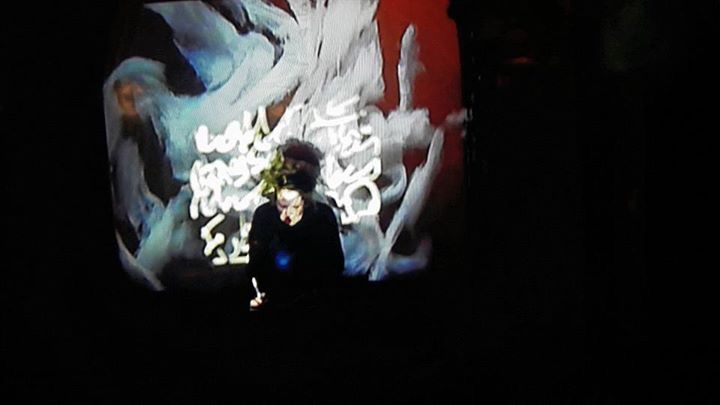
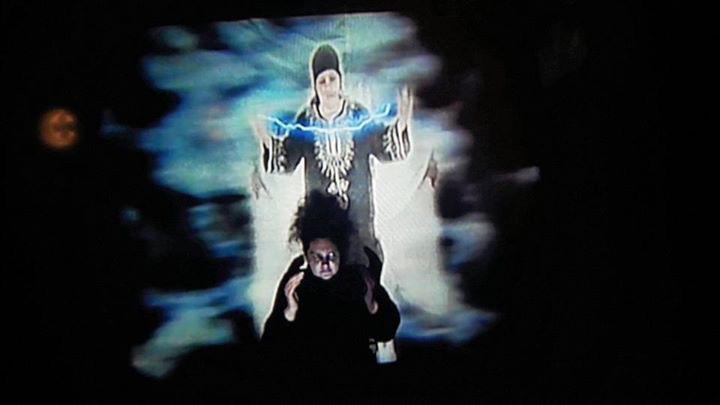
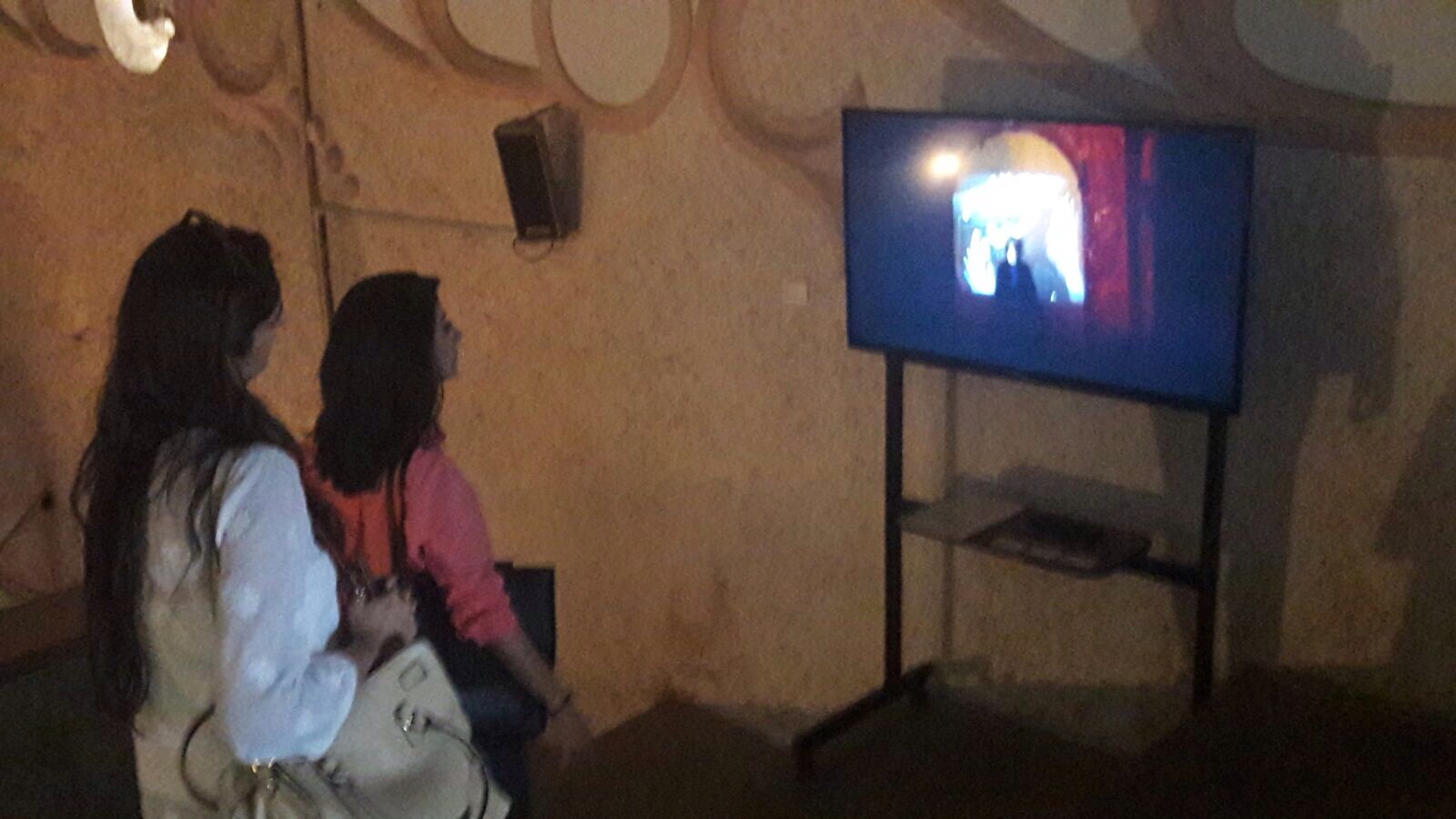
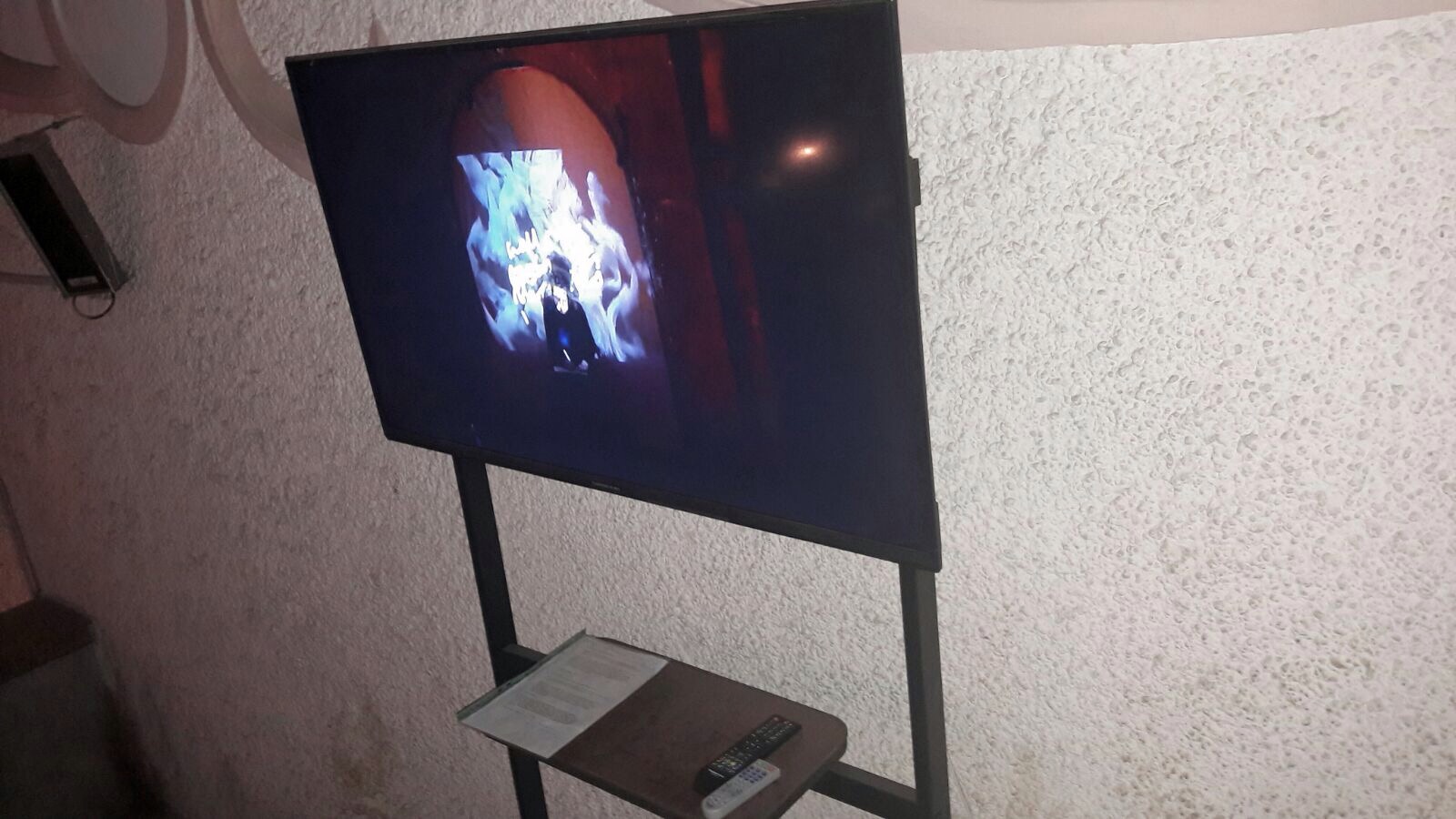
Thrilled that a video of my 2012 performance Medium was selected for the Karachi Biennale in Pakistan this year. Curated by Amin Gulgee, this is the first ever Biennale to take place in Karachi and had the theme of ‘Witness’. My work was installed in a building that formerly housed a branch of the Theosophical Society.
The Biennale launch:
Thanks to Sandra Louison for all her assistance in installing and promoting this work for me. Here are some of her photos of my work and where it was situated:
Here is a snippet from the first dress rehearsal of Medium in the cells of a former workshouse underneath Shoreditch Town. Curated by Jane Webb for Illumini.
























 Melania tries to interest the audience in her cookies [Picture by Calum F Kerr]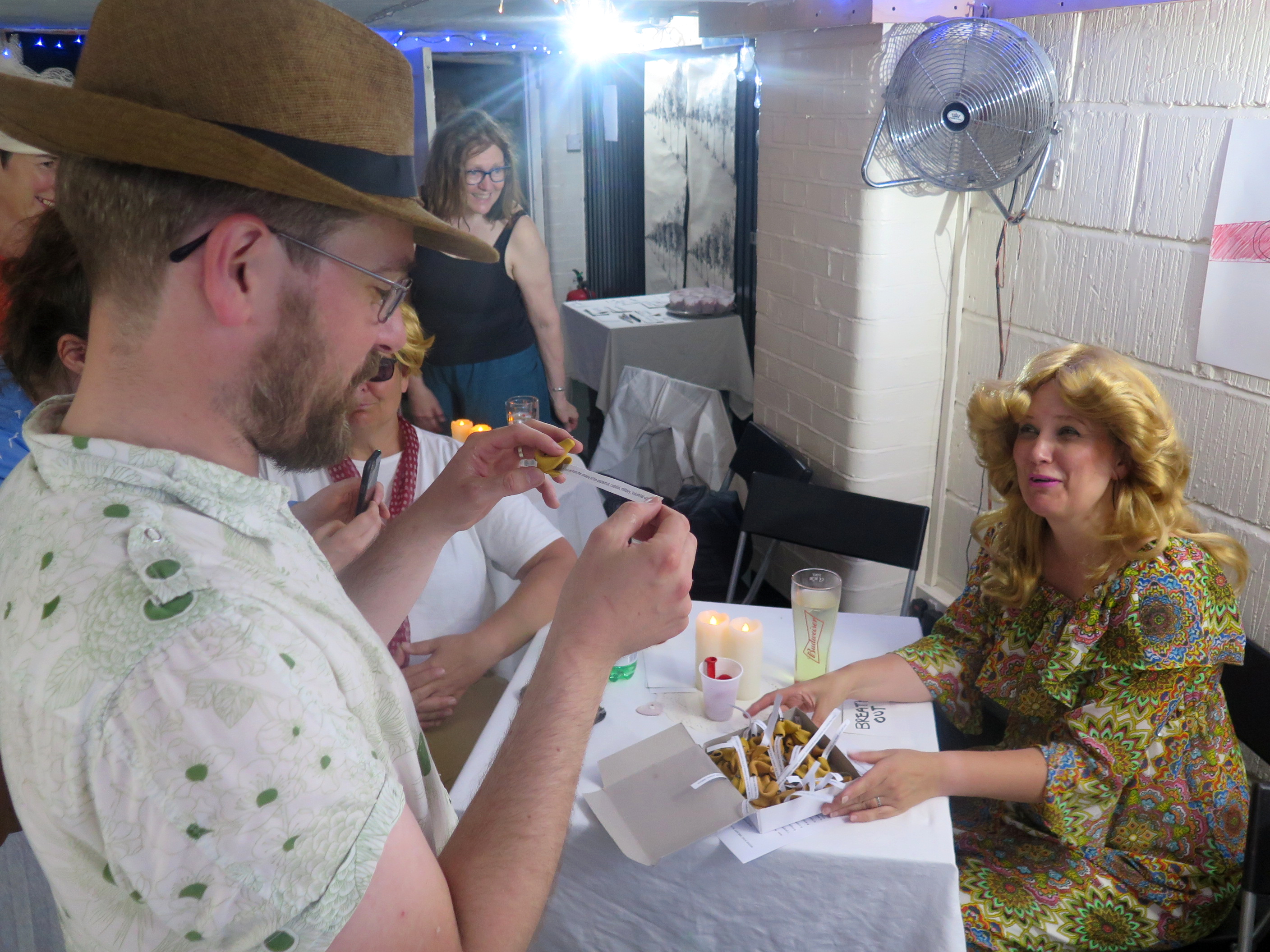
 Expanded Animation