ET X: Animating Hope

An overview of Ecstatic Truth X: Animating Hope which was part of the UNDER_the_RADAR 2026 festival in Vienna.

Day 1: 26.04.26 Opening events
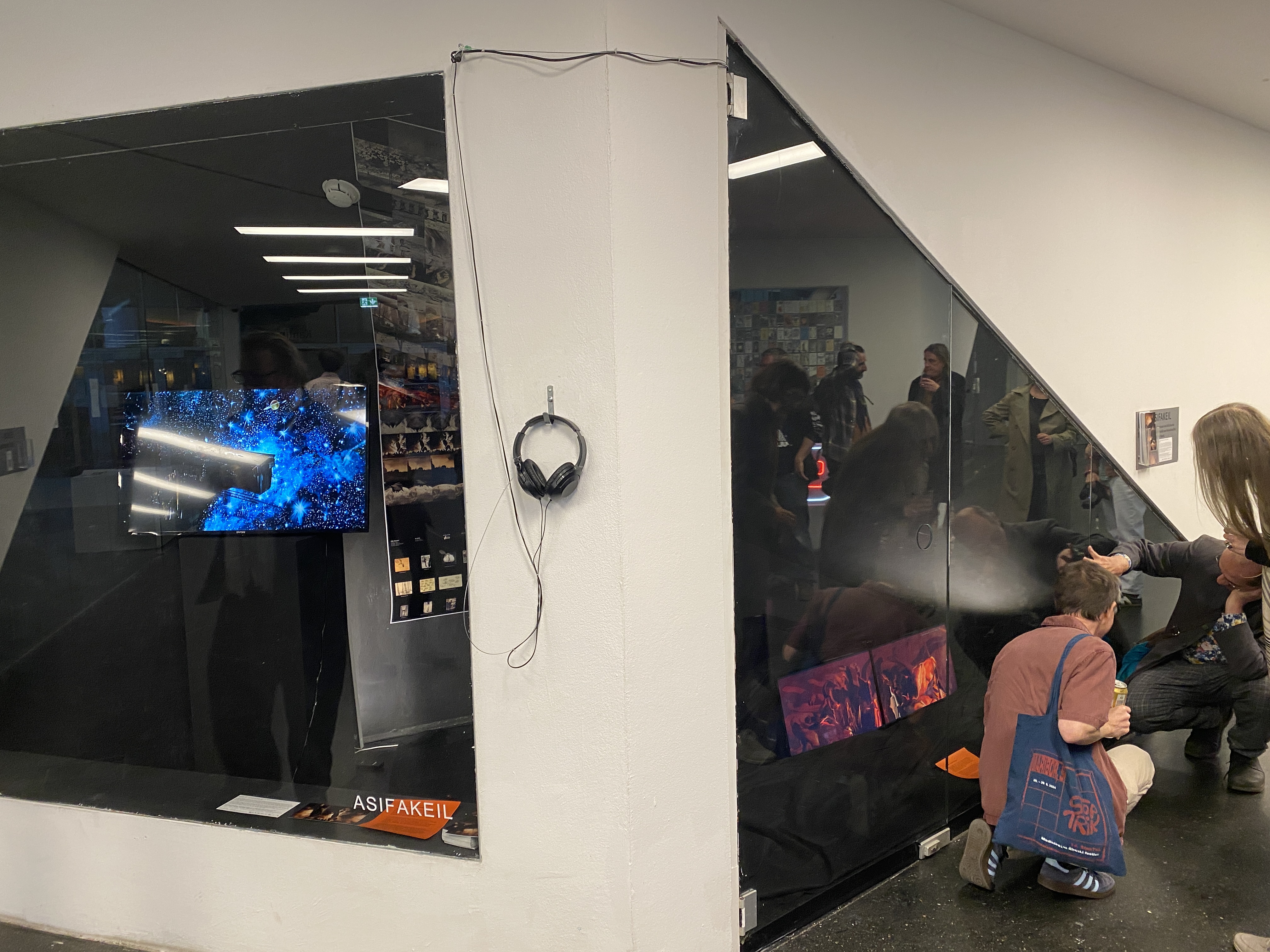
Events started in Q21 Museum Quarter with UNDER_the_RADAR’s exhibition launch for Juergen Hagler and co’s interactive project in the ASIFAKEIL gallery that responded to the movements of passers by. There was also screenings and presentations in Raum D.


Day 2: 27.04.26 Keynote 1: Juergen Hagler
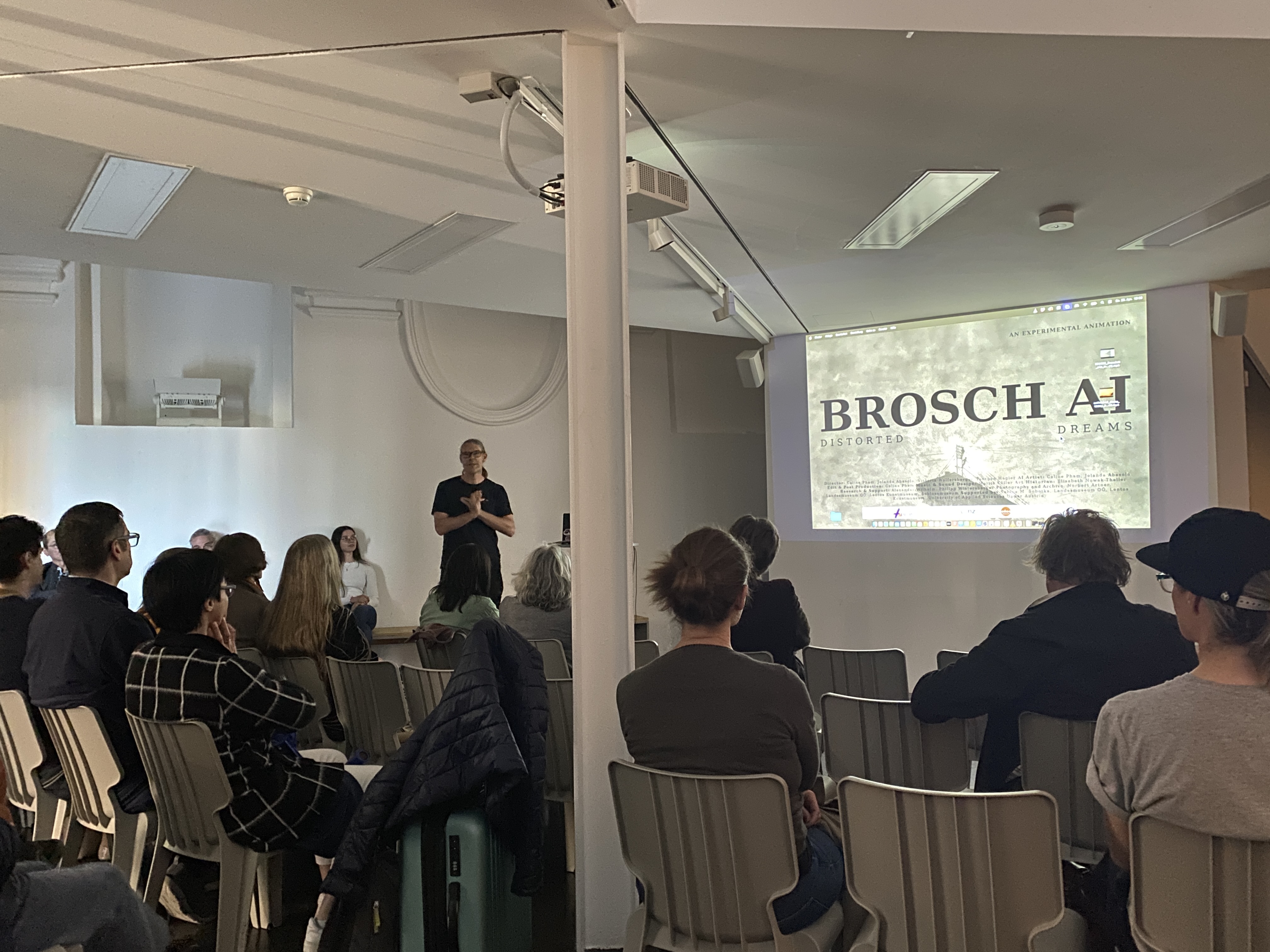
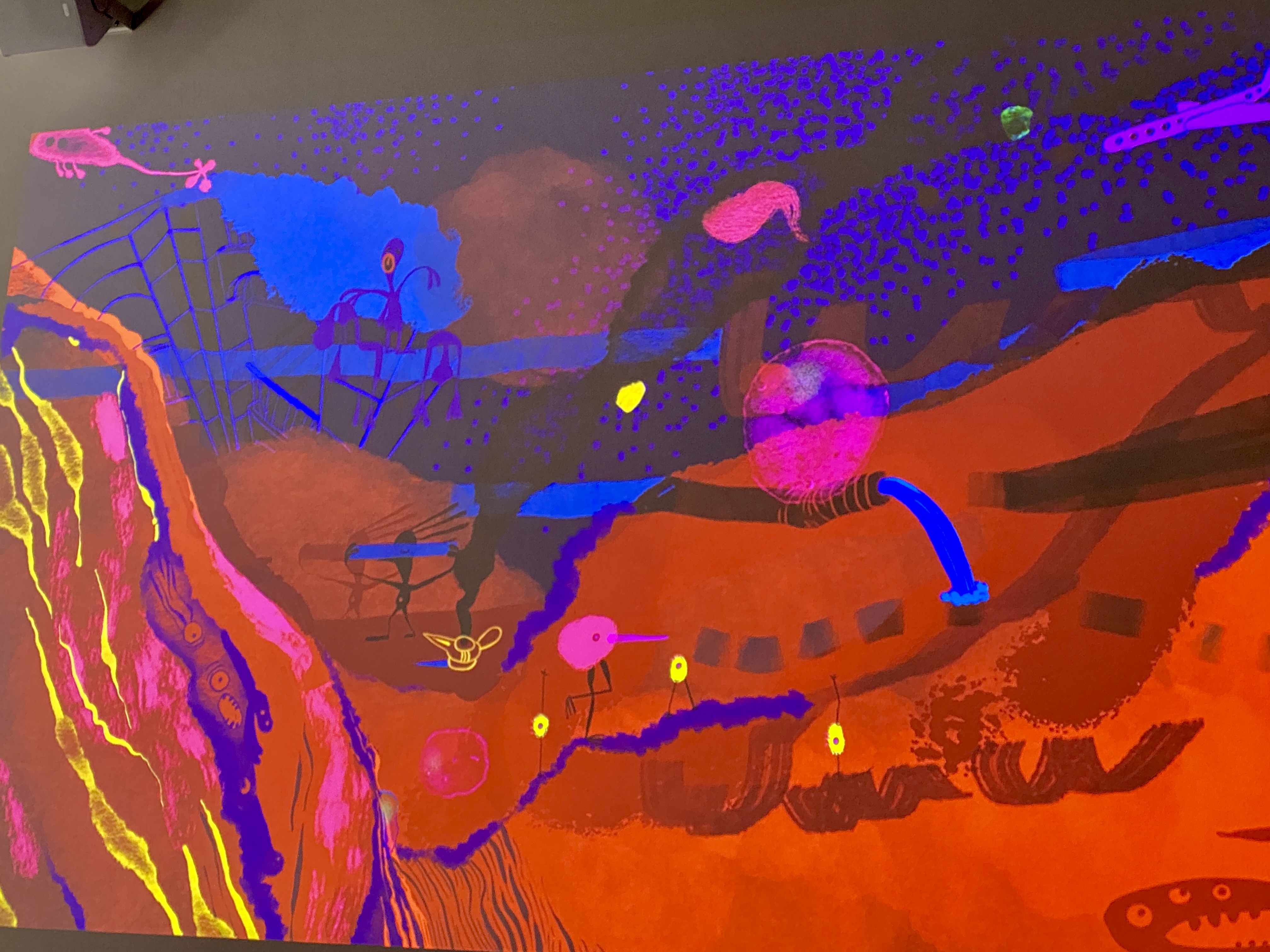
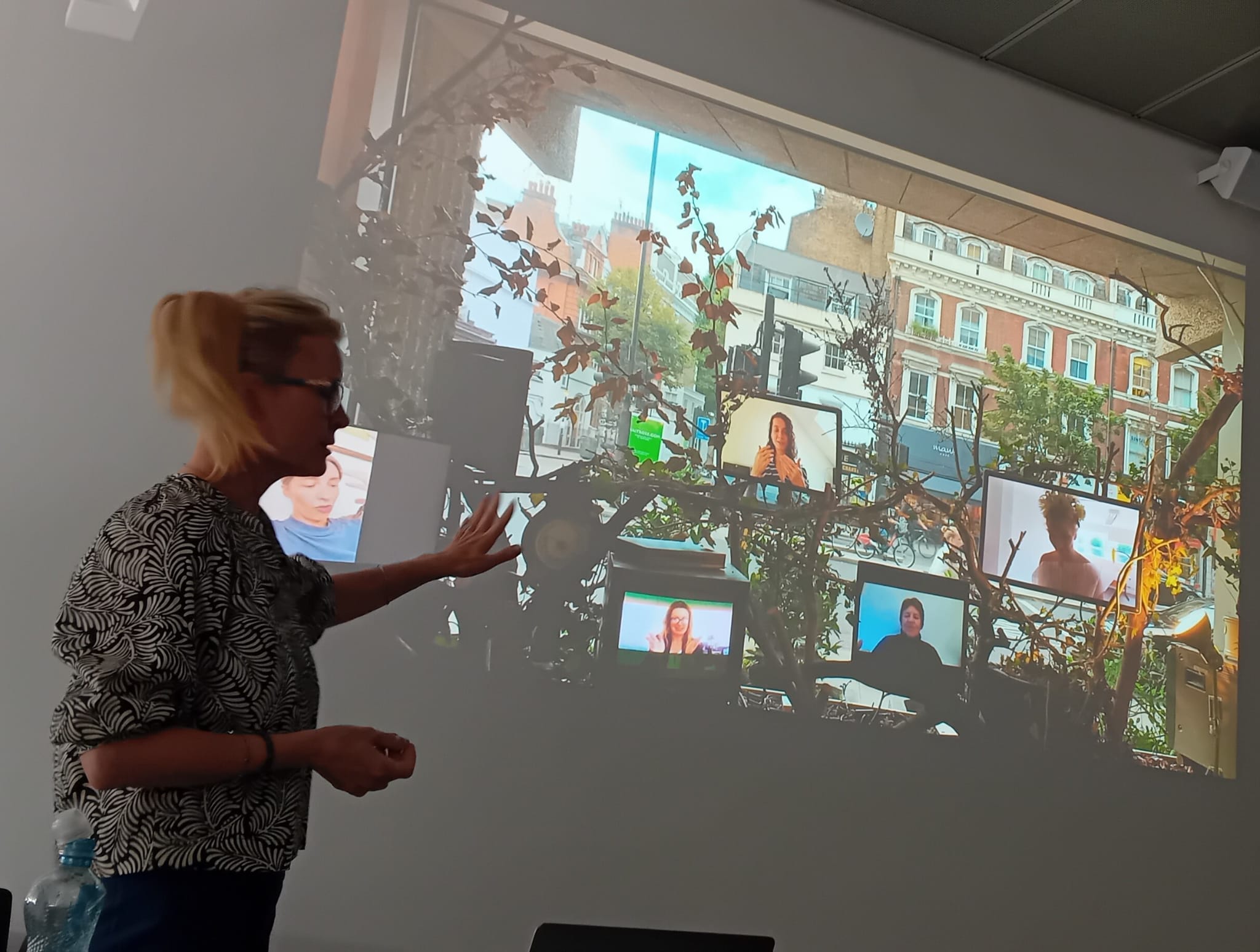
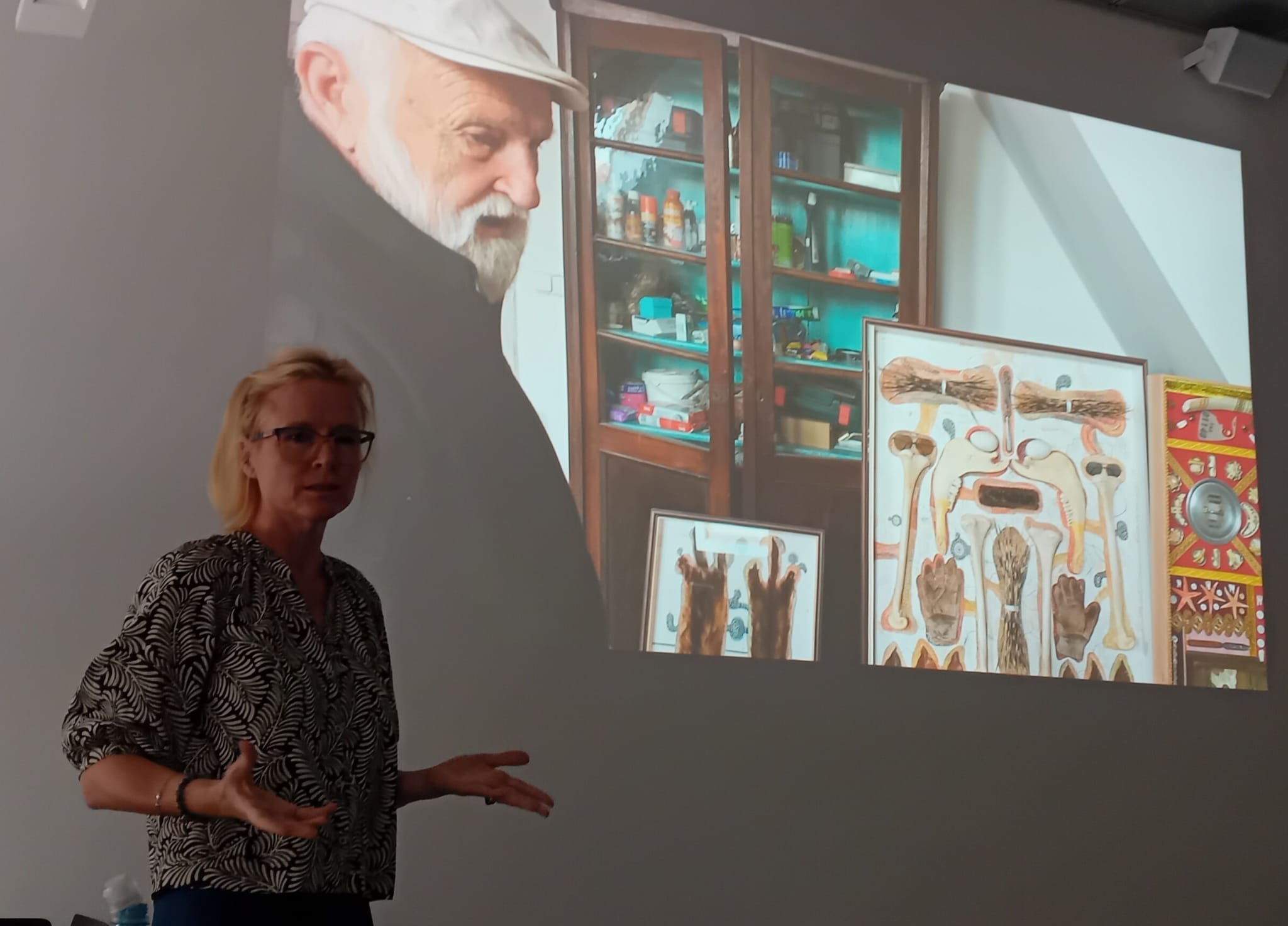
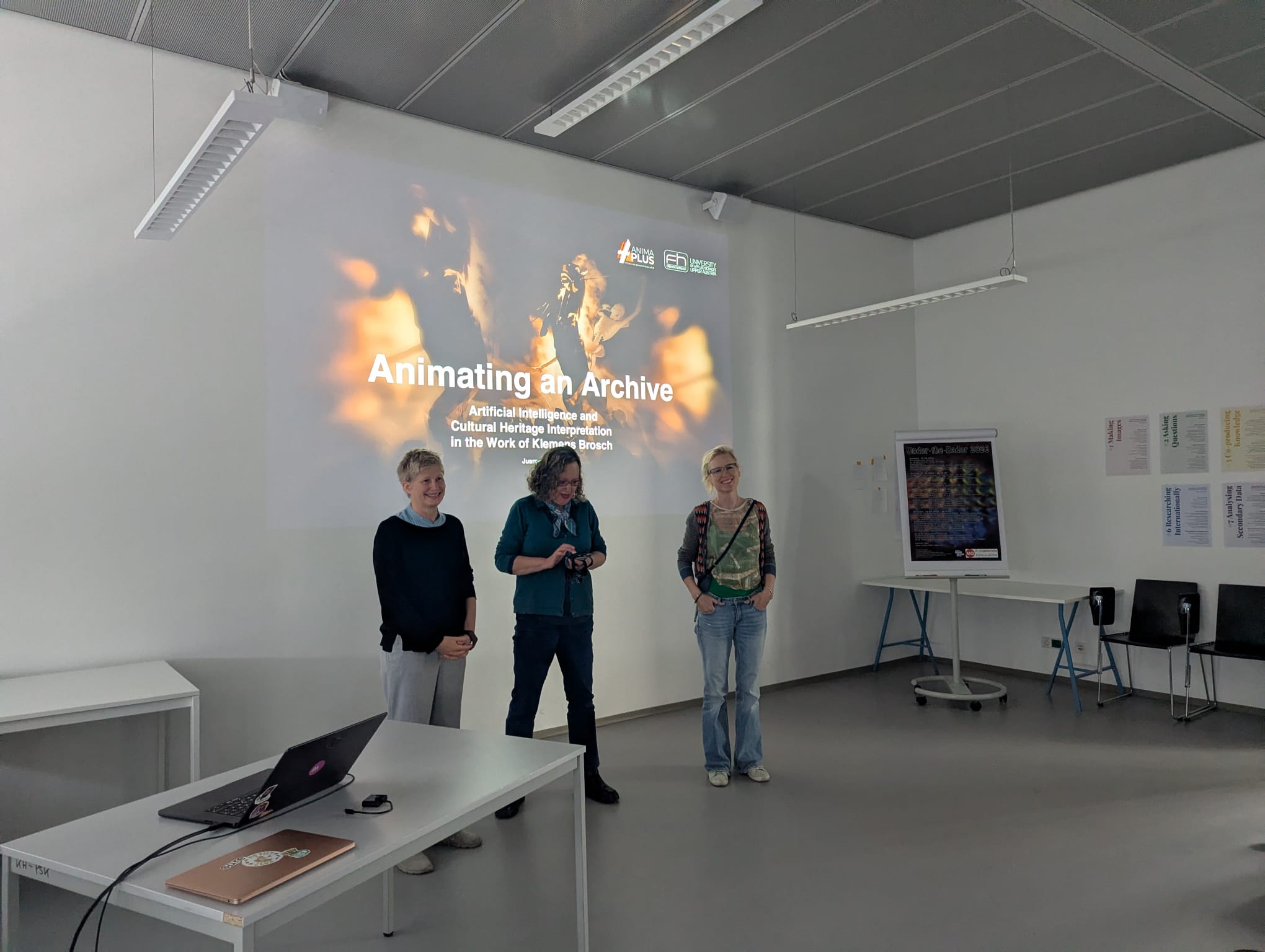
The symposium took place at the University of Applied Arts Vienna. In his keynote, Hagler presented a critical overview of the development of AI animation and outlined the details of his team’s ethical use of AI to animate the archives of Austrian artist Clemens Brosch for a forthcoming centenary exhibition. Whilst acknowledging the limitations of AI, he argued for the hope that it can be a useful tool in the hand of trained experts, but should not be used to offload the process of creativity to or as a substitute for learning and deep engagement with the disciplines of animation, storytelling and visual communication. 
PANEL 1 Ecstatic Truth: Uncertainty, Speculation and the Not-Yet
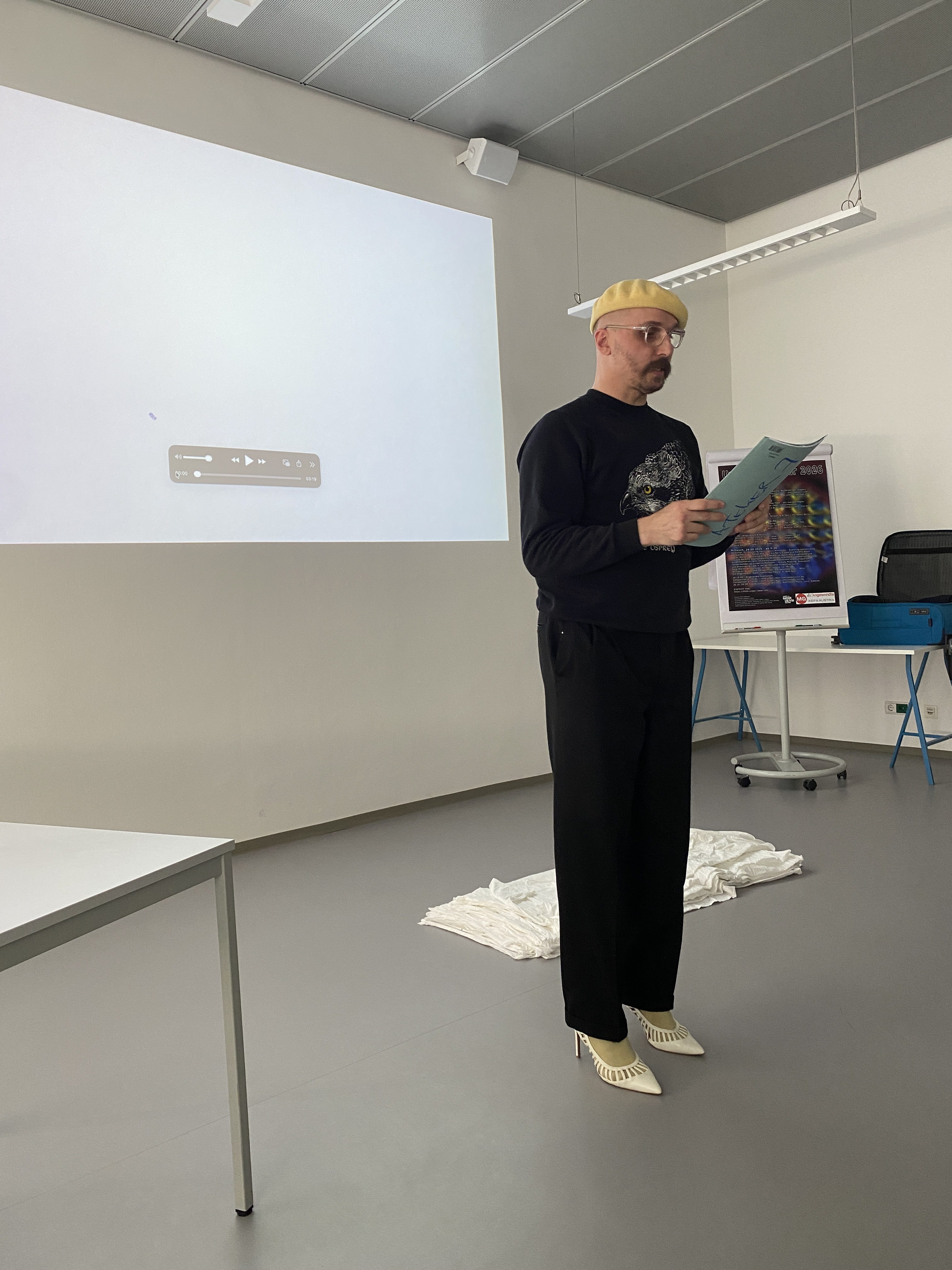
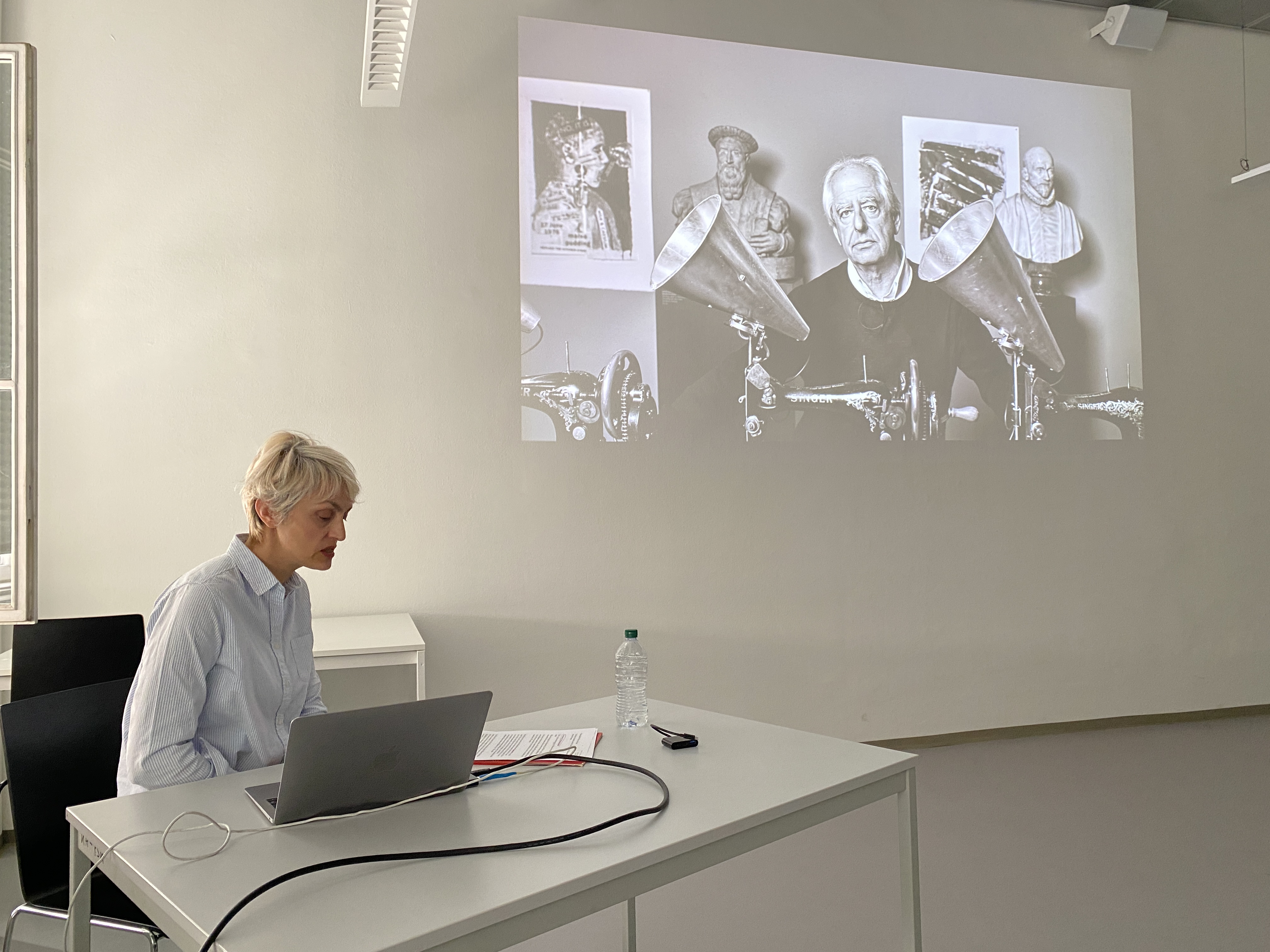
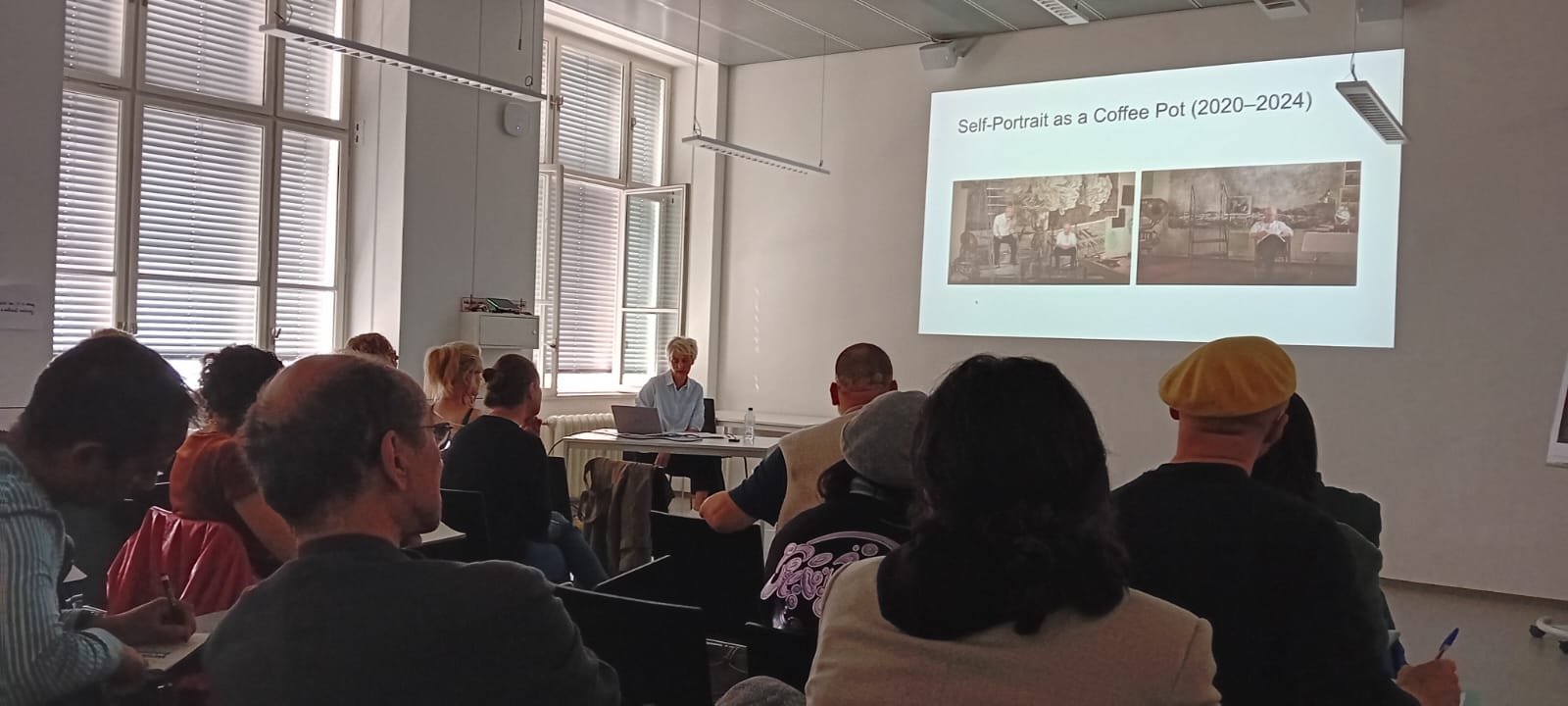
In the first panel, Bahar Kiamoghaddam, Isaac Parkinson, X. (aka Xavier Gorgol) and Andrijana Ružić gave presentations that wove together themes of animation’s potential for active hope, for what can we believe in at this post digital moment when there is no longer faith in the indexical truth of photography as evidence. What is the truth? Manipulated animated images can be used to falsify the representation of current events (BK), but they can also be used to present different forms of reality, other forms of ‘ecstatic truth’ as Werner Herzog termed it. So animation can be based on clearly authored and positioned witness statements; it can distill complex arguments into powerful memes or create computational assemblages of multimodal forms of data, such as Forensic Architecture, who use the tools of animation to argue for interpretations of events based on diagrammatic representations pieced together with mass collective testimonies formed out of cross referenced personal archives on social media and publicly available open source information that provide evidence and material support for campaigning investigations (IP). Animation can also be used to re-narrate and re-assemble traumatic events, providing the opportunity for close examination and propositions for alternative endings (BK). This might involve the re-animation of personal archives of images and objects to change the story and come to terms with the past. Animation can go beyond the indexical to present many subjective ways of being in the world such as queer, gender nonconforming and intersex epistemologies and, thus, act as a form of resistance to prejudiced ways of thinking (X). This brings to mind the ethics of philosopher Emmanuel Levinas who argued for authentic encounter with the Other. An example of this is the work of William Kentridge whose charcoal smudges give a space to the ghosts of past injustice. Kentridge’s embodied studio practice becomes a moment of thick time in which the process of drawing and animating becomes a process of contemplation and sense making, a safe space for uncertainty, failure and the ‘less good idea’, a praxis of hope in which insight emerges from the activity of making. Kentridge’s collective projects in his Centre for the Less Good Idea in Johannesburg were also considered as a hopeful symbol of collective creativity (AR). Finally, we were reminded of Herzog in his new book saying that the truth may be fragile but we must never stop searching for it (TS). 

Keynote 2: Pedro Serrazina

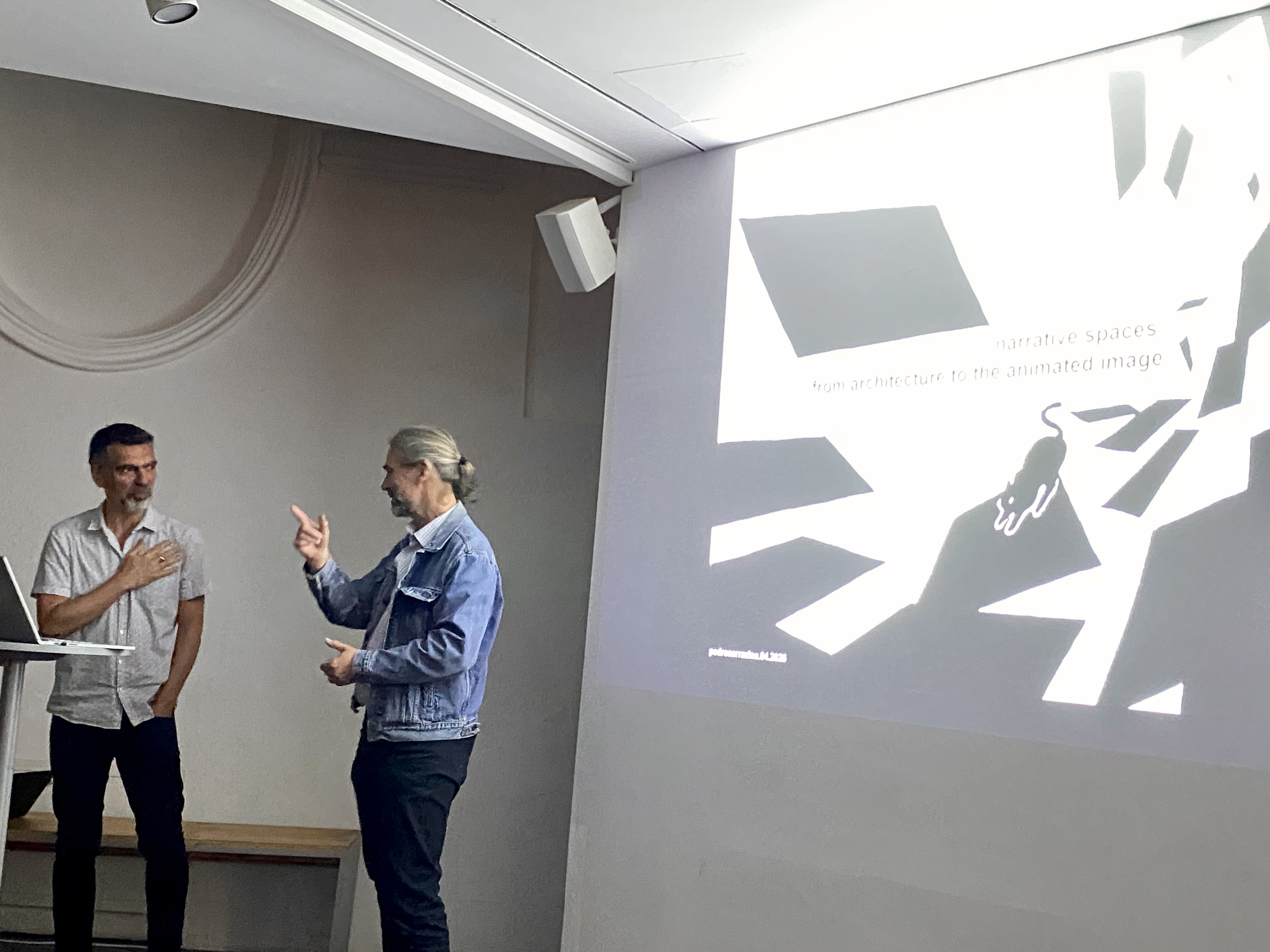
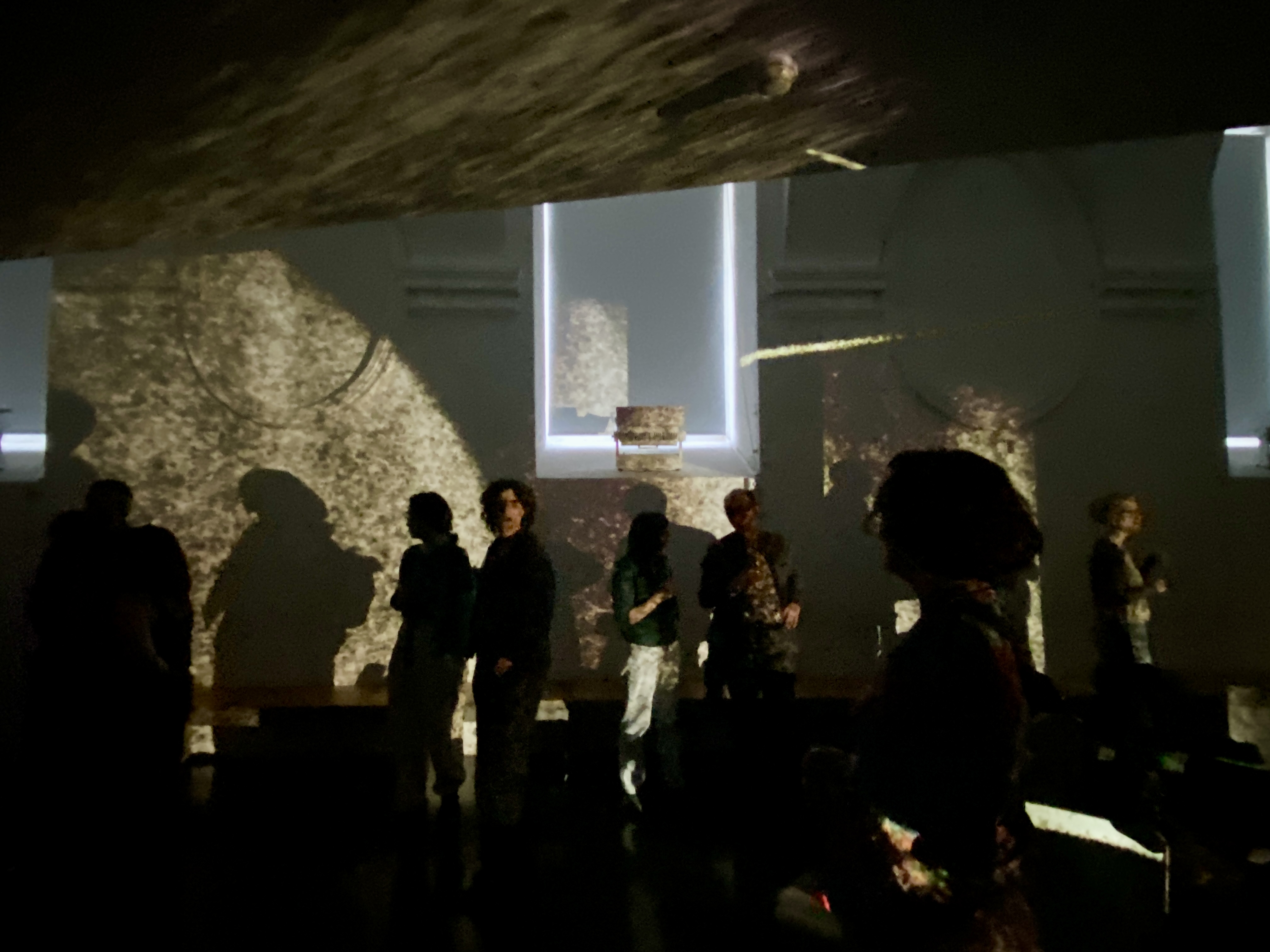
In his retrospective screening at RAUM D, Pedro Serrazina presented his interest in space and the built environment, raising issues about gentrification and how animation might unify and connect people. His installation, ‘Shadows of Ourselves’ re-storied the venue into a space of wonder through abstract patterns of light and shade, because ‘when we forget empathy and acceptance of the other, we become shadows of ourselves’. 


Day 3: 28.04.26 Keynote 3: Gabrielle Jutz

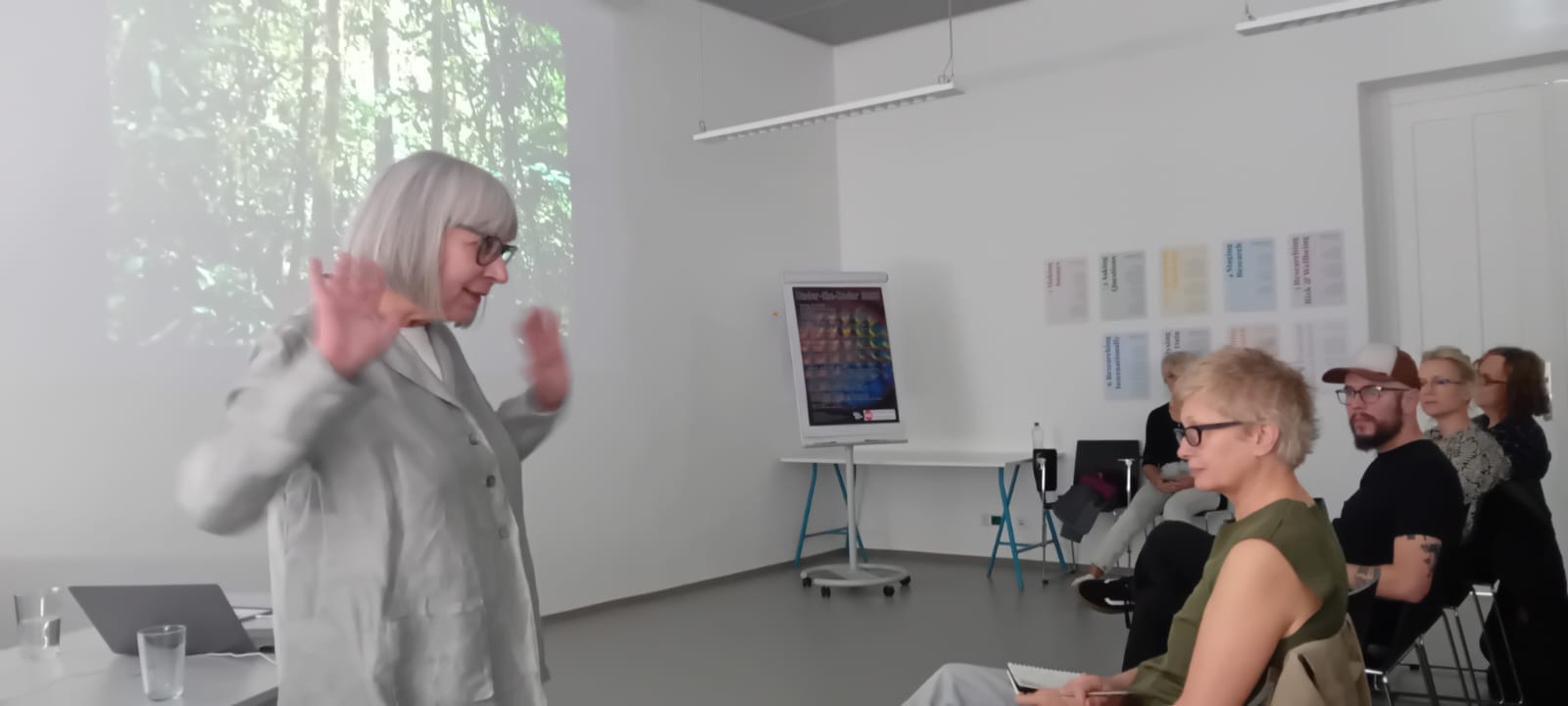
Gabrielle Jutz’s keynote ‘How to Film a Forest in the Anthropocene’ contrasted two approaches to animated documentary and a dilemma – is the filmmaker’s own personal viewpoint the only strategy or could it ever possible to capture some kind of posthuman viewpoint in which nature is in the forefront and the anthropocentric human bias removed. 

PANEL 2 Changing perspectives: On Hope and Recovery

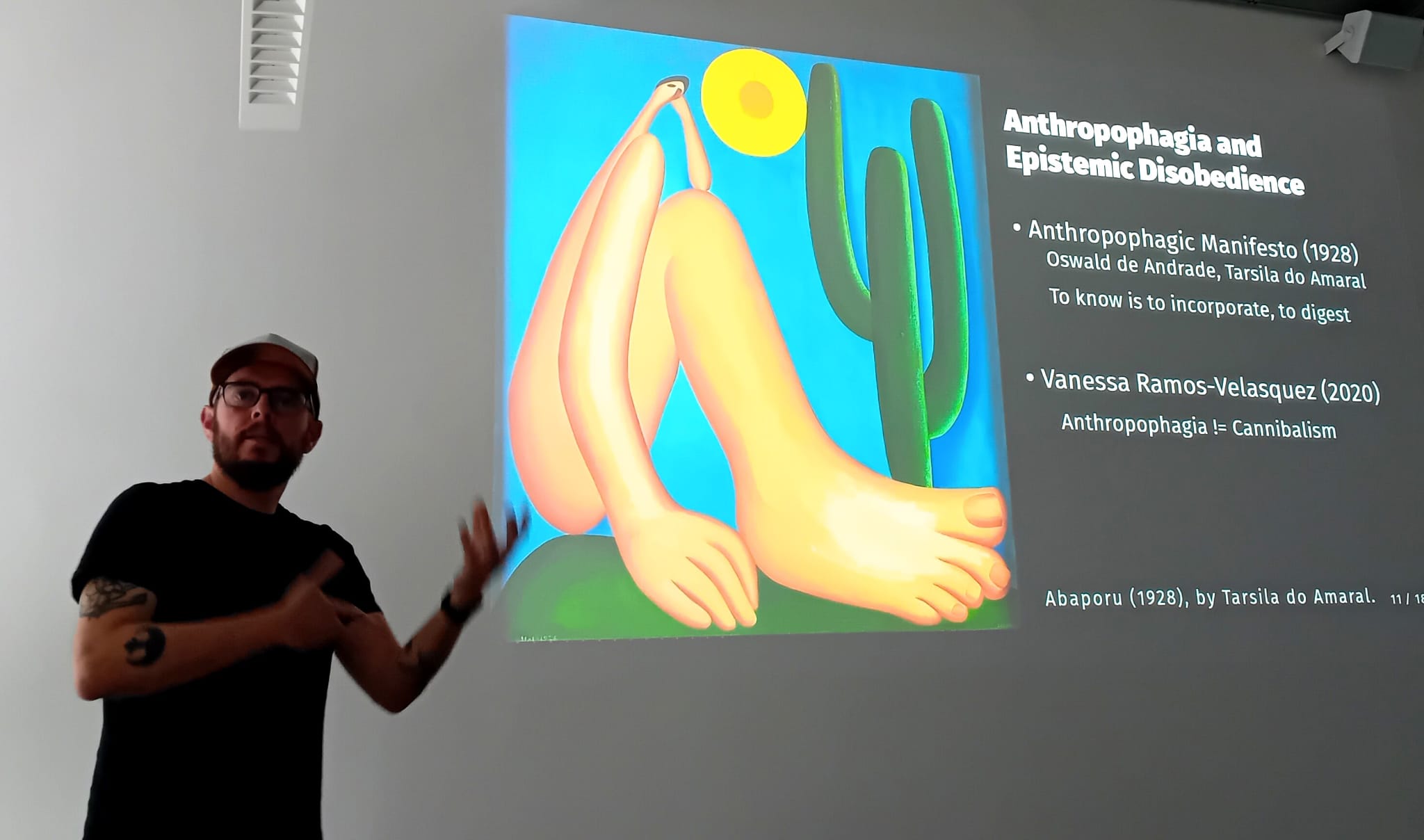
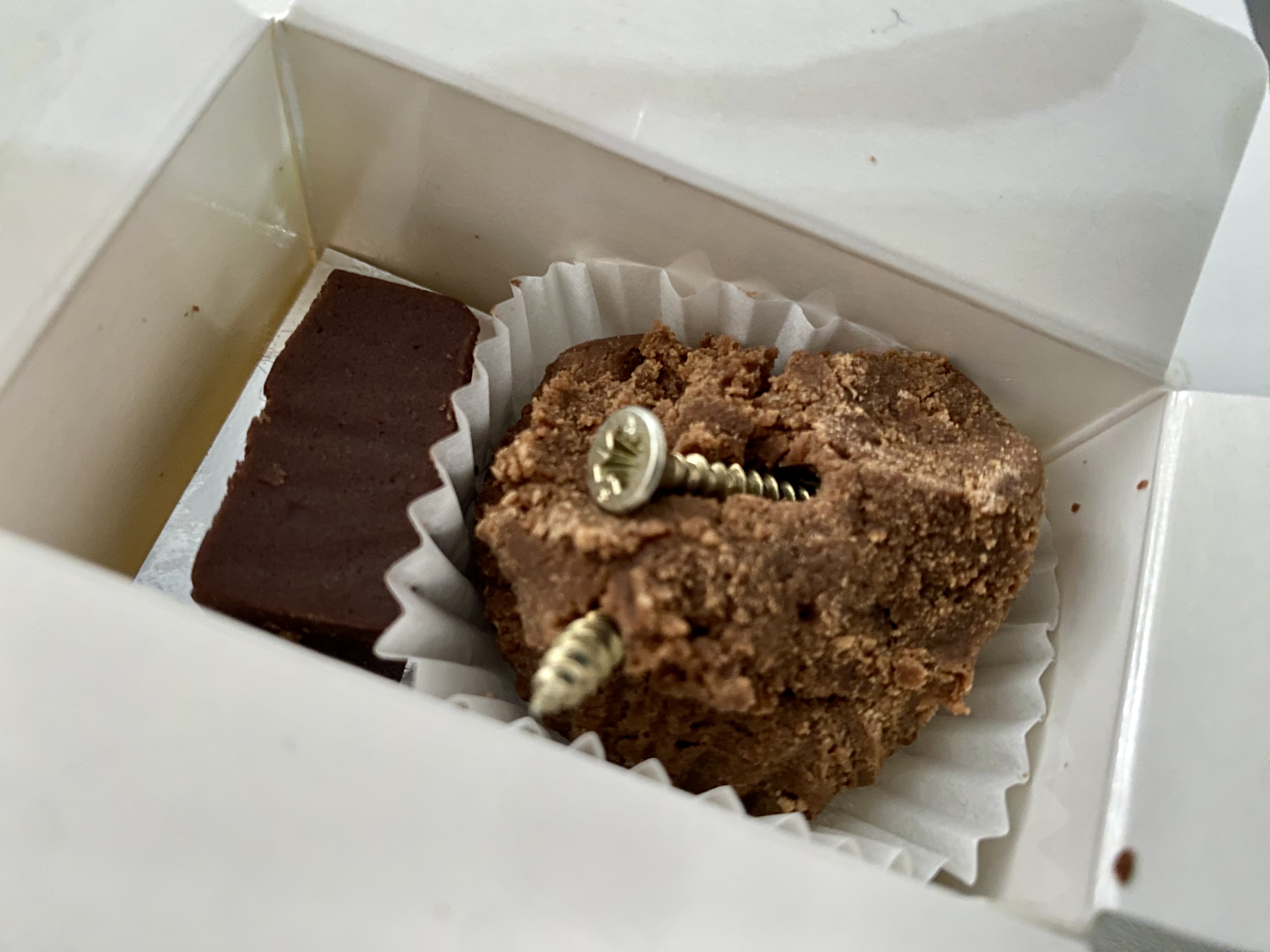
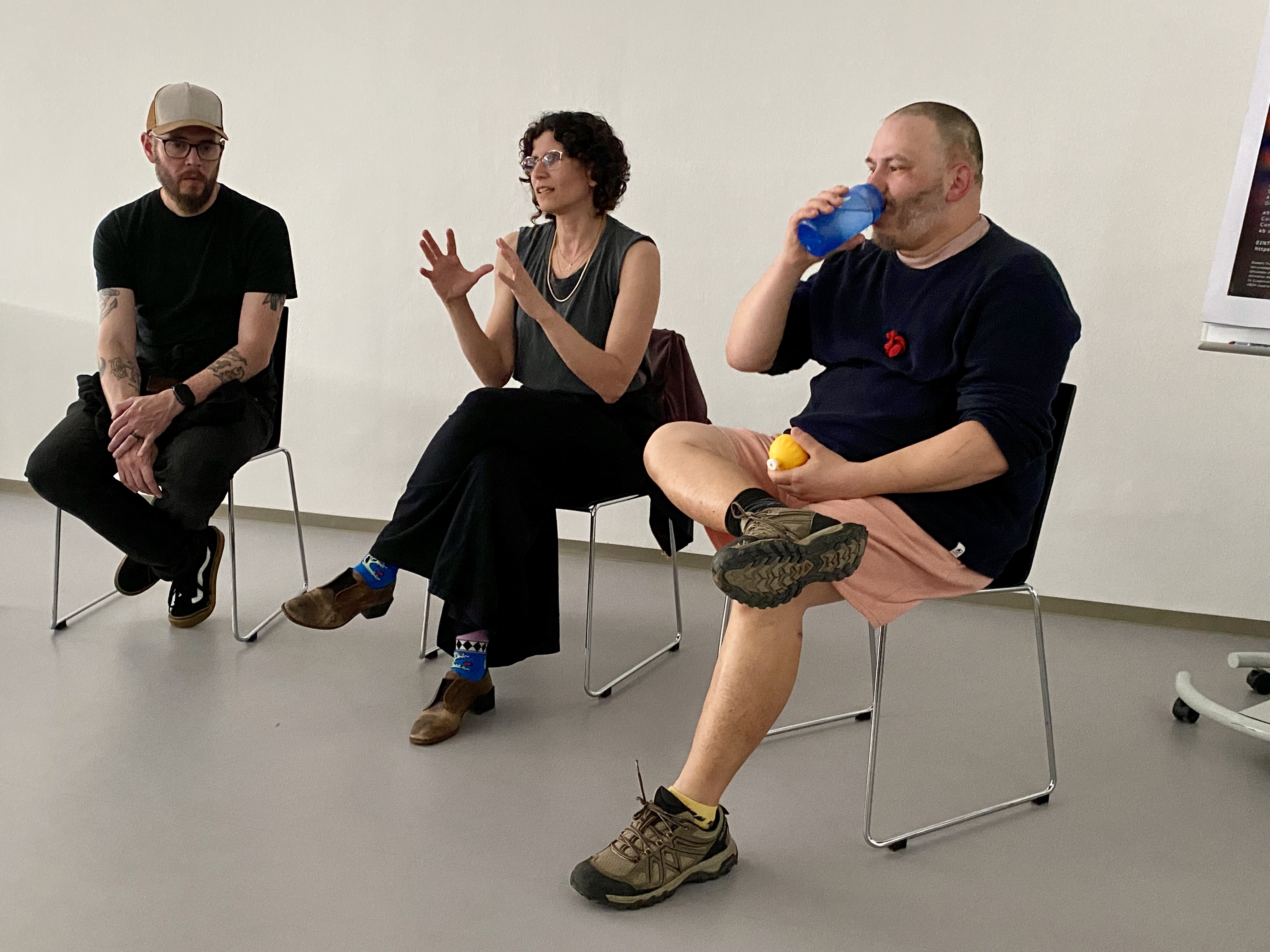
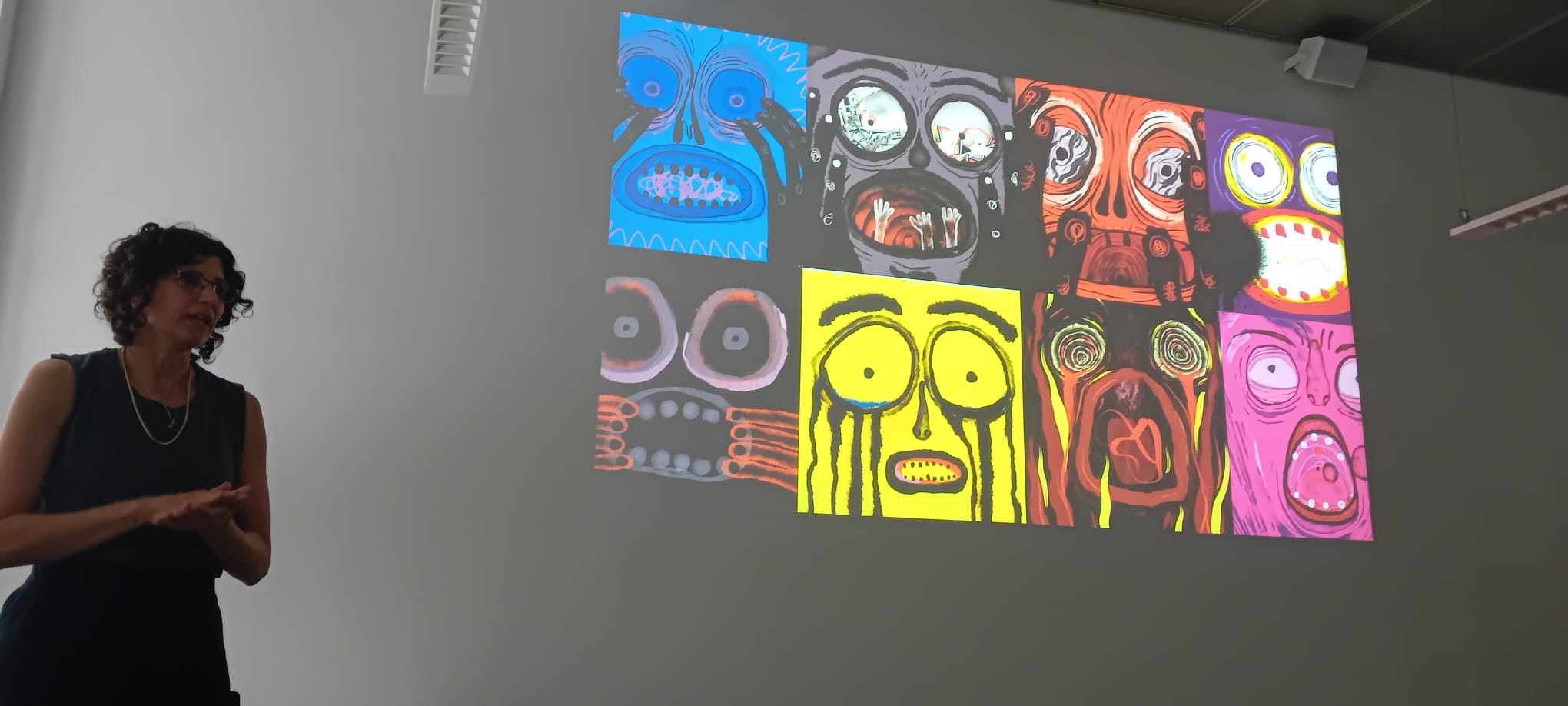
In Panel 2, Osi Wald, Virgilio Vasconcelos and Rares Augustin Craiut presented perspectives on the use of animation for shifting paradigms. OW showed animated loops of protest and quiet domestic moments created as a methodology for survival, persistence and resistance in a time of war. In an interesting discussion, the loop was variously considered as the therapeutic holding onto a comforting moment or perhaps a permanent imprisonment  within a situation that never changes and you can’t break out of or perhaps even, when conceived of as a spiral or in three dimensions, it could be viewed from different angles. Does technology trap us into particular modes of thinking or worldviews? Can the core methods of animation resist this? In traditional frame-by-frame animation, we continually flip between views of the past and the present in order to make the future. VV connected this with the anthropophagia art movement of 1920s Brazil. In an attempt to decolonise their artworks, Brazilian artists of this period looked to the autophagy rituals of their ancestors as a metaphor. Condemned as cannibalism by the colonisers, these were not about eating other humans for food but a ritual to digest and assimilate the powers of noble enemies, a process of synthesis and reflection. These artists considered themselves to be collectively digesting and synthesising the art forms of their colonisers. Gen-AI was proposed as a form of commodified cannibalism in which the ideas of others are extracted and sold. Continuing the theme of digestion, we were all invited by RAC to eat chocolate as a form of sensory participation in his story from a childhood in communist Romania. With reference to Suzanne Buchan on pervasive animation, through the symbolic action of eating chocolate, animation was proposed as a form of material transformation and sensory, affective encounter. 

Keynote 4: Tereza Violet Stehlikova

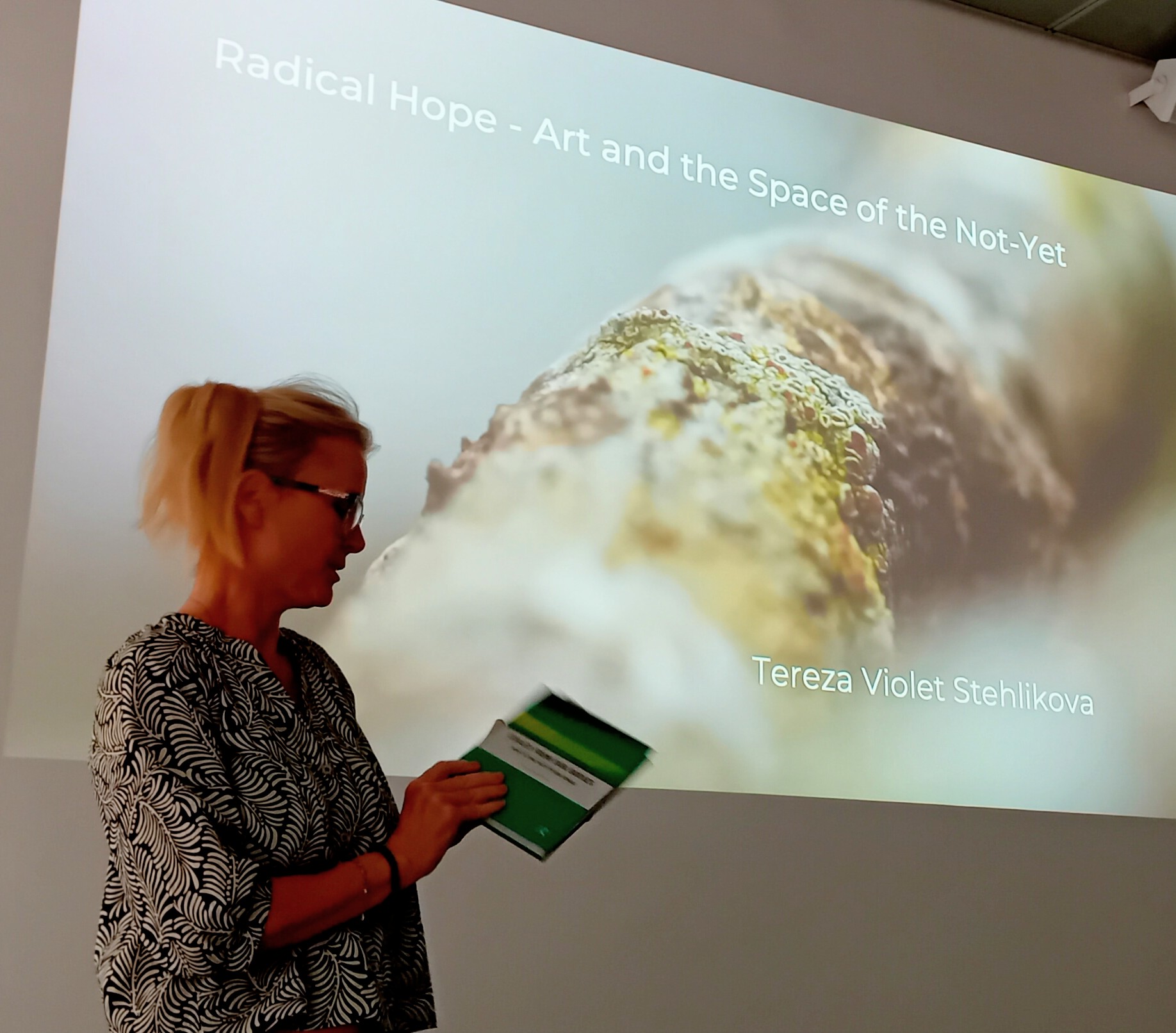
In her presentation, ‘Radical Hope – Art and the Space of the Not-Yet’, Tereza Violet Stehlikova drew on ideas from her book Exiled from Our Bodies: How to Come Back to Our Senses to explore radical hope as something that emerges not through technological optimisation, innovation or the promise of ever-greater control, but through our capacity to remain open to the unresolved, the ambiguous and the not-yet-formed. Reflecting on art’s ability to create liminal spaces in which habitual ways of seeing begin to dissolve, she considers how both art and nature can open up new possibilities for perception, meaning and transformation. 

Panel 3: Ecstatic Truth @ 10 years discussion with Birgitta Hosea, Tereza Violet Stehlikova, Pedro Serrazina, Natalie Woolf, Holger Lang

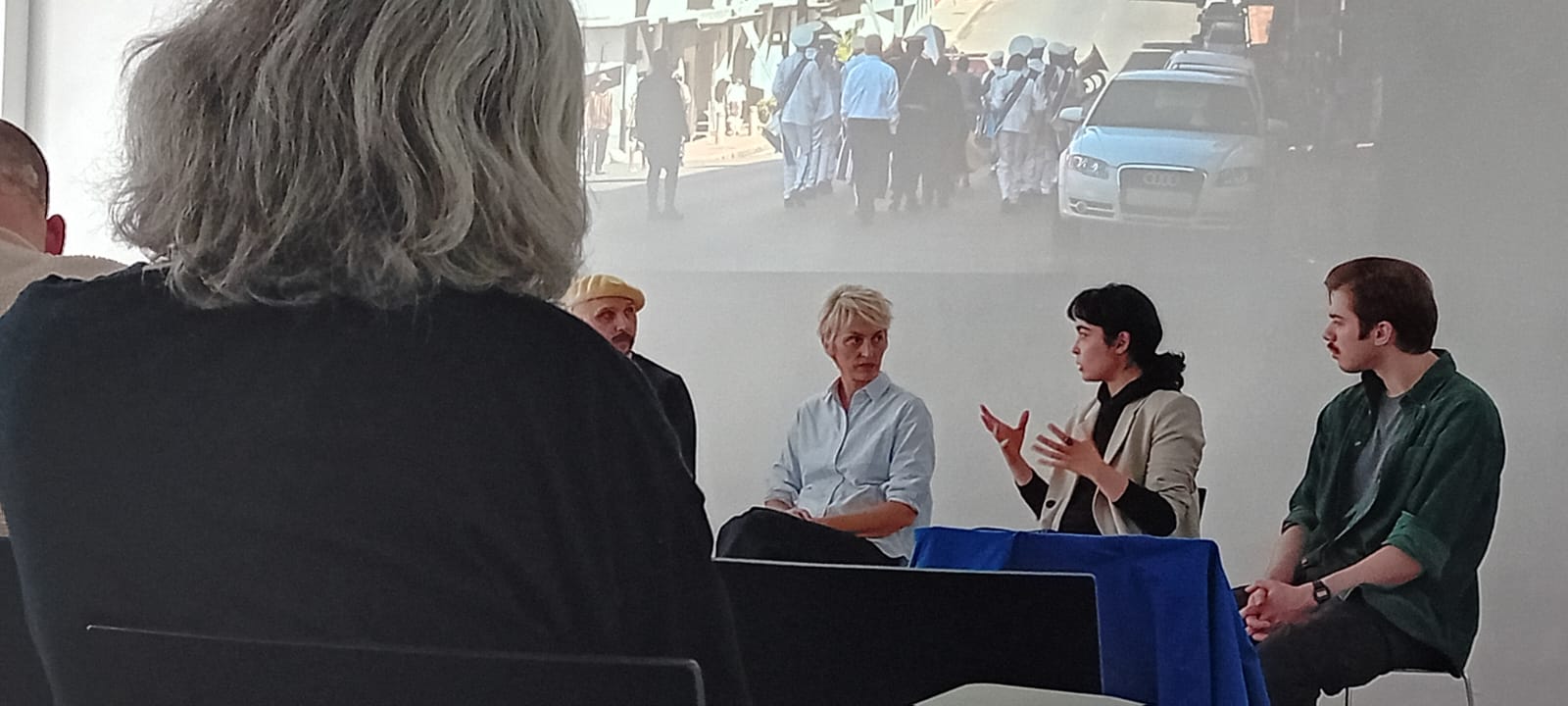
At the intersection of experimental practices in expanded animation and post documentary, for over 10 years we have organised symposia with multiple approaches and perspectives. Our concern has never been to restrict, to categorise or to propose narrow definitions of animated documentary, but to open it out by considering the many intersecting issues on the fringes of this concept. Using Werner Herzog’s notion of ecstatic truth as a stratum of truth that exceeds the merely factual, we have sought to promote discussion of innovative approaches to animation that are socially engaged and based in lived, embodied experience. As a small, voluntary, international collective, we have been able to be agile in our choice of themes and ours were the first symposia in animation studies on niche topics such as colonialism, absurdity, embodiment, AI, decoloniality and practice-based research. The discussion concluded with a call for new collaborators to join us and invigorate future versions of Ecstatic Truth.

Our final thought was that hope can be practised: it is both a verb as well as a noun.


Day 4: 29.04.26

The final day featured a workshop, ‘Co-Designing Participatory Animation: Exploring Collaborative Approaches to Animation Making’ by Nairy Eivazy and Natalie Woolf.

This workshop examines how animation’s narrative, visual strategies, and unique language can function as a collaborative framework for bringing diverse voices together. Centering collaboration within the animation-making process, it explores participatory approaches that invite public engagement into creative and hands-on production. Working in small groups, participants will collectively develop methods through mapping, discussion, and prototyping, fostering shared authorship, dialogue, and meaningful exchange across diverse backgrounds. The co-designed methods will then be tested and activated through the collective creation of short stop-motion animation prototypes.

The workshop is led by Nairy Eivazy and Natalie Woolf, members of Animating Together, a FilmEU dynamic cluster that explores the transformative potential of collective storytelling through participatory animation.https://www.filmeu.eu/research/dynamic-clusters/animating-together FilmEU is a European university alliance that brings together leading institutions across Europe to collaborate on education, research, and innovation in film and media arts.

This was all complemented by screenings at the UNDER_the_RADAR festival


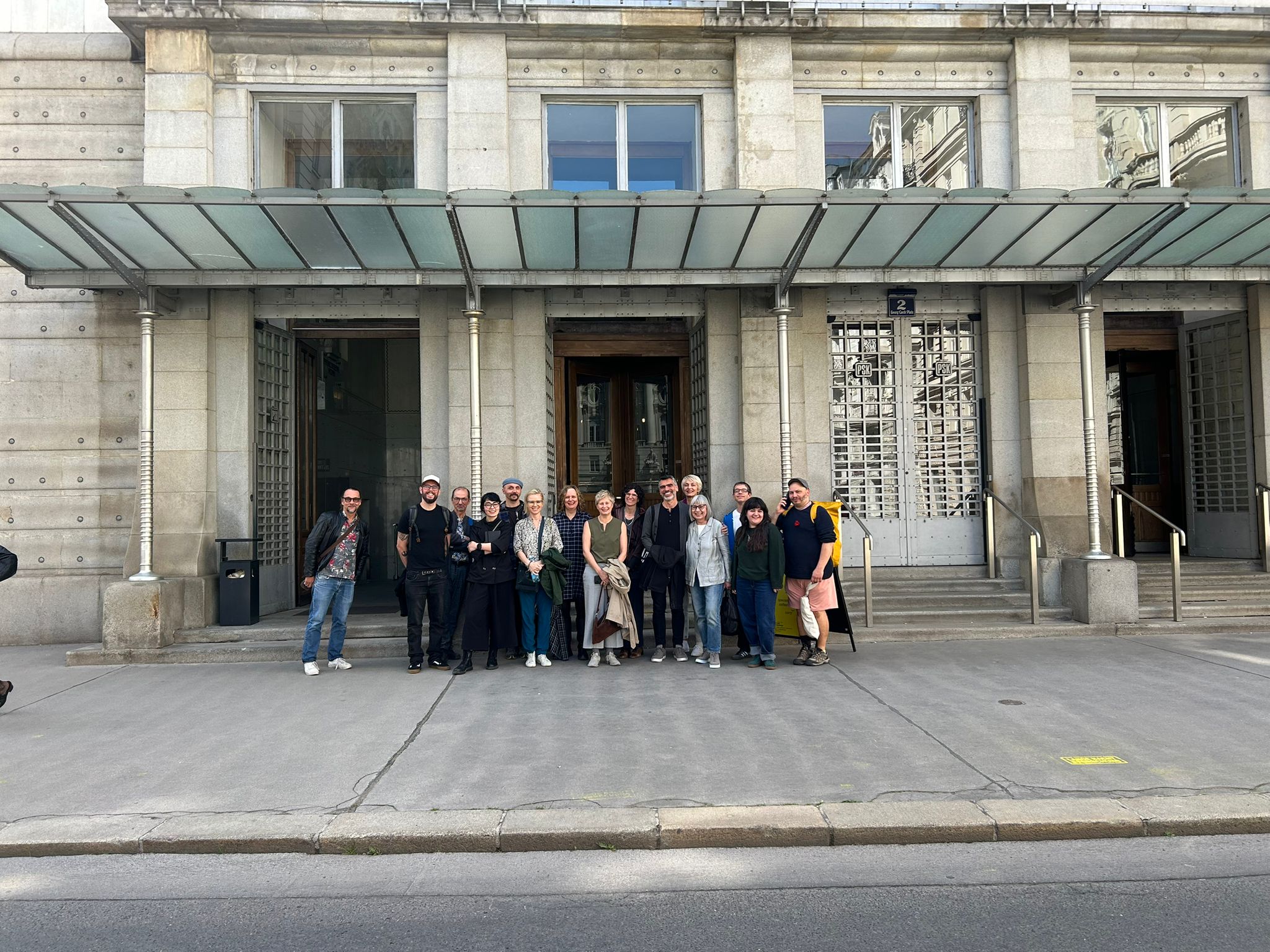
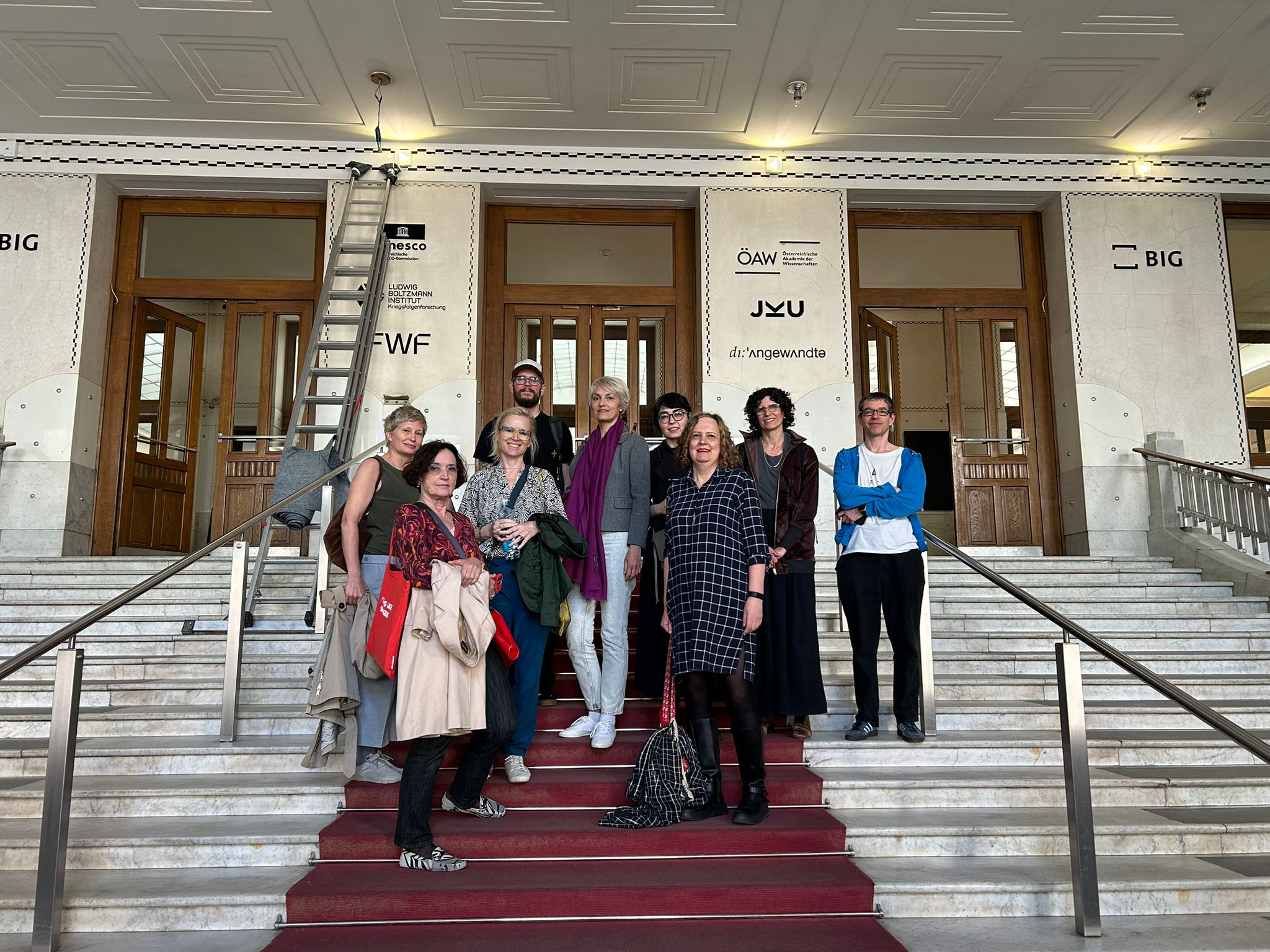
Ecstatic Truth X was organised by Birgitta Hosea, Tereza Violet Stehlikova, Pedro Serrazina and Natalie Woolf in collaboration with Holger Lang and the UNDER_the_RADAR festival. The team are all grateful to Nikolaus Jantsch from University of the Applied Arts Vienna for generously hosting our events.

Pictures by Birgitta Hosea, Tereza Violet Stehlikova, Pedro Serrazina, Holger Lang and Juergen Hagler

ETX / U_t_R 2026: Schedule

Ecstatic Truth X: Animating Hope, international symposium on documentary animation, presented in association with UNDER_the_RADAR Festival and the University of Applied Arts Vienna. Book a free place here.

Ecstatic Truth returns for its tenth edition with a three-day gathering of artists, filmmakers and researchers exploring documentary animation in its most expanded form. The symposium takes its name from Werner Herzog’s idea of ecstatic truth — a form of truth that exceeds the merely factual. Animation is uniquely positioned to work in this register. It can render memories, dreams, inner states and dispersed timescales, showing aspects of reality inaccessible to live-action cinema while openly acknowledging its artifice.

Our 2026 theme, Animating Hope, asks what documentary animation can do in a moment saturated with information, simulation and uncertainty. Rather than adding to the noise, can animation transform data into meaning and experience into understanding? The symposium includes presentations, screenings and discussions addressing speculative futures, resistance, memory, and new documentary forms emerging across installation, performance and hybrid cinema.

Schedule: April 26 – 29 2026

Sunday 26.04.2026
UNDER_the_RADAR Festival
@ Raum-D / Museumsquartier, Quartier 21, Museumsplatz 1, 1070 Vienna

18:00 Opening and Introduction UNDER_the_RADAR
18:10 (approx.) BroschAI – Distorted Dreams – with Juergen Hagler
19:00 (approx.) Water works: Video as Painting – with Pietro Gardoni
19:45 (approx.) Austrian Animation – Competition 1
20:45 (approx.) Chillin´ Out


Monday 27.04.2026 10:00 to 13:30 
Ecstatic Truth X: Animating Hope – Symposium Day 1
@ Art x Science Seminar Room 1, 2nd Floor, University of Applied Arts Vienna, Georg Coch Platz 2, A 1010 Vienna

10.00 Intro

10.10 – 11.00 KEYNOTE: JUERGEN HAGLER
“Animating an Archive” – Artificial Intelligence and Cultural Heritage Interpretation in the Work of Klemens Brosch

This presentation explores the potential and limitations of artificial intelligence in animating and interpreting cultural heritage, focusing on the archival works of Austrian artist Klemens Brosch. Drawing on the projects “Brosch AI – Distorted Dreams” (2025) and “Unfinished Decay” (2026), it examines how generative AI transforms historical drawings into animated audiovisual narratives while raising questions of stylistic fidelity, authorship, and authenticity. Rather than treating AI – generated artefacts as flaws, the projects frame distortions and inconsistencies as meaningful interpretive gestures. These transformations resonate with Brosch’s psychologically charged imagery and open a speculative space between preservation and reinterpretation, while also revealing limits in handling complex line work, material specificity, and historical aesthetics. Combining practice – based research with critical reflection, the keynote presents AI not as a tool for reconstruction but as an interpretive collaborator. It situates these experiments within debates on digital heritage and authorship, arguing for a nuanced understanding of AI – driven cultural interpretation that acknowledges both its creative potential and its constraints.

11.00 –11.10 Coffee break

11.10 – 12.30 PANEL 1 Ecstatic Truth: Uncertainty, Speculation and the Not-Yet
Animating Hope Beyond the Archive: Augmented Reality Documentary as Decolonial Epistemic Practice
Bahar Kiamoghaddam
This presentation explores how animation serves as a tool for resistance in contemporary Iran through two speeds: “fast” and “slow.” In moments of digital isolation, animation functions as a rapid-response language, turning fragmented, low-quality smuggled data into clear visual testimony. In contrast, stop-motion workshops with the Iranian diaspora represent a “slow” methodology; a frame-by-frame process of reclaiming agency. By analyzing these two modes, the talk demonstrates how animation allows for the reclamation of a future and the persistence of hope during periods of intense repression.

Computational Witness: Data Visualisation as Ecstatic Truth in Documentary’s Epistemic Futures
Isaac Parkinson
I argue that computational visualisation in investigative documentary from groups like Forensic Architecture and filmmakers like Laura Poitras makes visible patterns of state violence that conventional footage cannot capture. The use of spatial modelling and statistical rendering to expose what official narratives obscure draws on Bloch’s idea of “concrete utopia” by carrying genuine political potential. I also consider the risk that visualisation can become polished and depoliticised imagery, shaped more by algorithmic logics than by accountability.

Morgenglanze
Xavier Gorgol
This presentation approaches the “mawkish” through animation as a minor yet persistent mode of queer resistance. Operating through stratification and relation, it challenges dominant regimes of clarity, hierarchy, and fixed identity.
Animation unfolds as an archipelago, a constellation of fragments that do not resolve into unity. These fragments continue their metamorphosis.

Where Shall We Place Our Hope? The Ethics of Instability and the Thinking Hand in William Kentridge’s Animated Process
Andrijana Ruzic
This paper explores William Kentridge’s animation as an act of ethical witnessing, analyzing how his studio practices embody hope through the instability of animated marks. By examining “Waiting for the Sybil” and “Self-Portrait as a Coffee Pot,” I argue that Kentridge’s work resists closed narratives and fosters an open dialogue with fate, highlighting the importance of mistakes and the unfinished nature of creation as a form of ethical responsiveness.

12.30 – 13.30 Panel Discussion

UNDER_the_RADAR screenings:
@ Raum-D / Museumsquartier, Quartier 21, Museumsplatz 1, 1070 Vienna

18:00 Shadows of Ourselves – Installation, Screening & Talk – with Pedro Serrazina


Tuesday, 28.04.2026
Ecstatic Truth X: Animating Hope – Symposium Day 2
@ Art x Science Seminar Room 1, 2nd Floor, University of Applied Arts Vienna, Georg Coch Platz 2, A 1010 Vienna

10.00 -10.50 KEYNOTE: GABRIELE JUTZ
“Ecstatic Modes of Observation” in Emily Richardson’s Aspect (2003) and Daniel Steegman Mangrané’s 16 mm (2008–2011)

Colin Williamson (2015) characterizes “an ecstatic mode of observation” as a state that surpasses ordinary perception. Two examples of this are Aspect, by British filmmaker Emily Richardson, and 16 mm by Spanish-Brazilian filmmaker Daniel Steegman Mangrané. Both films feature forests and are shot on 16 mm, yet they use vastly different methods. Richardson documented an English forest over the course of one year in a labor-intensive process, using still images and time-lapse photography to compress twelve months into nine minutes. However, Steegman Mangrané’s exploration of a dense Brazilian rainforest employed structural filmmaking strategies. His modified 16mm camera moved along a tensioned steel cable, a perfectly straight line through the winding jungle, producing a continuous long shot at a constant speed, with the film roll’s duration dictating the film’s length. By comparing Aspect and 16 mm, my presentation will examine their representational strategies and analyze how they challenge anthropocentric perspectives on more-than-human biosystems, including trees.

10.50 – 12.00 PANEL: Changing perspectives: On Hope and Recovery
Lights All Askew in the Heavens: Animating Hope through the Physics of Resistance
Osi Wald
“Lights All Askew in the Heavens” is a solo animation exhibition presented in Jerusalem in 2025. The project documents the effort to maintain a coherent inner life within a fractured collective reality of war and protest. Guided by the principle that rotation does not disappear but is transformed, the work seeks to reframe the animated loop. Rather than a repetitive trap, it becomes an engine of hope – a rhythmic persistence that enables change through continuous movement.

Looking back to previous drawings: Anthropophagy and the recovery of better futures
Virgilio Vasconcelos
This presentation discusses how animation, in moments of social and technological disruption, can be a place to recover the “Lost Futures” described by Mark Fisher by looking back at the Brazilian Modernism’s Anthropophagic movement. Building on Oswald de Andrade’s metaphor and postcolonial thinkers, I propose animation as both a place and a metaphorical act of “active hope”, that digests external influences to synthesize better futures by creating new images. By examining solarpunk productions as metamodern practices, the research suggests animation can offer ways beyond postcolonial melancholia toward imagining achievable, existing alternatives rather than impossible utopias.

GospodinA: Alimentary Animation and the Body as Projection Space. Performing 1980s State Motherhood Through “Palatal” Cinema
Rares Augustin Craiut
GospodinA is a performance protocol in which alimentary gestures inherited from 1980s socialist Romania become the material of a documentary animation practice. Drawing on recorded transmissions between the presenter and his mother — a living archive of survival cooking under Ceaușescu — the paper proposes palatal cinema: a mode in which the mouth, hand, and digestive body function as projection spaces for state ideology and collective memory. The presenter argues that alimentary gestures resist fixity in the same way animation resists indexicality: both operate through transformation, approximation, and the trace of absent originals.

12.00 – 12.10 Coffee break

12.10 – 12.40 INVOCATION: TEREZA VIOLET STEHLÍKOVÁ
Radical Hope – Art and the Space of the Not-Yet
In this presentation, Tereza Violet Stehlikova draws on ideas from her book Exiled from Our Bodies: How to Come Back to Our Senses to explore radical hope as something that emerges not through technological optimisation, innovation or the promise of ever-greater control, but through our capacity to remain open to the unresolved, the ambiguous and the not-yet-formed. Reflecting on art’s ability to create liminal spaces in which habitual ways of seeing begin to dissolve, she considers how both art and nature can open up new possibilities for perception, meaning and transformation. The talk will also include a screening of Stehlikova’s 2011 film Nameless Wood, whose exploration of landscape, atmosphere and sensory attention remains deeply connected to these concerns.

12.40 – 13.30 ROUND TABLE: 10 years of Ecstatic Truth – Hope in an Age of Uncertainty
Birgitta Hosea, Tereza Violet Stehlikova, Pedro Serrazina, Natalie Woolf, Holger Lang

UNDER_the_RADAR screenings:
@ Angewandte Auditorium, Vordere Zollamtsstrasse 7, 1030 Vienna

18:00 Competition 2
19:30 Competition 3


Wednesday, 29.04.2026
Ecstatic Truth X: Animating Hope – Workshop
@ Animation Studio OKP, Ferstel-Trakt, Dachgeschoss (DG) – Attic, University of the Applied Arts Vienna, Oskar Kokoschka Platz 2, A 1010 Vienna

9.30 – 13.00 WORKSHOP:
Co-Designing Participatory Animation: Exploring Collaborative Approaches to Animation Making
Nairy Eivazy/Natalie Woolf
This workshop examines how animation’s narrative, visual strategies, and unique language can function as a collaborative framework for bringing diverse voices together. Centering collaboration within the animation-making process, it explores participatory approaches that invite public engagement into creative and hands-on production. Working in small groups, participants will collectively develop methods through mapping, discussion, and prototyping, fostering shared authorship, dialogue, and meaningful exchange across diverse backgrounds. The co-designed methods will then be tested and activated through the collective creation of short stop-motion animation prototypes.

13.30 – 14.00 Workshop roundtable discussion

UNDER_the_RADAR events:
@ Animation Studio OKP, Ferstel-Trakt, Dachgeschoss (DG) – Attic, University of the Applied Arts Vienna, Oskar Kokoschka Platz 2, A 1010 Vienna

18:00 Competition 4
19:00 Competition 5

20:00 (approx.) Awards Ceremony – with jury members Tereza Stehlíková, Andrijana Ružić and Barbara Luisi
20:30 (approx.) Drink and Celebrate