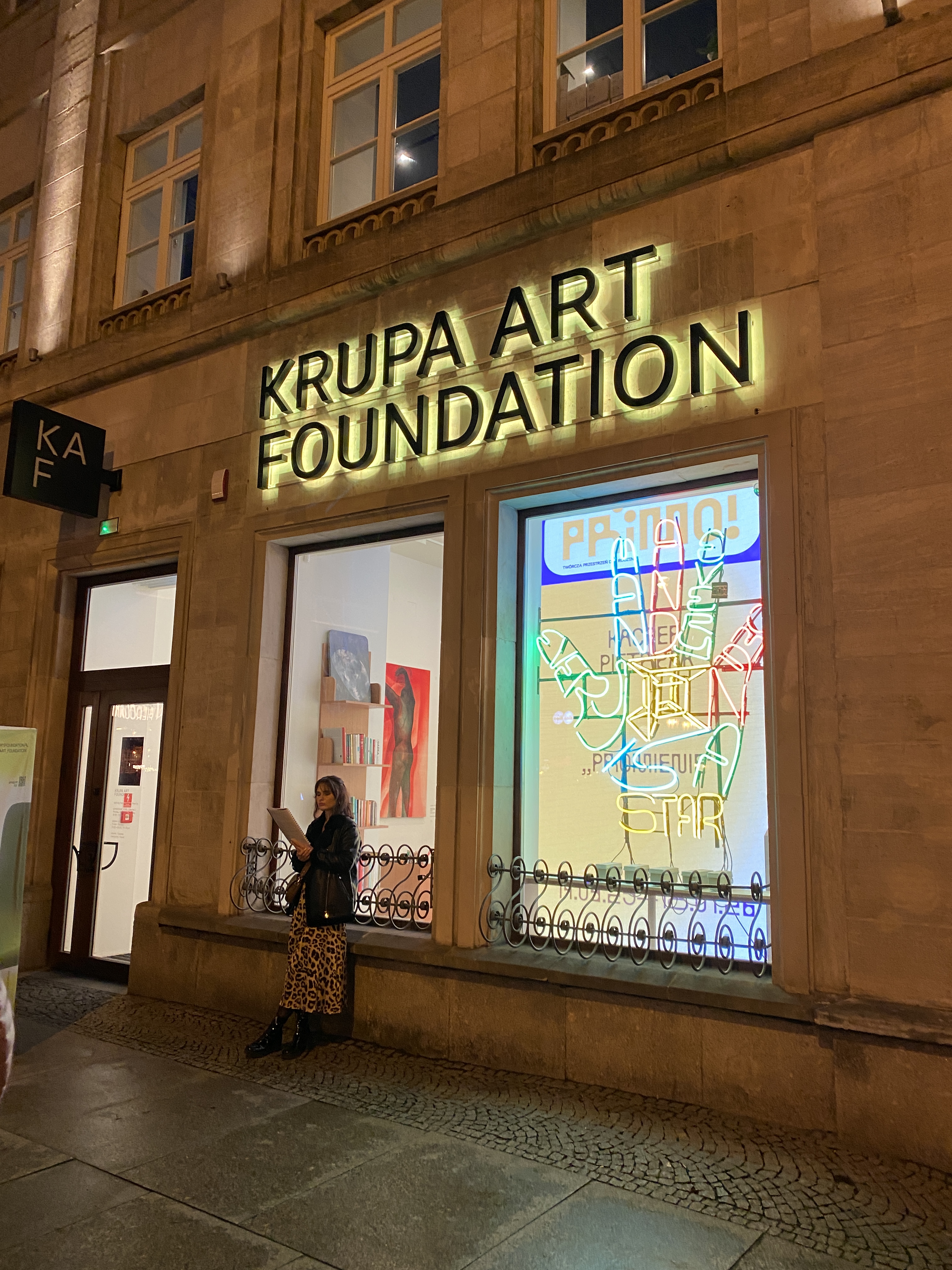
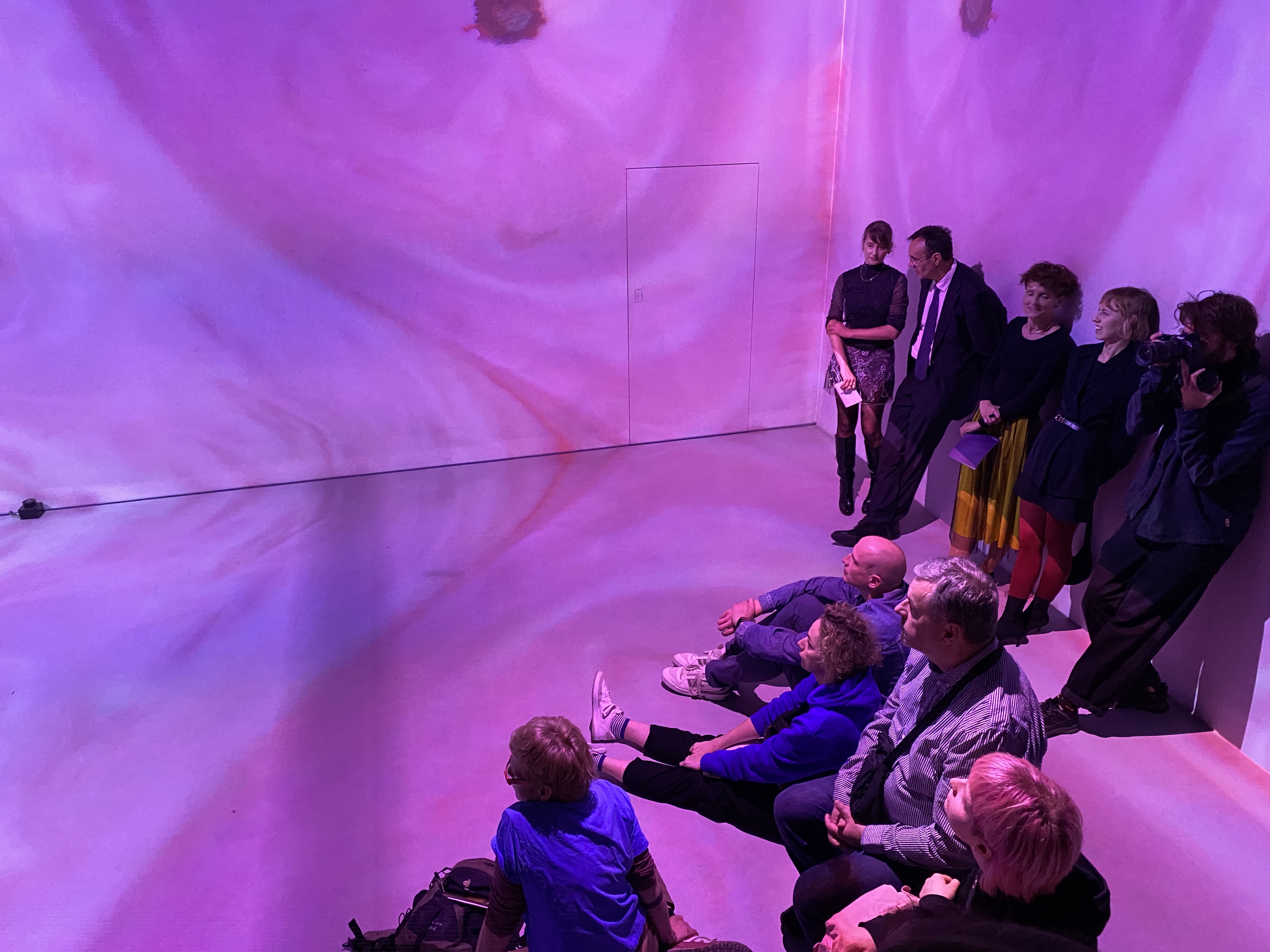
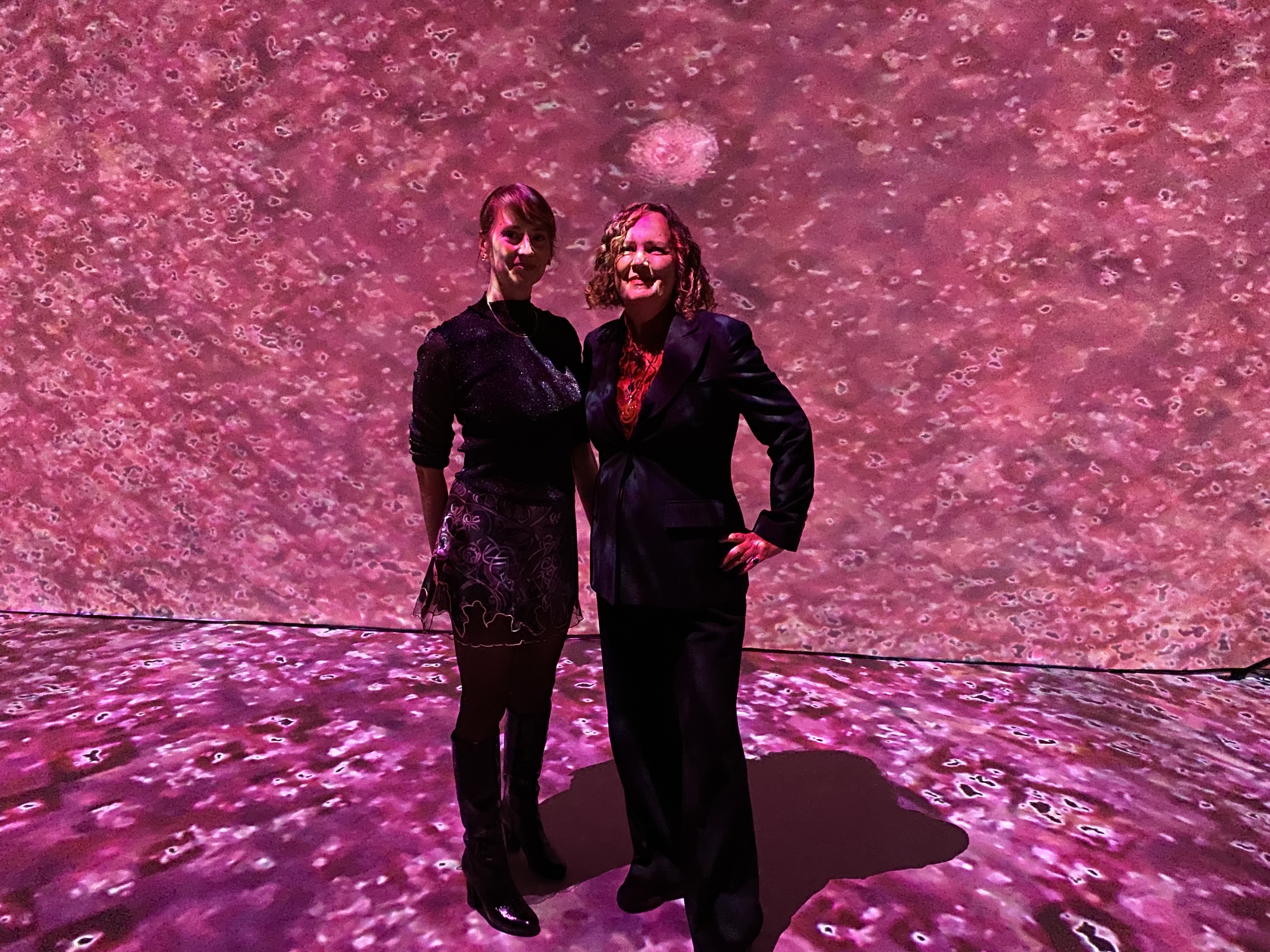
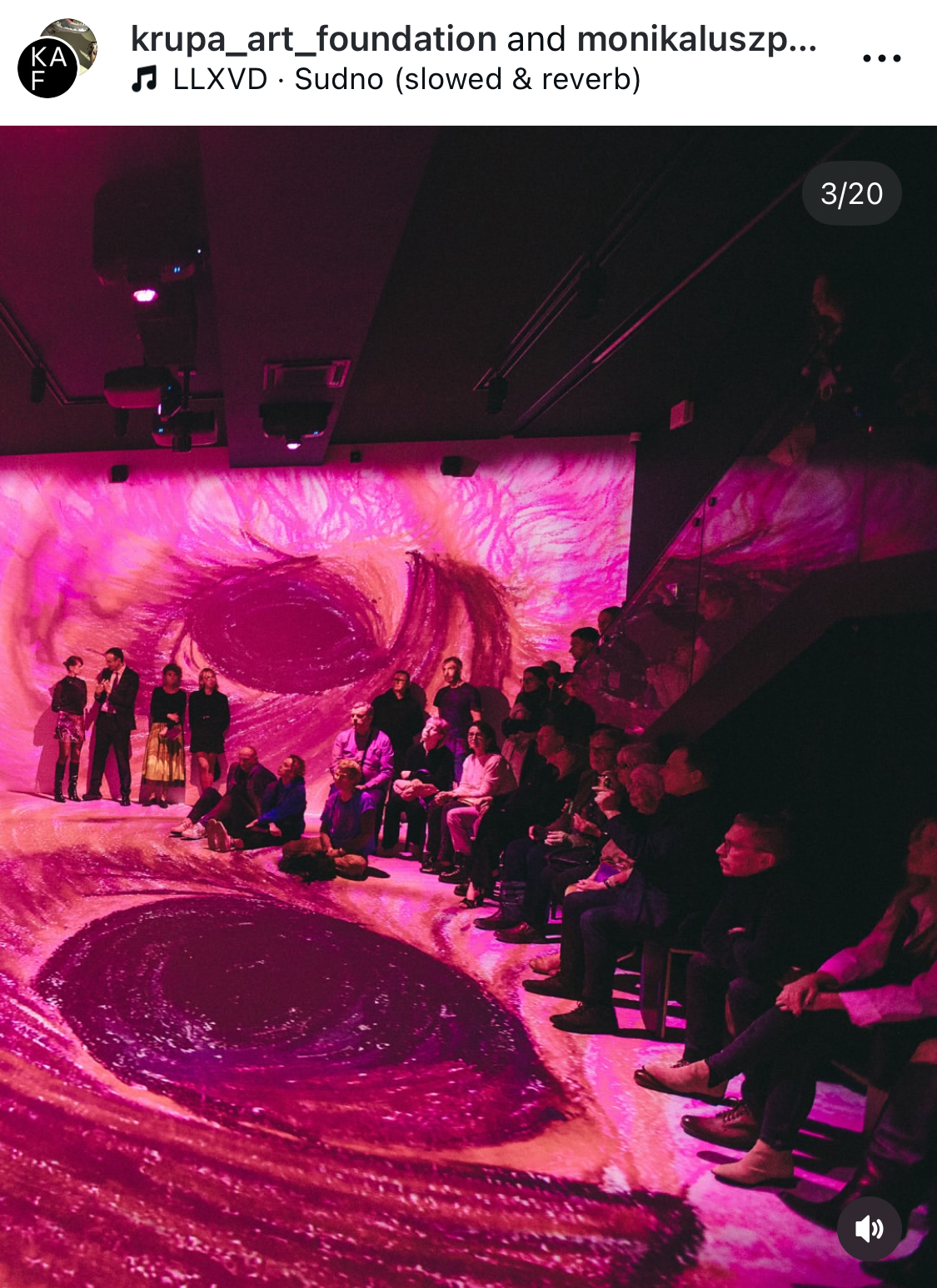
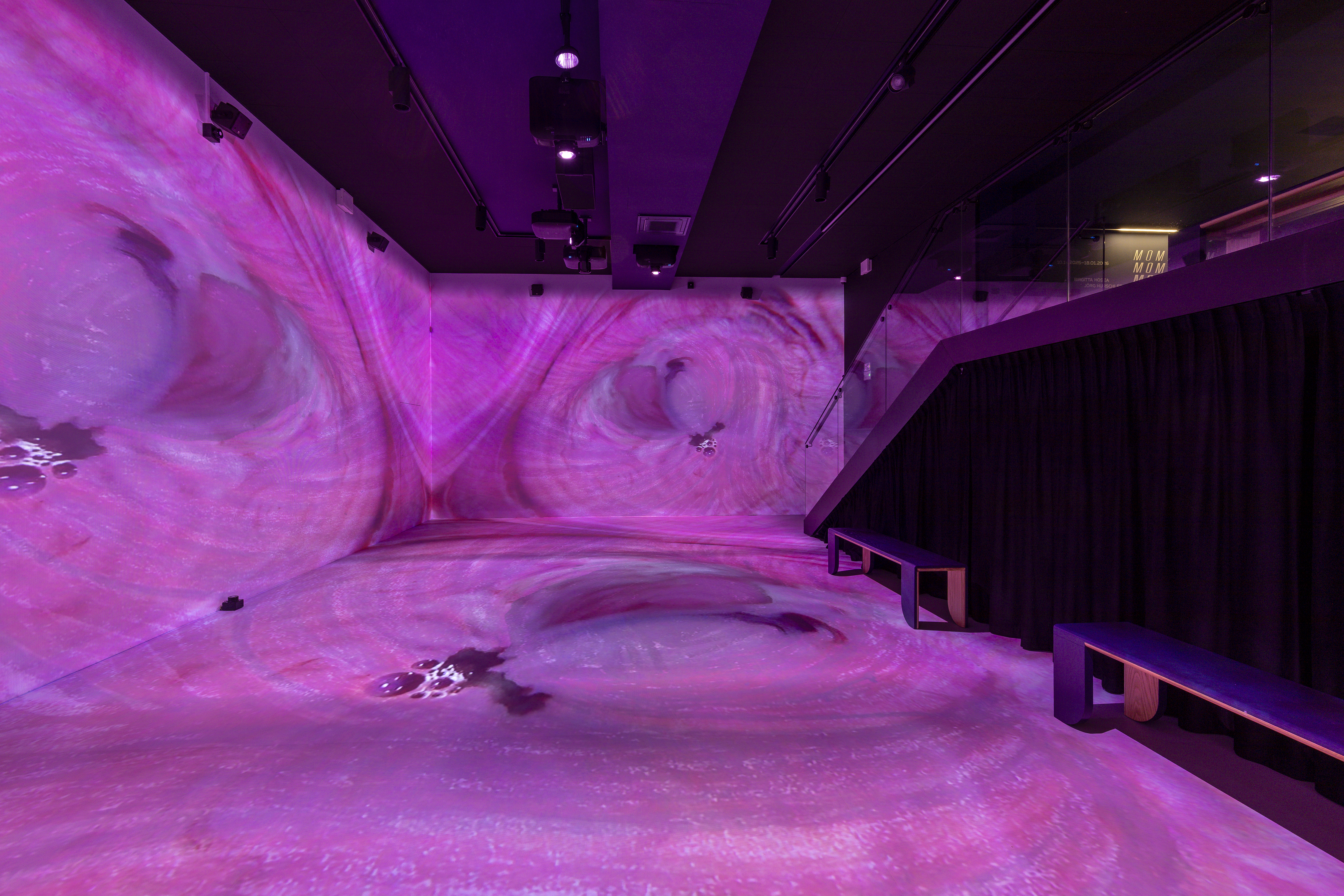
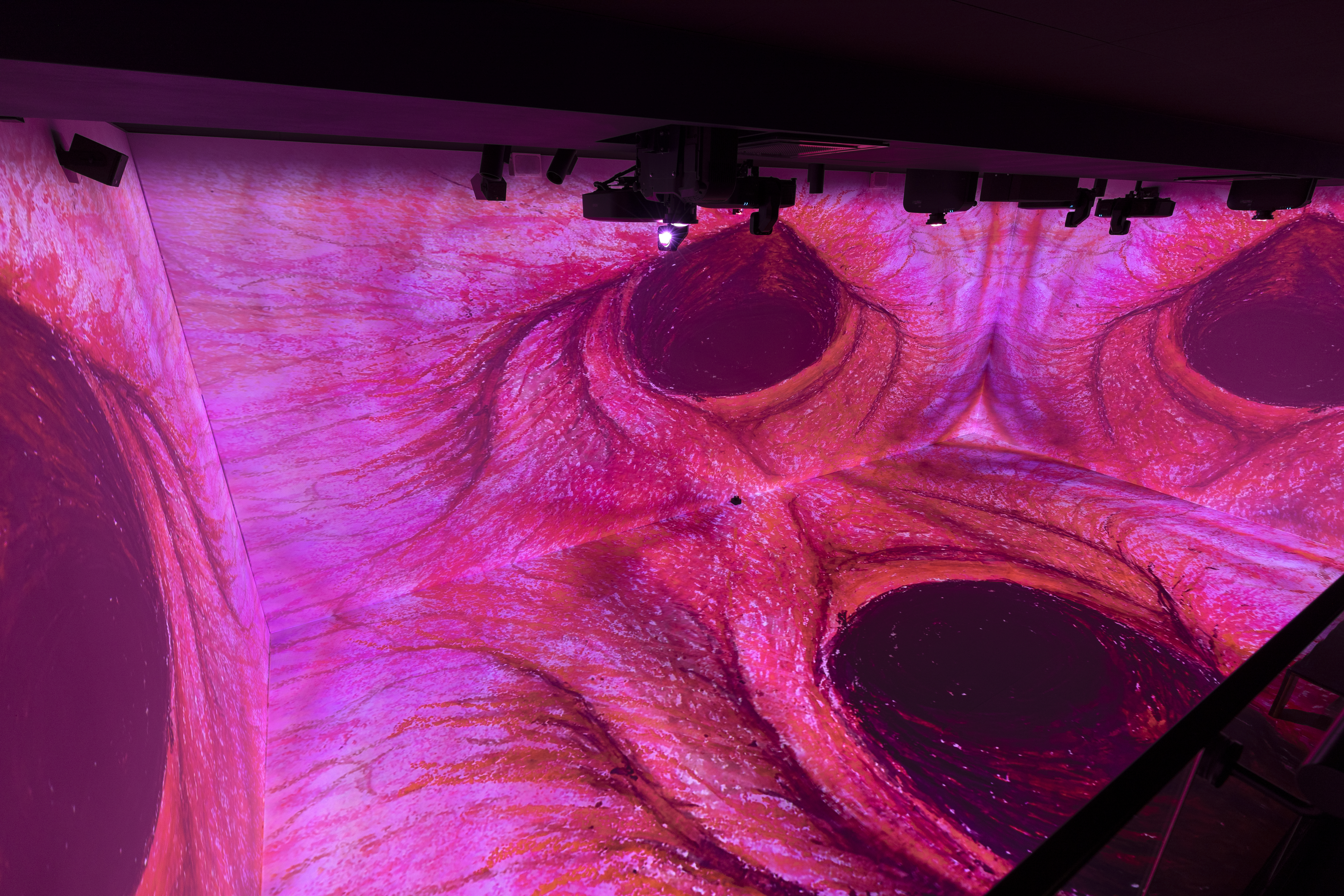
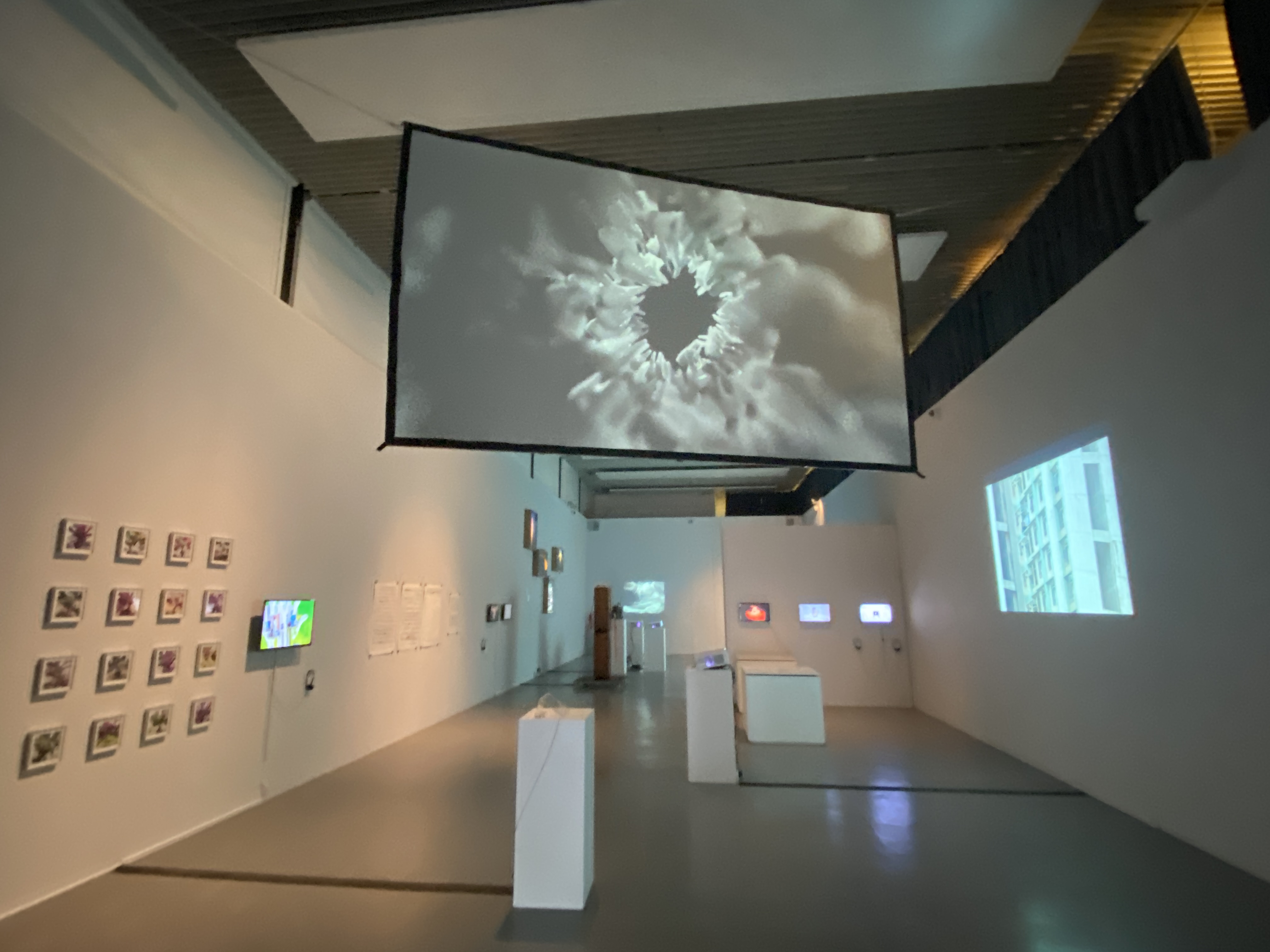
Originally conceived of as something to be voyeuristically peeped at through a peephole, Birgitta Hosea’sHoles has been re-engineered for the exhibition Momentum in the immersive space at Krupa Art Foundation, Wroclaw, Poland.
It has become a new experience, from something interior and hidden that you peep at through a small opening into another world, it has become exterior – a whole audiovisual world that you can walk into.
The artist said, ‘I really enjoyed how visitors explored the experience with their whole bodies and entered into the world of my film’.
The film was wrapped around three walls and the floor of the space.
Installation shots for Krupa Art Foundation by photographer Alicja Kielan:
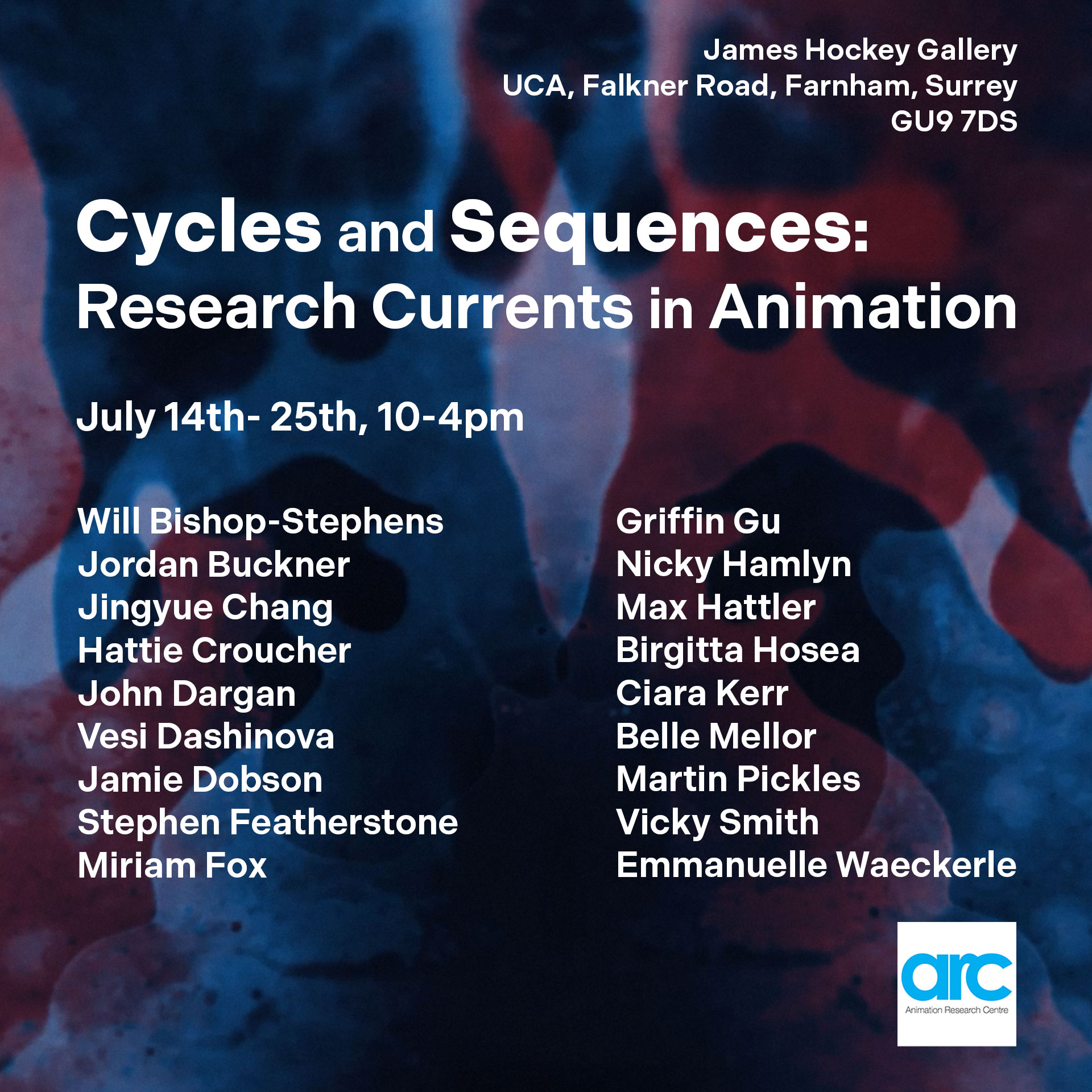
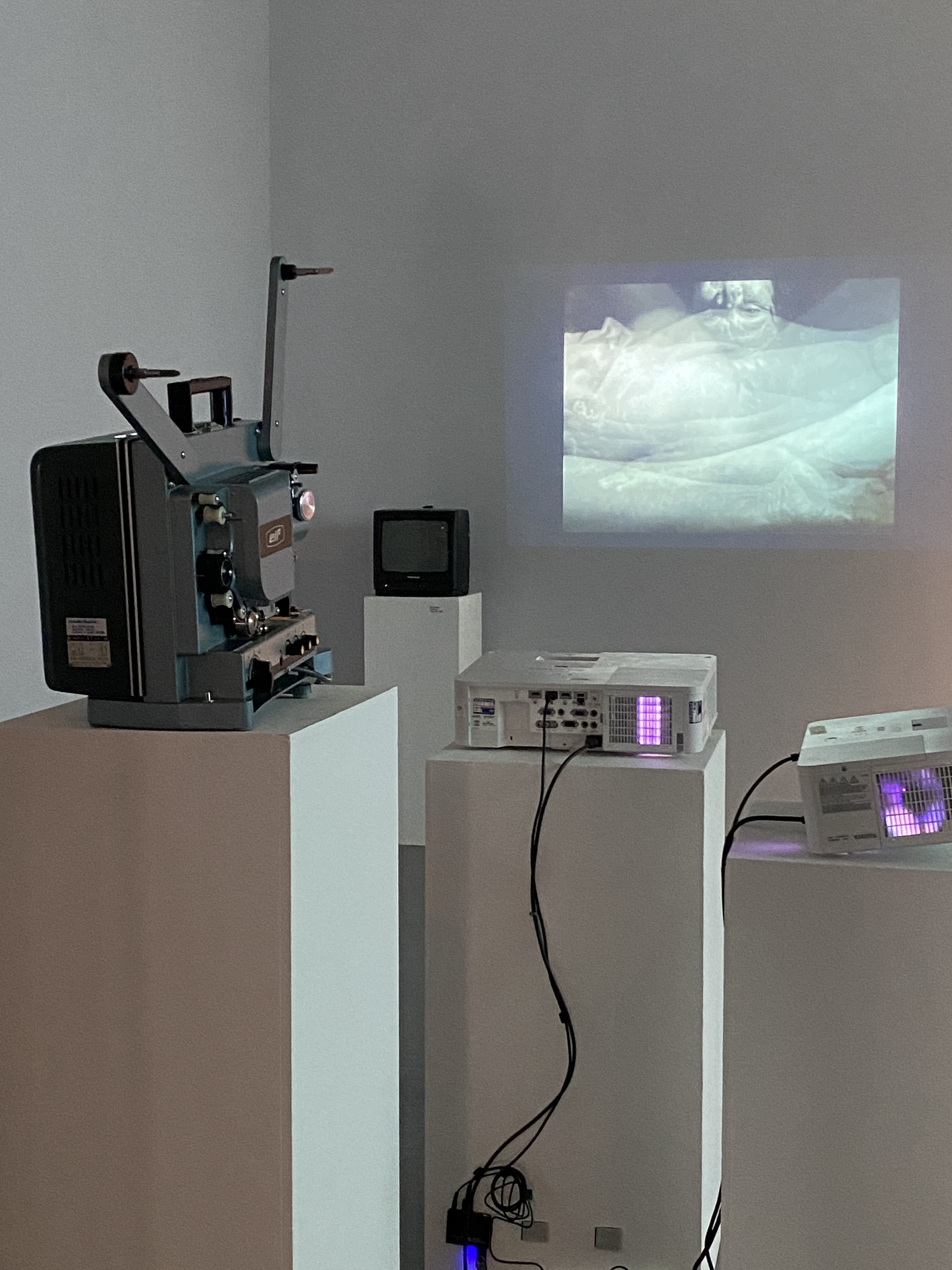
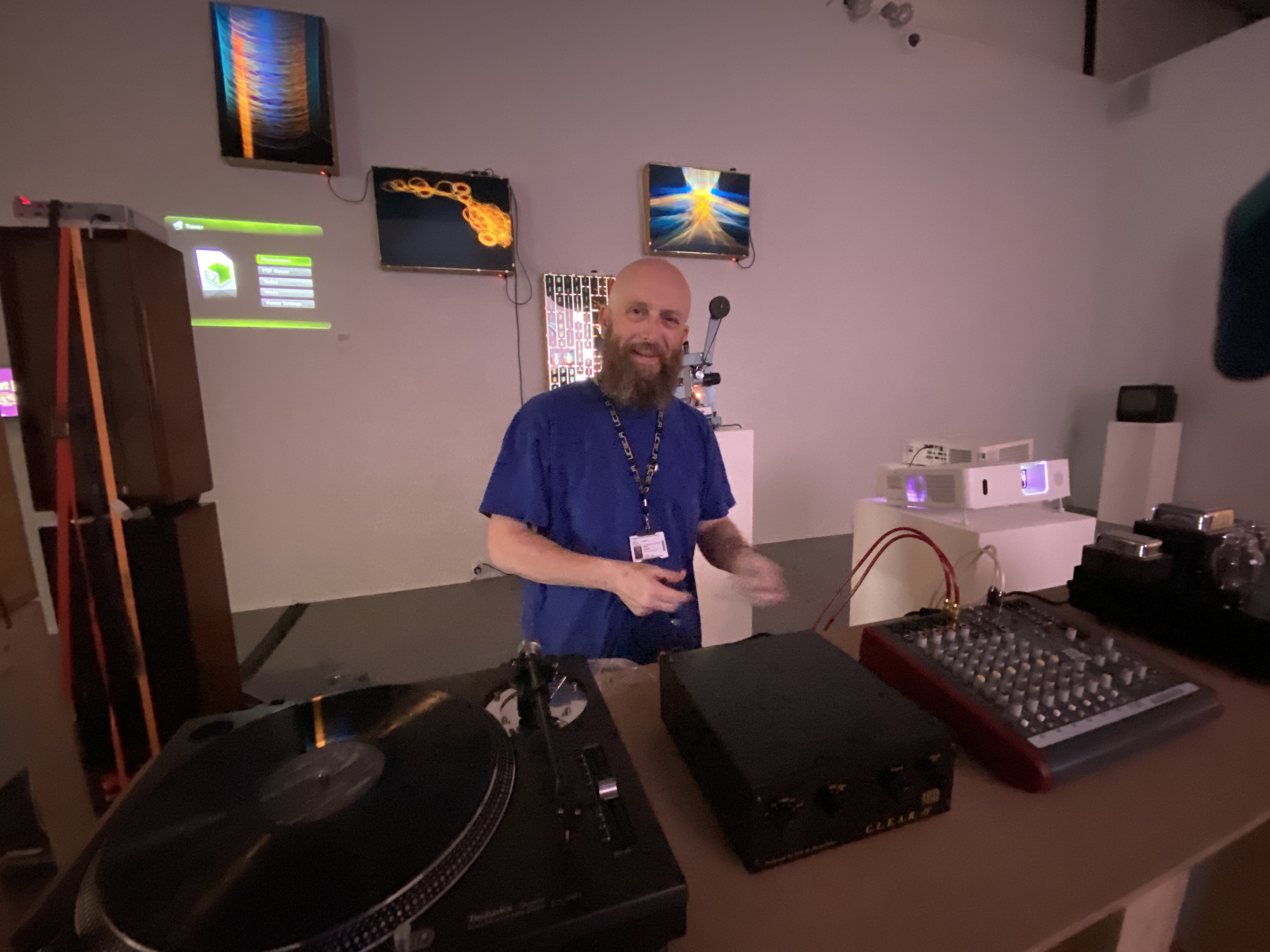
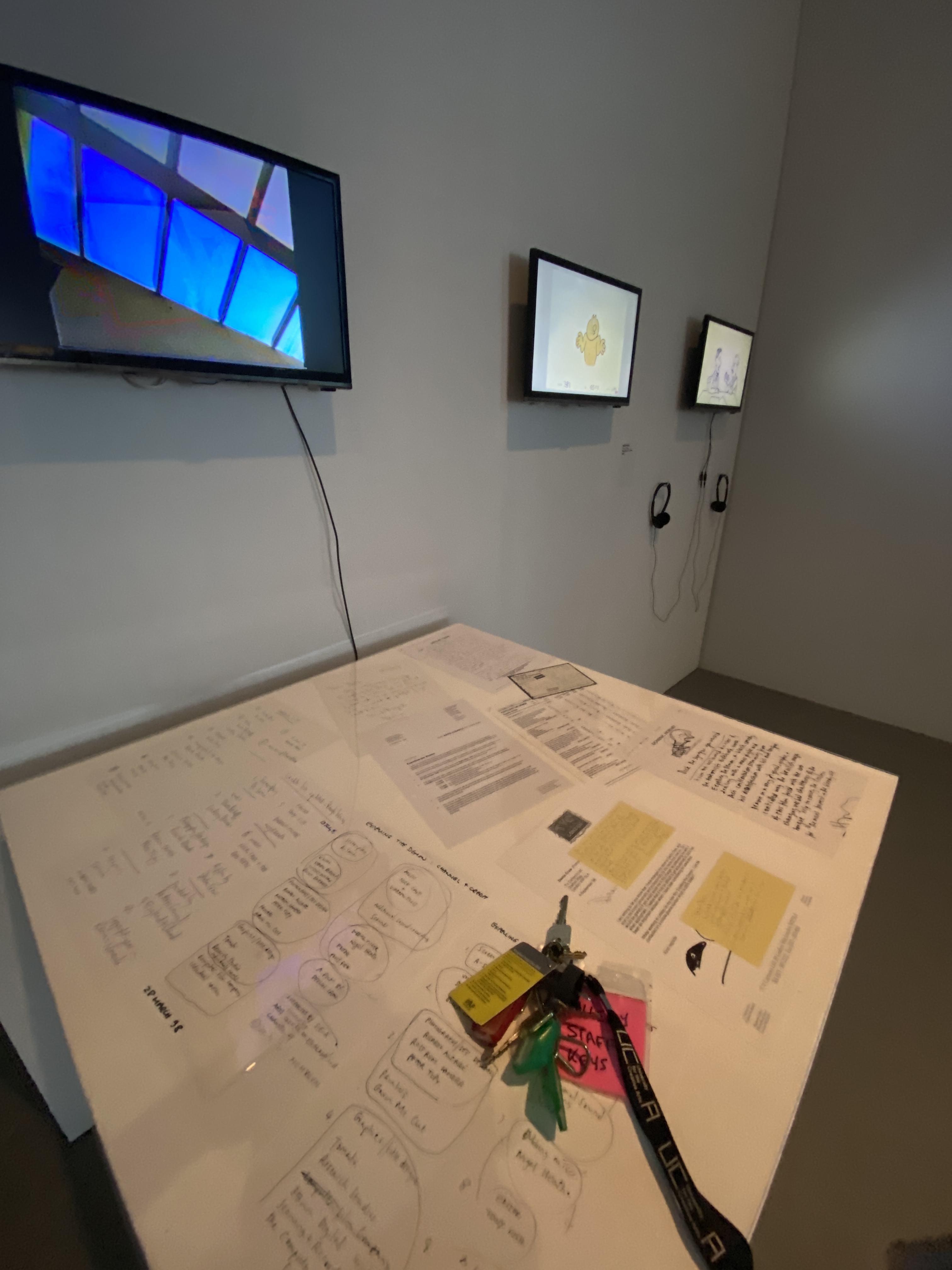
What is the cutting edge of animation? In July 2025, staff and PhD researchers from the Animation Research Centre at UCA came together to present Cycles and Sequences: Research Currents in Animation with interdisciplinary works of expanded animation that span the disciplines of animation, games, photography, design, illustration and music. Alongside installation, sequential drawings, animated documentary, experimental CGI, AI, animation machines and live 16mm performances were items from UCA’s animation archives.
Curated by Vicky Smith, Cycles and Sequences featured more than twenty different artworks on display in the James Hockey Gallery in Farnham along with a number of entirely new collaborations in expanded animation.
Artists: Will Bishop-Stephens, Jordan Buckner, Jingyue Chang, Hattie Croucher, John Dargan, Vesi Dashinova, Jamie Dobson, Stephen Featherstone, Miriam Fox, Griffin Gu, Nicky Hamlyn, Max Hattler, Birgitta Hosea, Ciara Kerr, Belle Mellor, Martin Pickles, Vicky Smith, Emmanuelle Waeckerle.
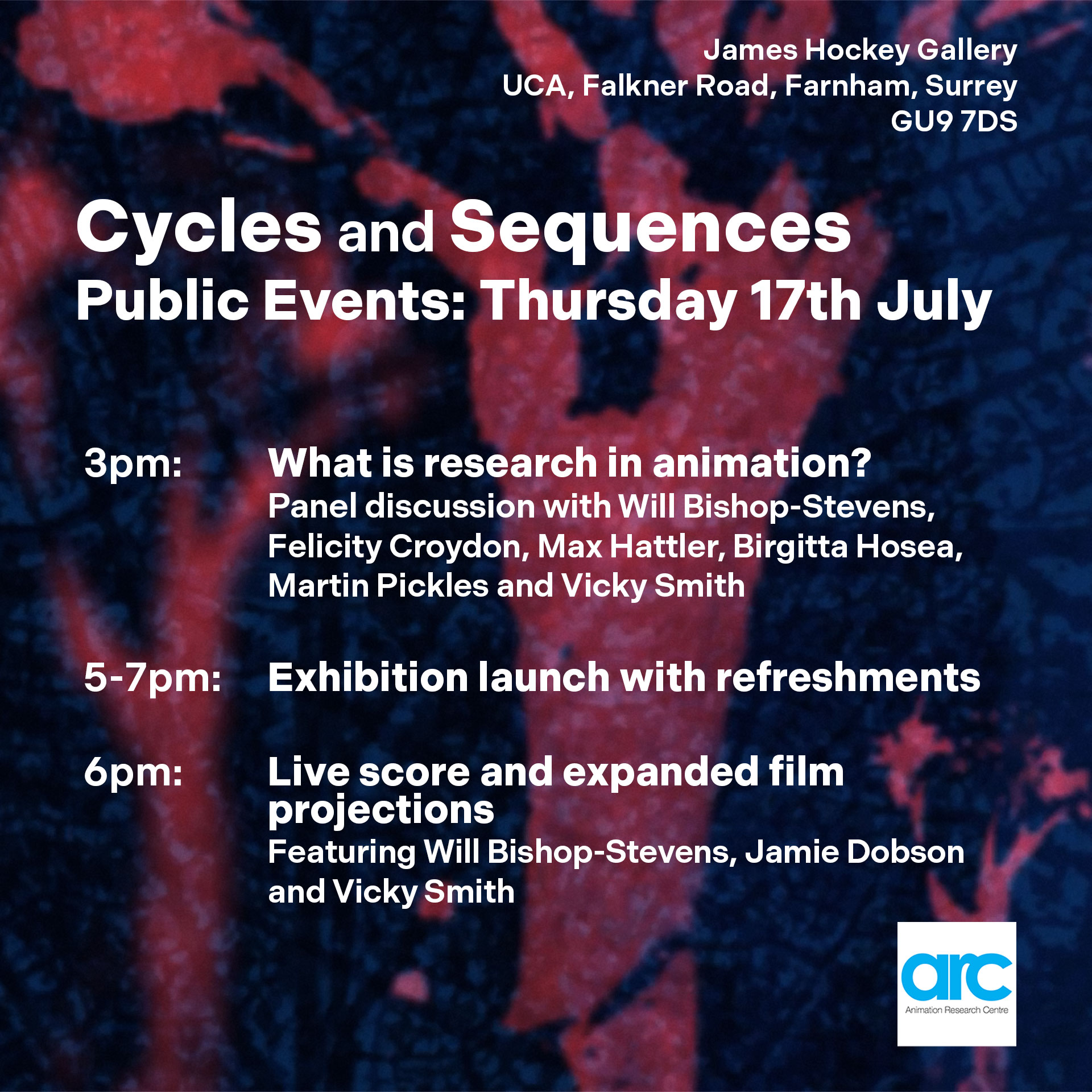
The events included live performances and a discussion panel on contemporary animation research featuring Will Bishop-Stephens, Max Hattler, Birgitta Hosea, Irene Kotlarz, Martin Pickles and Vicky Smith.
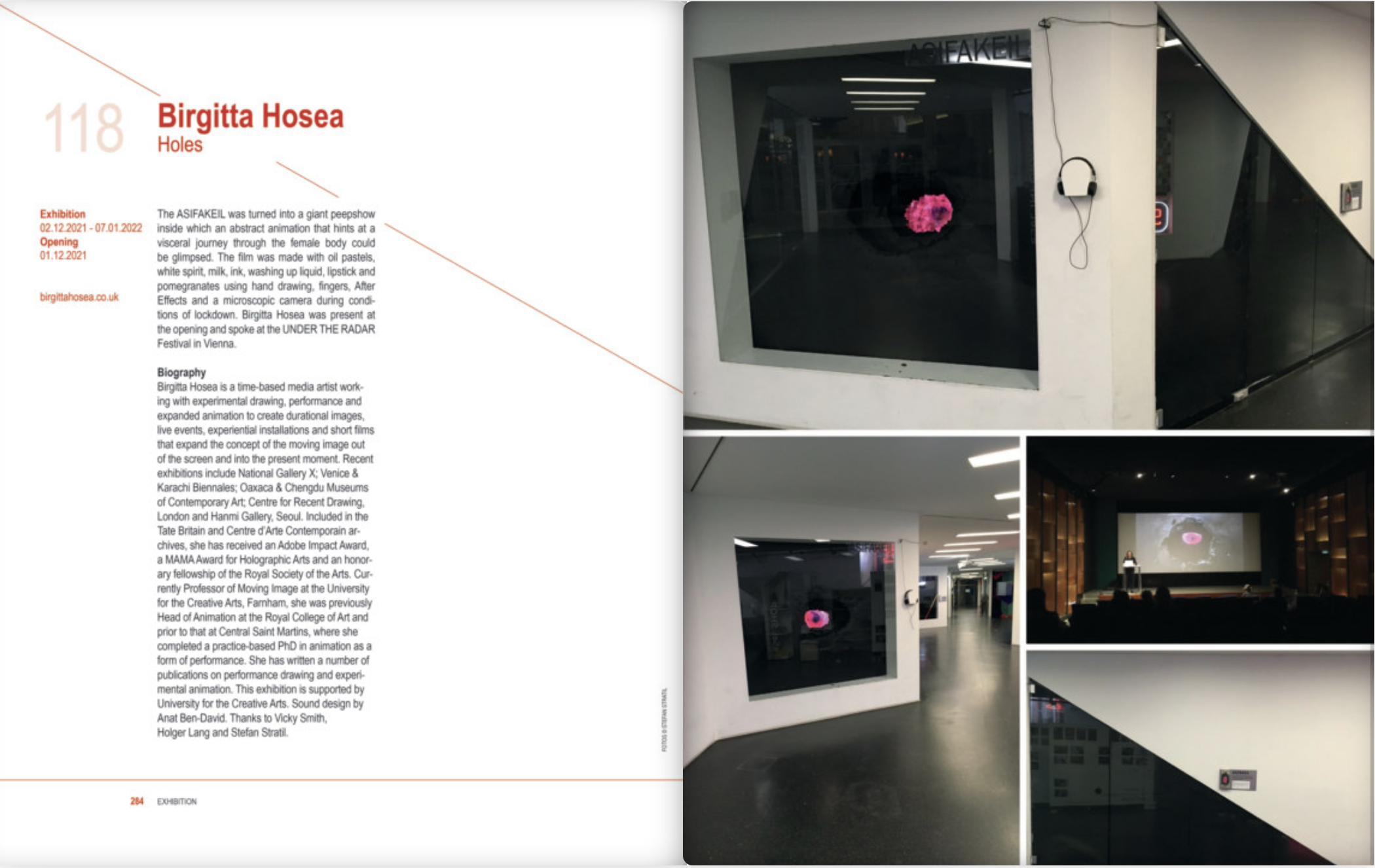
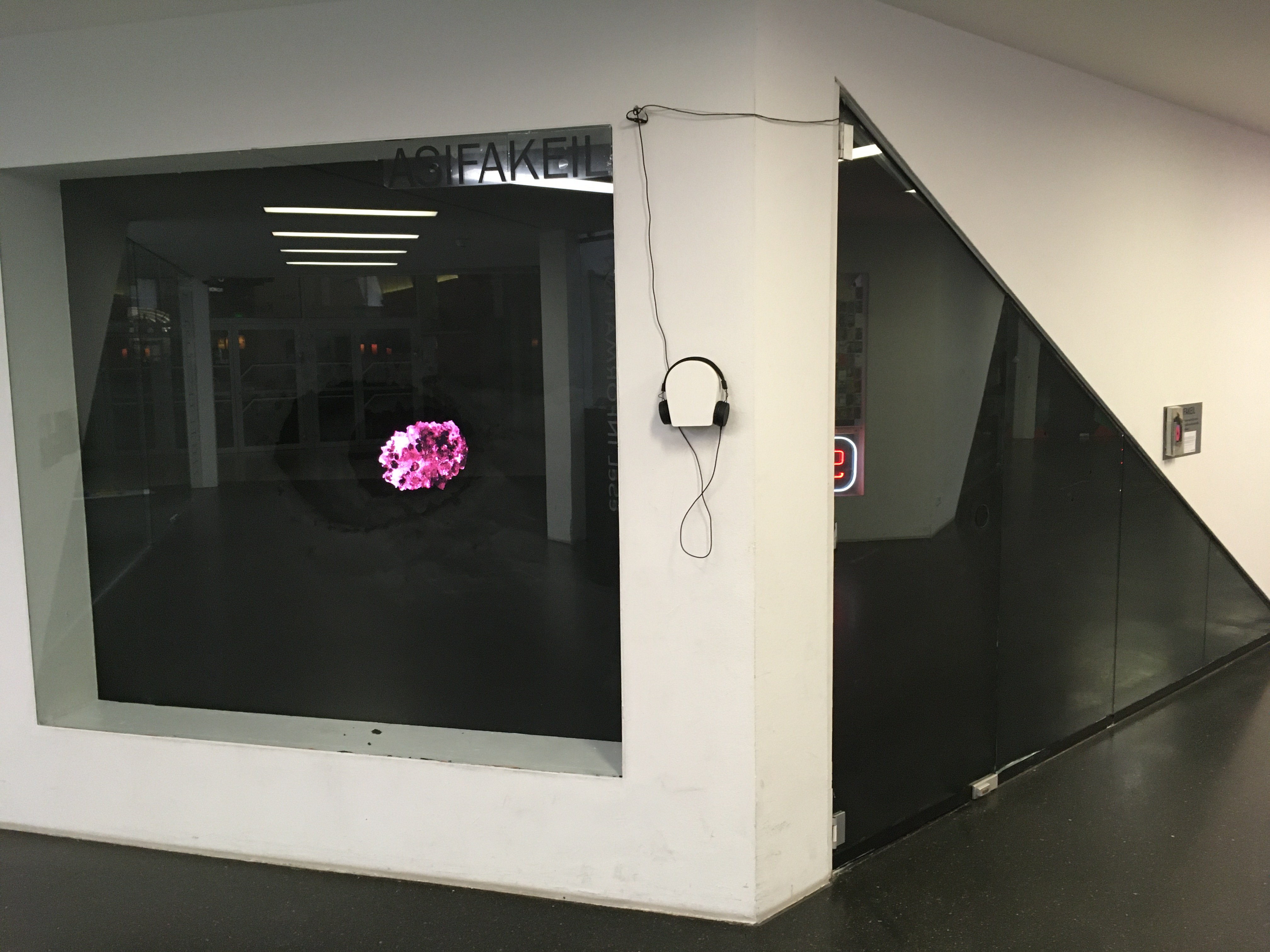
An English language catalogue for the ASIFAKEIL gallery in Vienna has now come out in English. ASIFA Austria has organised over 130 exhibitions of animated installation at their gallery in the Museum Quarter in Vienna. Animating Art is edited by Stefan Stratil and Holger Lang and features scholarly essays by media theorists, artists and curators alongside documentation of the different exhibitions that have taken place there.
Features an essay by Birgitta Hosea on ‘Perambulatory Perception’ and documentation of her first exhibition of Holes.
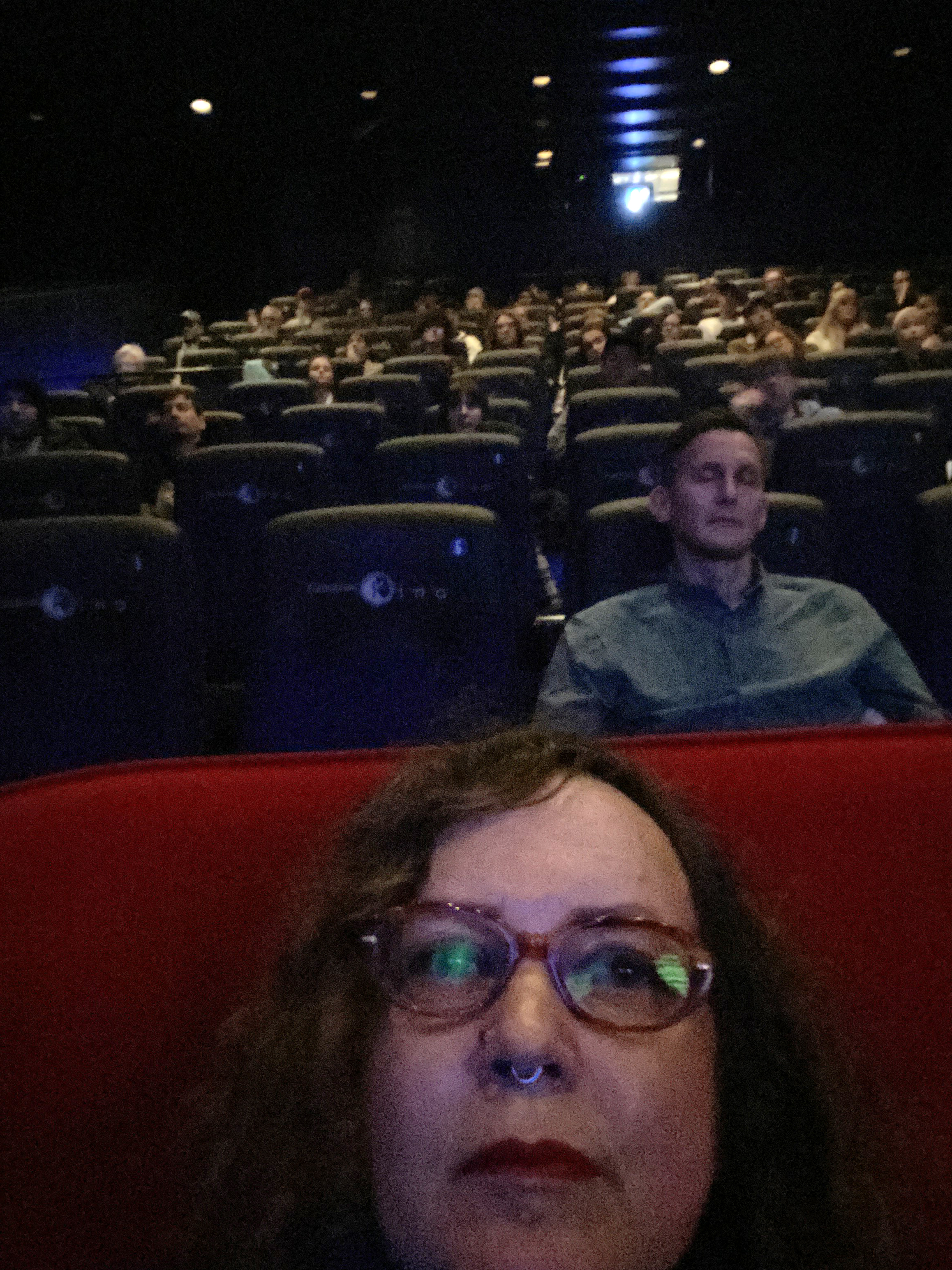
The Visual Music programme at Fredrikstad Animation Festival 2024 was curated by Trygve Signes Nielsen and featured presentations at the Fredrikstad Kino and performances by Will Bishops-Stephens, Derek Holzer, Eilif Hensvold, Birgitta Hosea and Trygve Signes Nielsen.
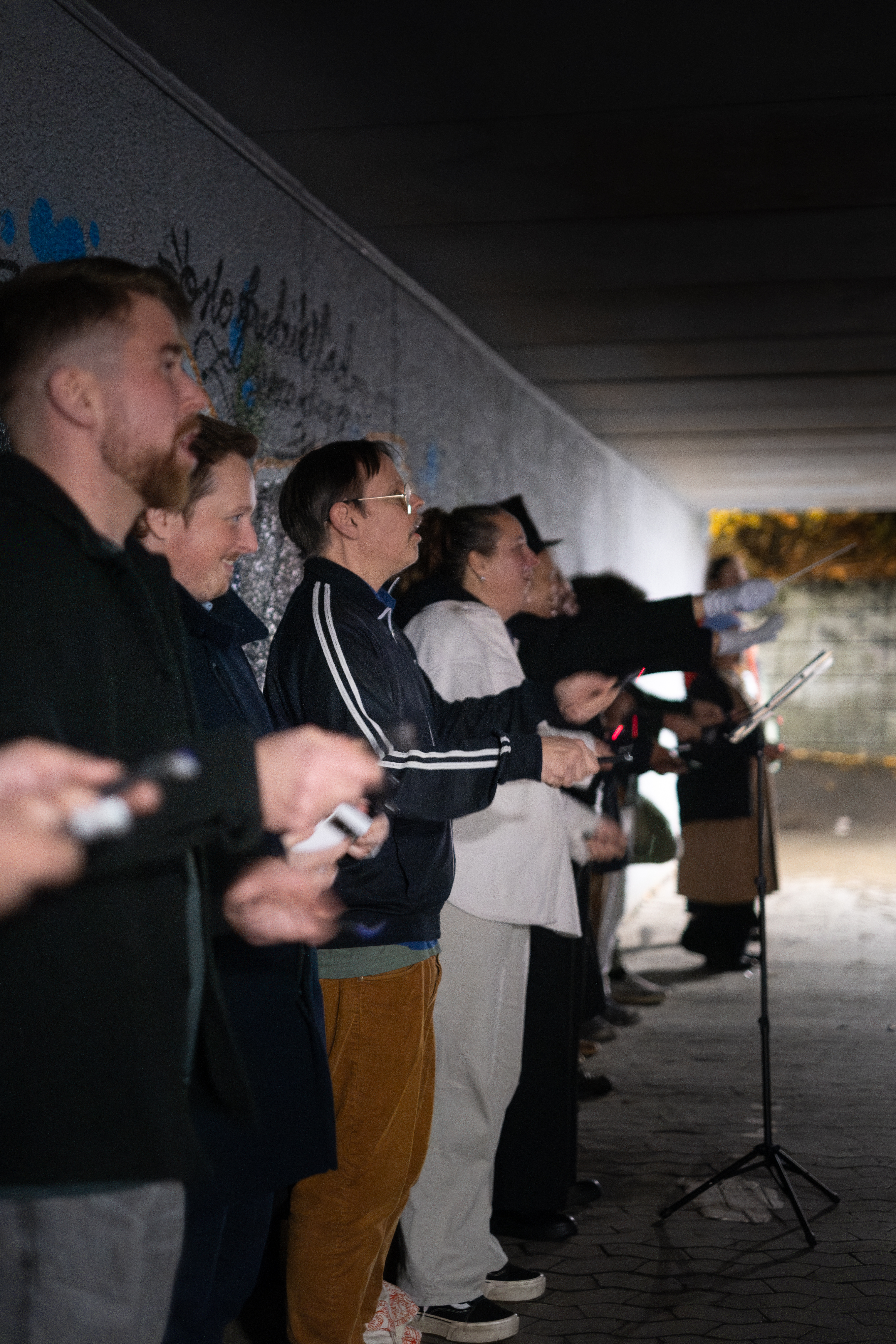
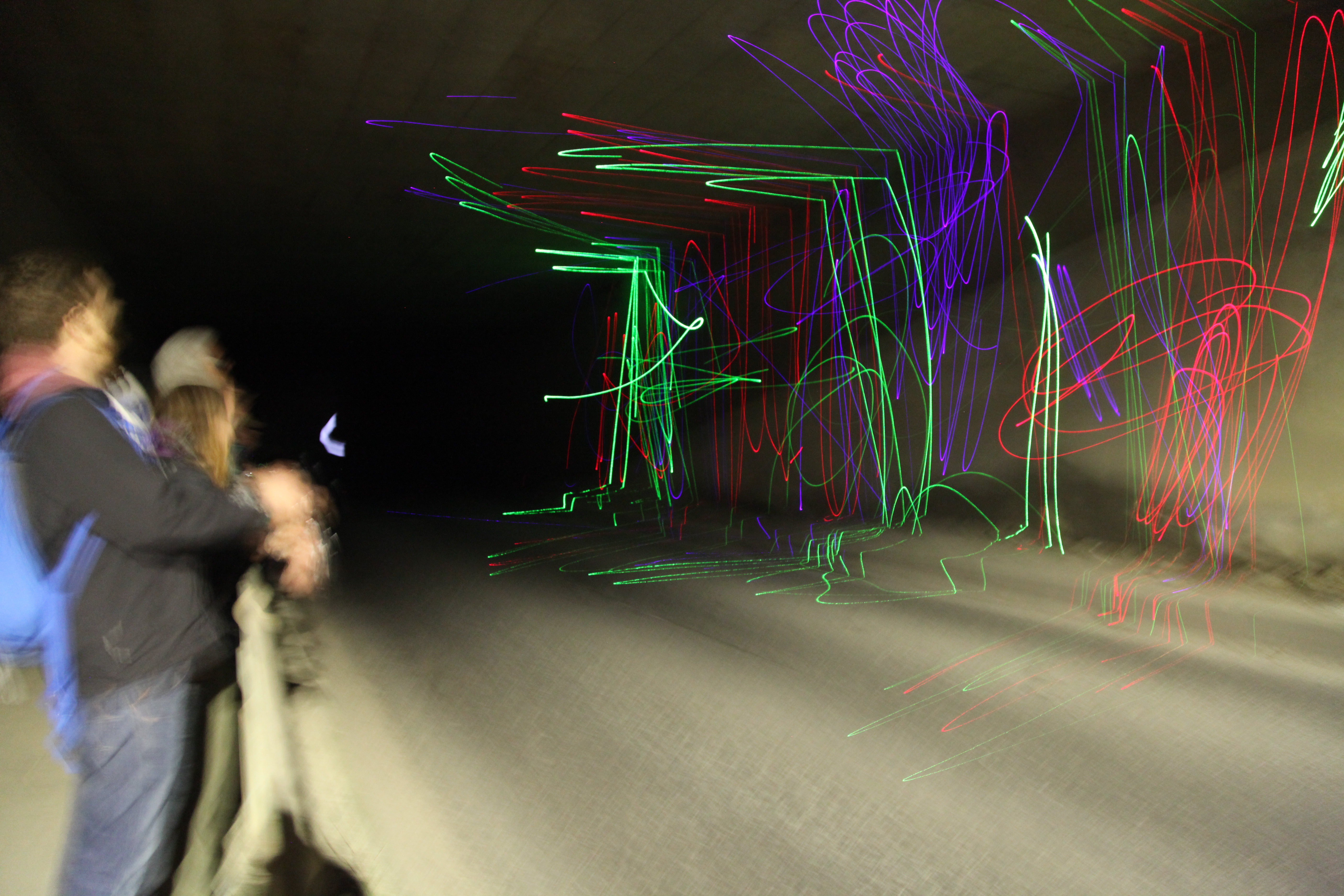
Birgitta Hosea orchestrated new performances of dotdot dash in the pedestrian underpass beside St Croix Kultur Huset. dotdot dashis a concert of visual music conducted by Birgitta Hosea, but made by the audience with laser pens and their own voices. This participatory, site-specific art work uses communal, collective action to reclaim the urban landscape at night. Coming together in a choral collaboration, participants are directed to explore the mark making possibilities of creating graffiti with light and to experience the power of their own voices. The performance is orchestrated by Hosea from a chance-based score made through walking with paint-covered feet over musical paper.
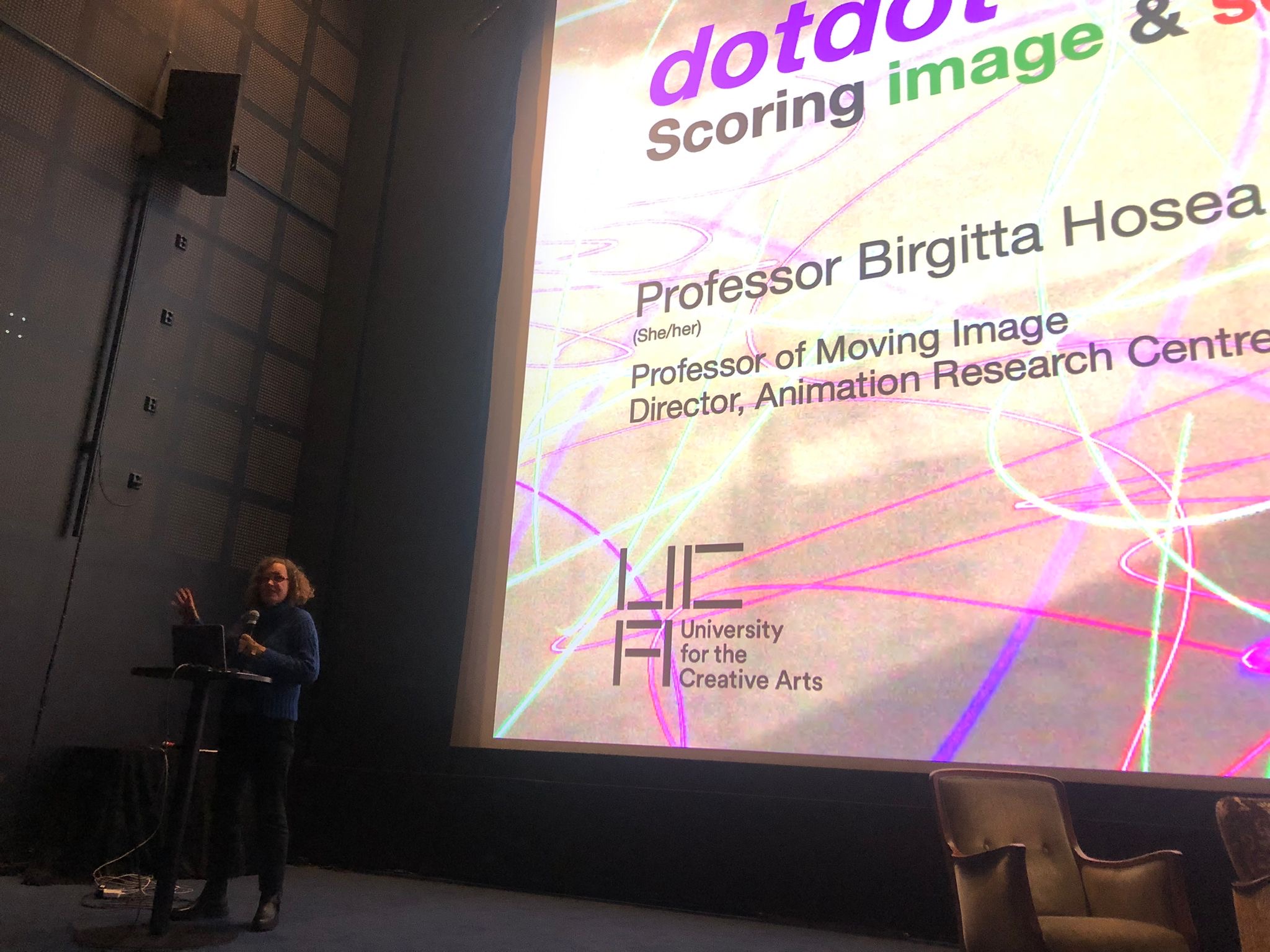
Her presentation at the Fredrikstad Kino explained all the ideas behind the work, including the influence of John Cage, experimental music notation, the research behind the Performance Drawing: New Practices Since 1945 book and the InspiralLondon collective.
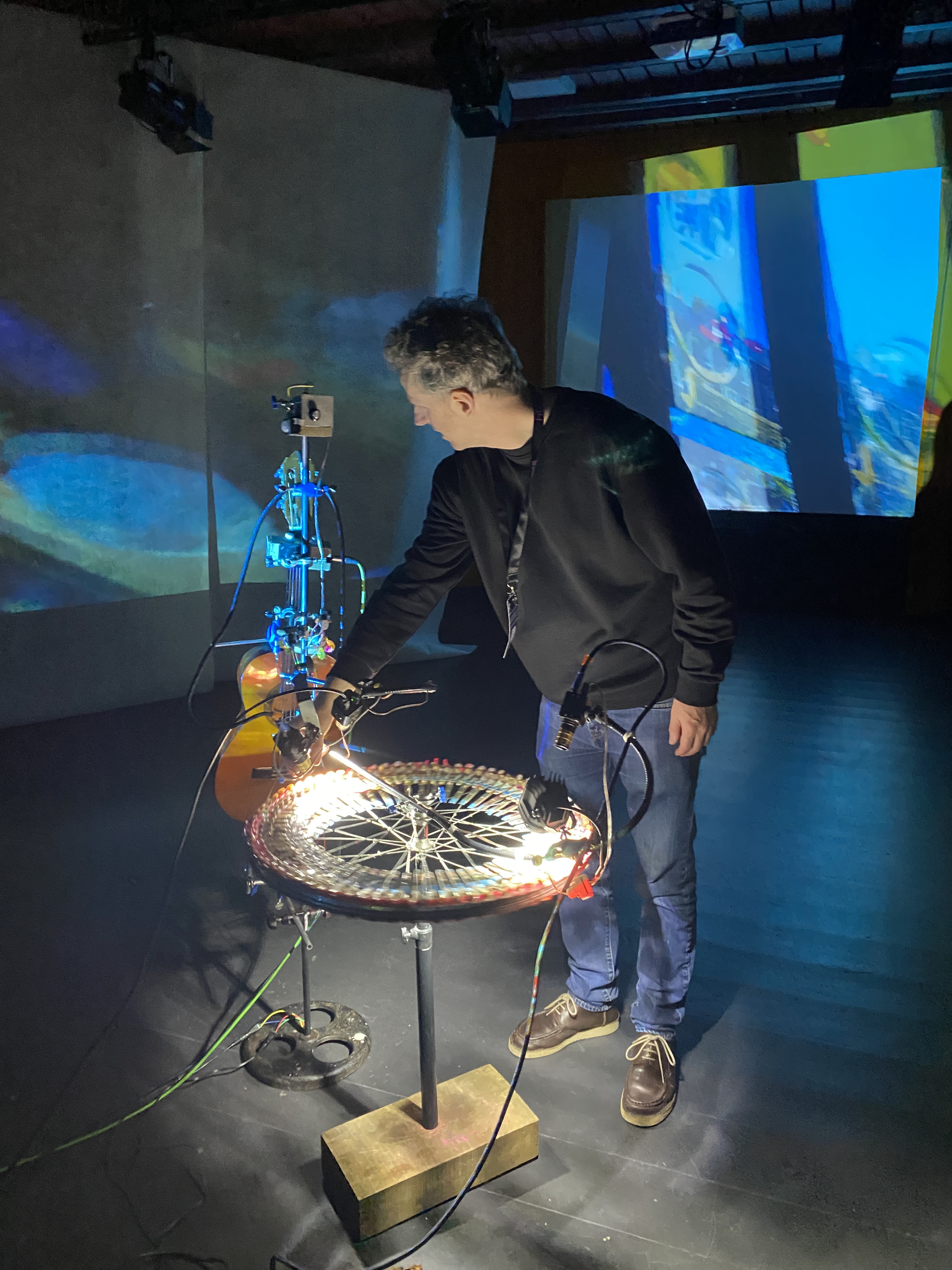
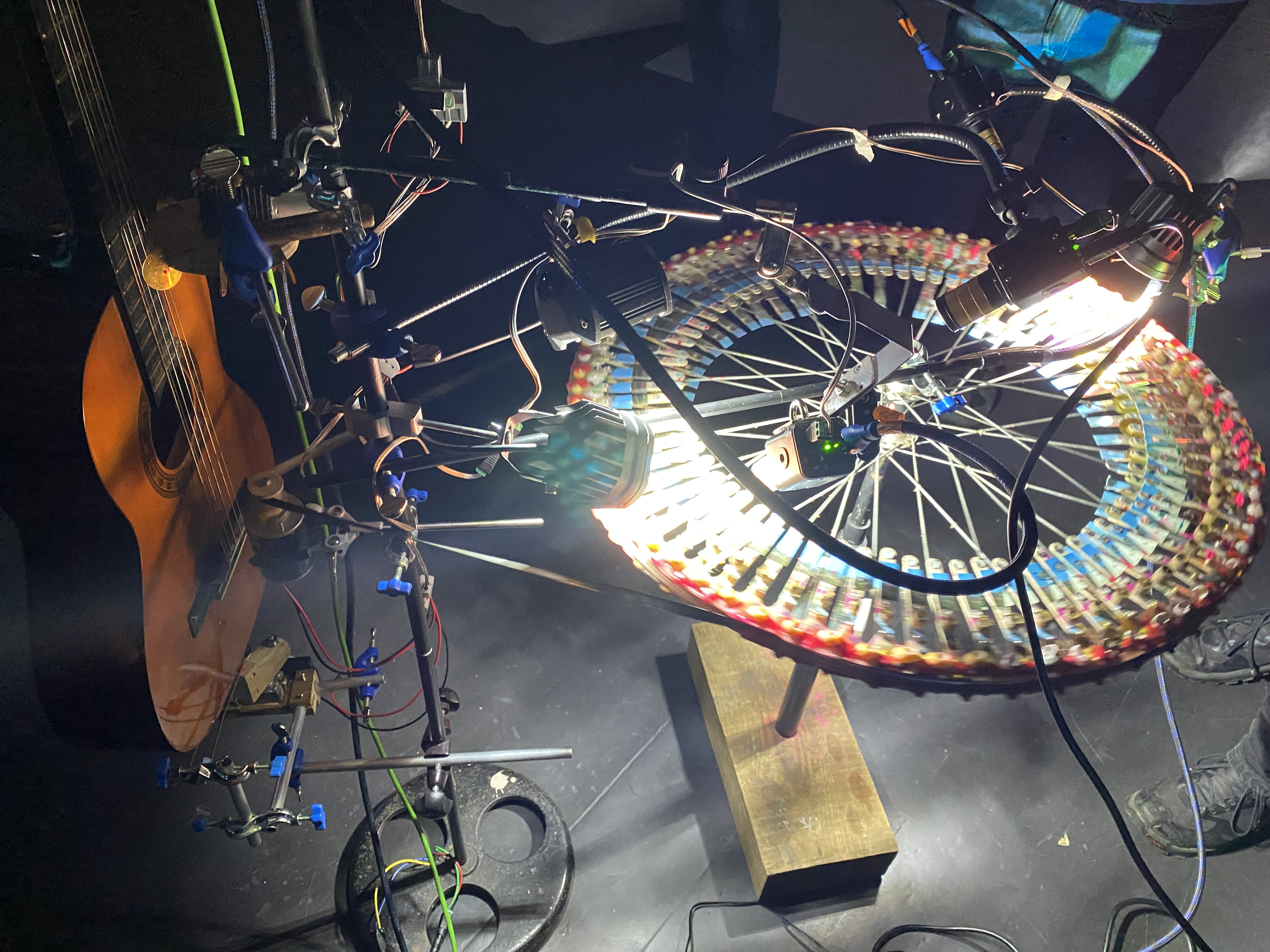
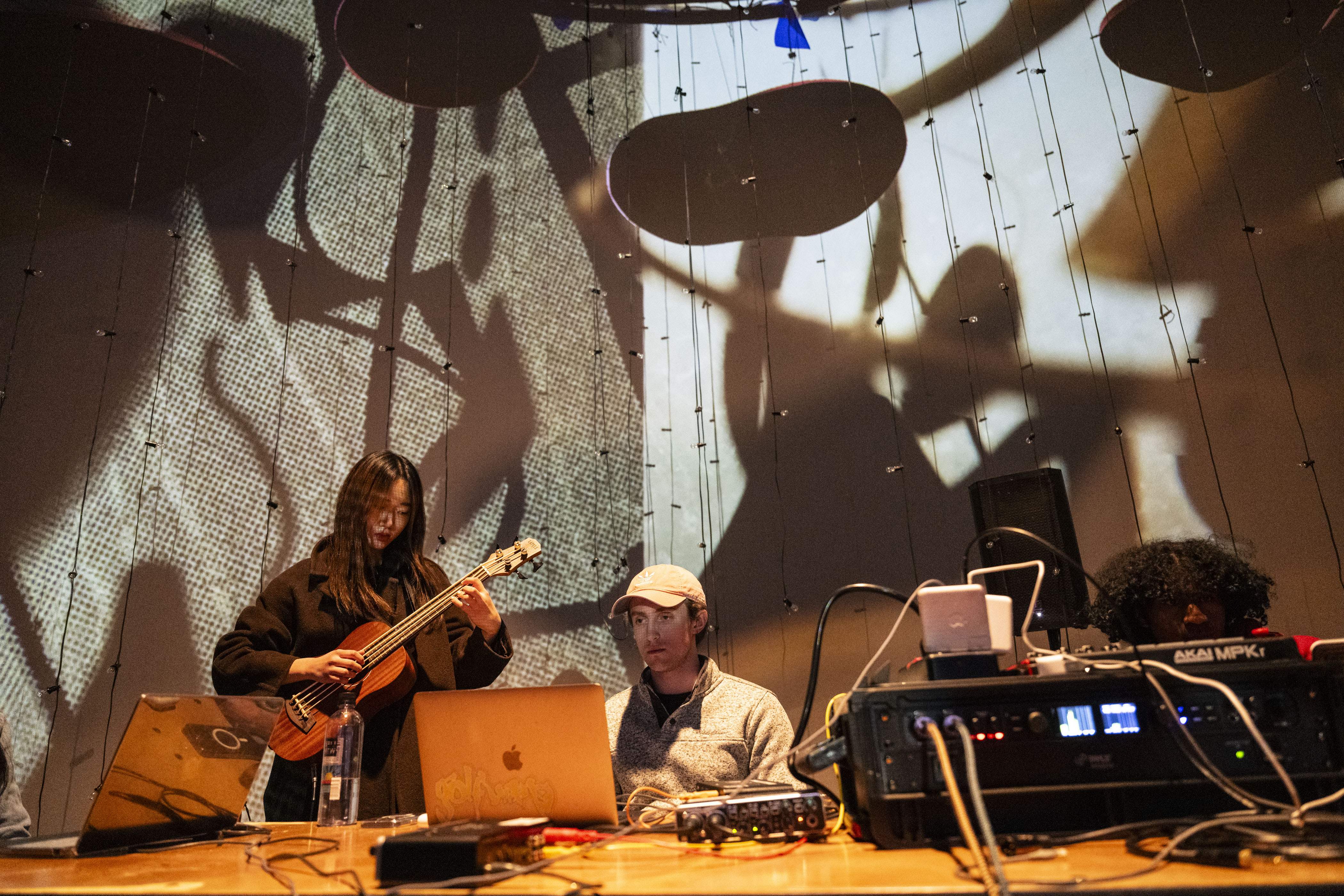
Will Bishops-Stephens also talked about Thrum, his incredible series of animating and guitar playing machines. A live performance installation was exhibited in St Croix House. Thanks to the University for the Arts London for supporting the transportation of all his equipment from the UK. He got it all packed up to fit on the airplane!
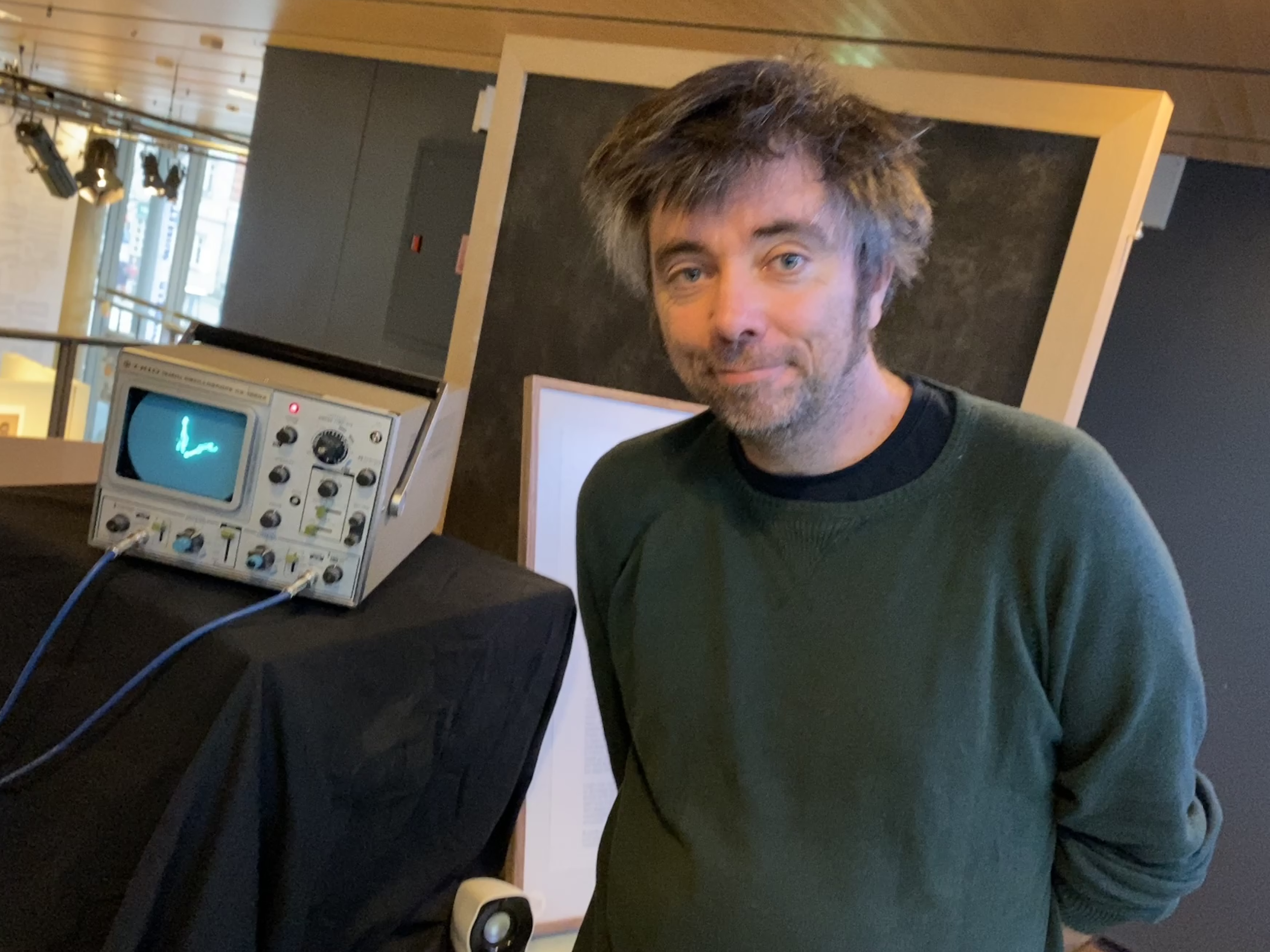
Trygve Signes Nielsen talked about his research into drawn sound and oscilloscopes. He had an exhibition in the Kino of his oscilloscope drawings and his speculative design fiction speculations on visual music making systems. On the Friday evening he performed live with Eilif Hensvold to create oscilloscope images.
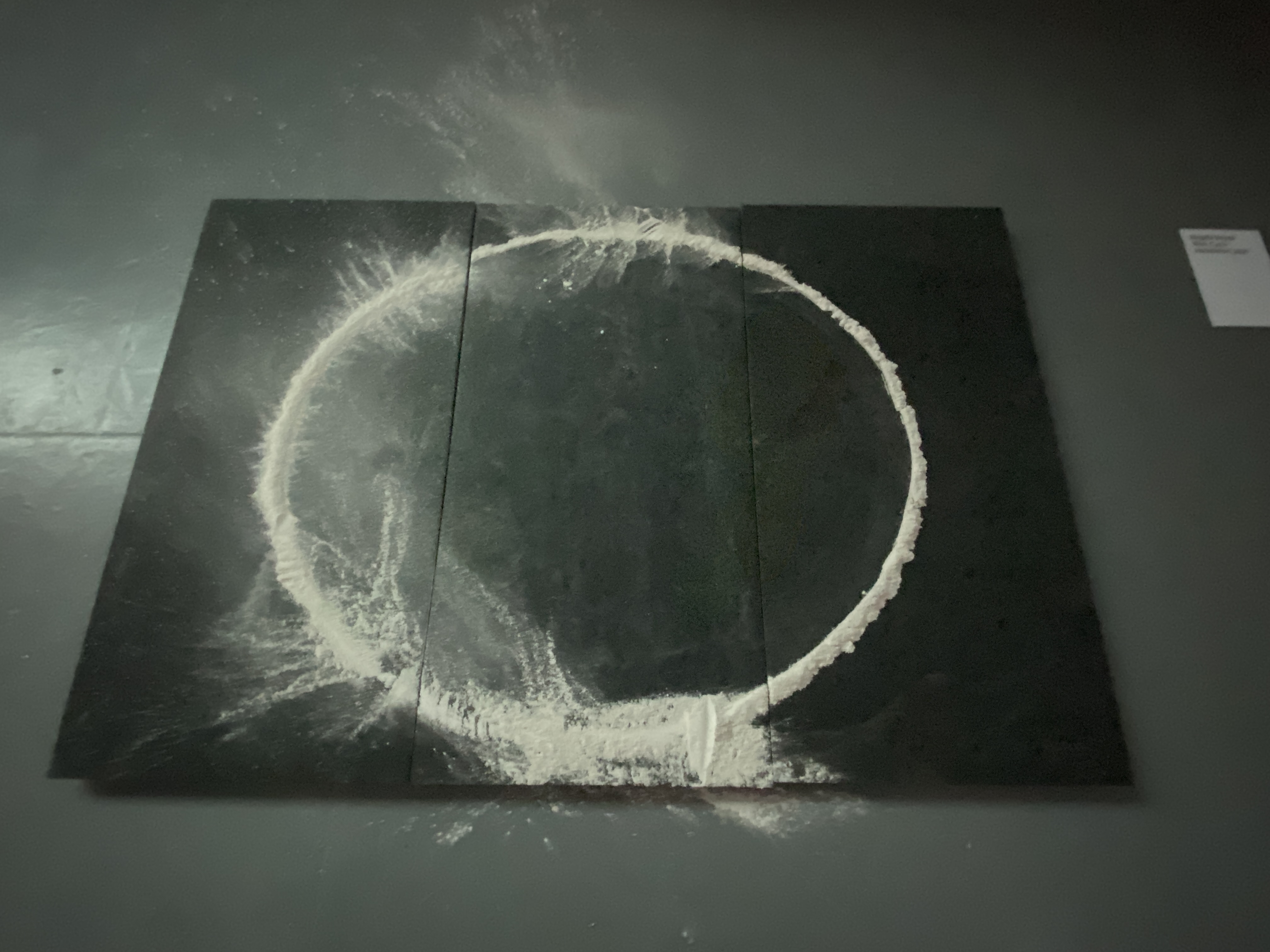
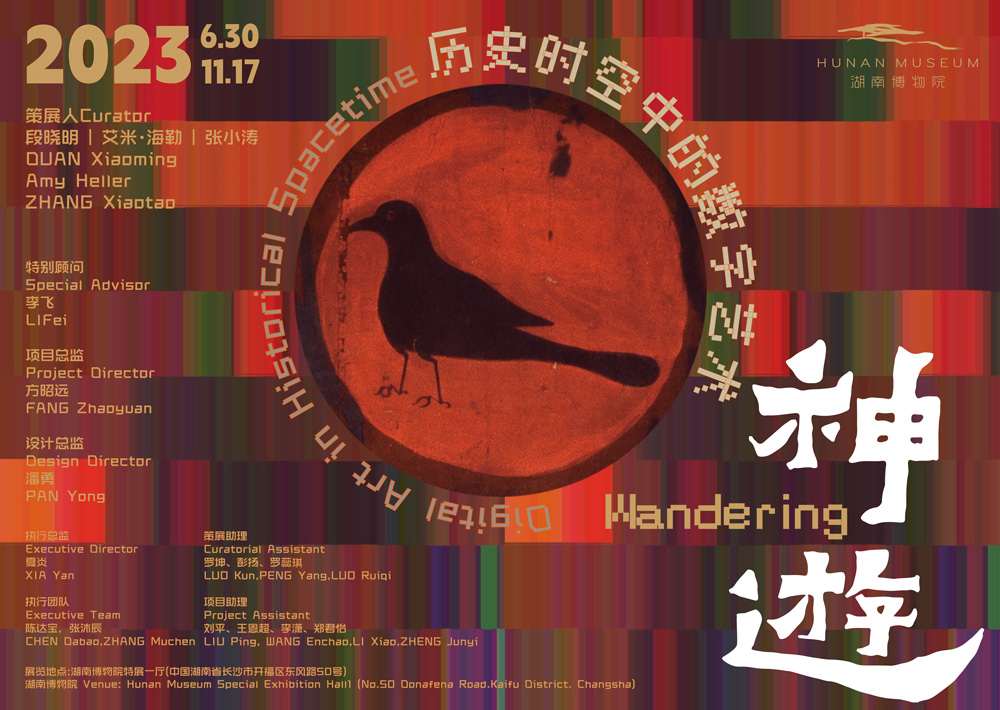
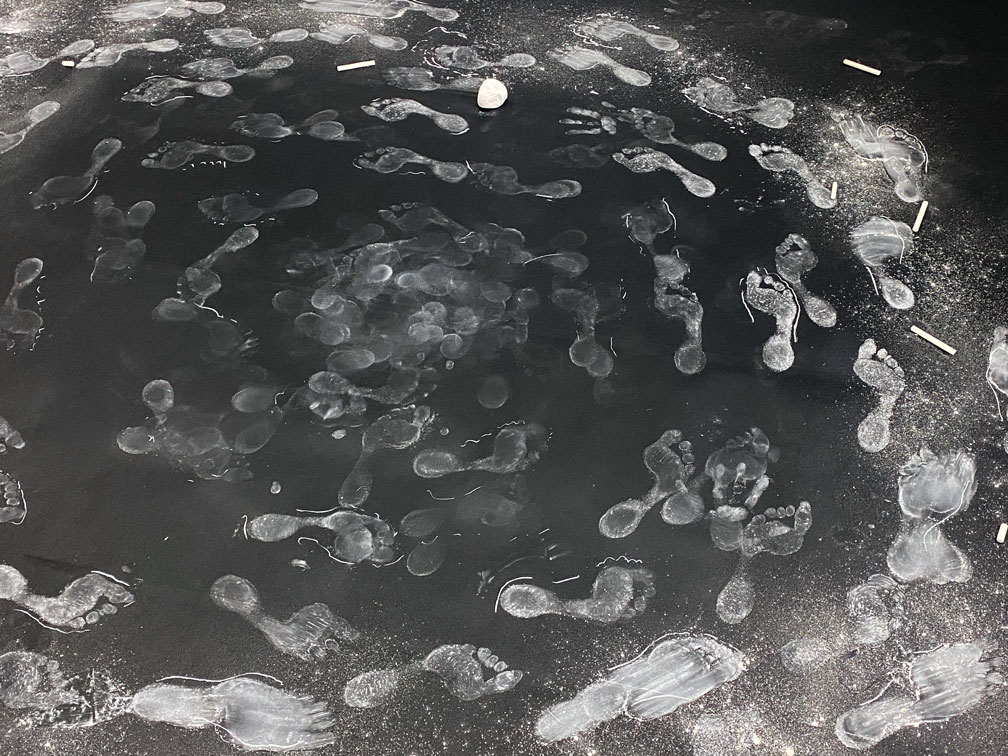
In this installation originally commissioned by Hunan Museum, an animated series of chalk footprints are projected downwards on a slate surface.
The exhibition, Wandering: Digital Art in Historical Space Time, was themed around contemporary artists responding to ancient, historical artworks. [Download catalogue essay]
This installation was subsequently included in Animation as Art: A Multi-Sensory Experience, an exhibition about the materiality of animation curated by Jorgelina Orfila, Francisco Ortega, Christine Veras for the Museum of Texas Tech, Lubbock, Texas, USA.
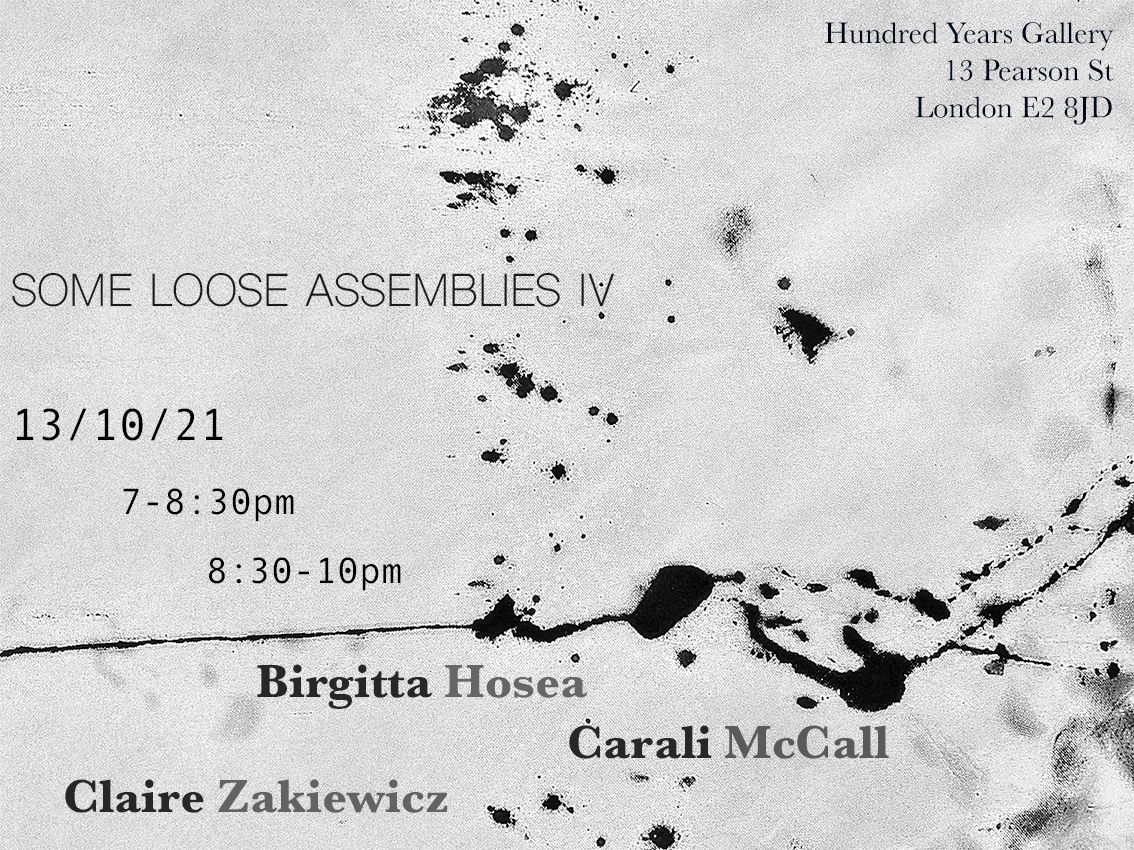
Performance by Birgitta Hosea at Hundred Years Gallery as part of her exploration of chalk as a material during her residency at the Centre for Recent Drawing (as part of the Performance Drawing 2021 exhibition events).
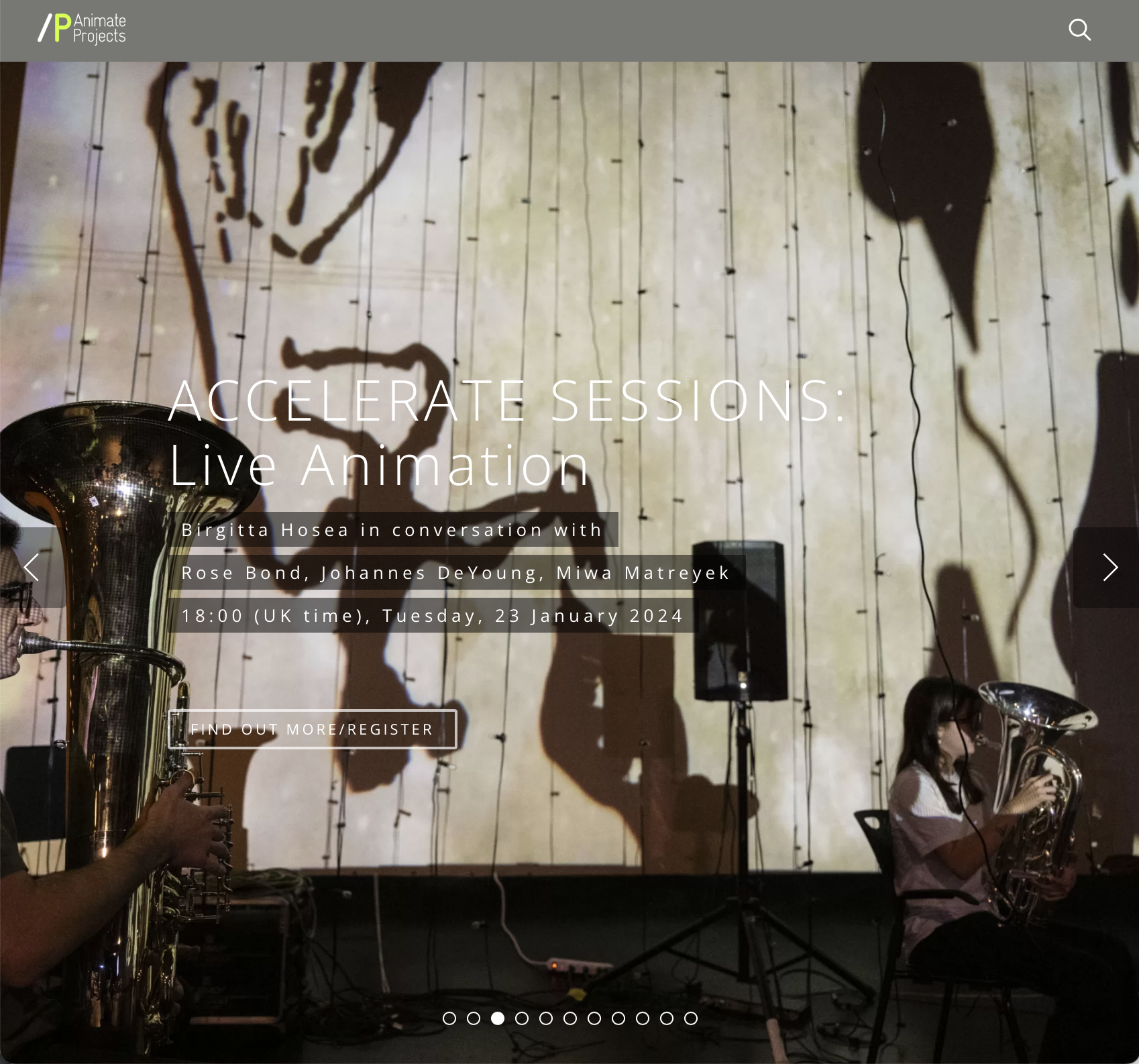
Rose Bond. Earths to Come. Interdisciplinary collaboration with composer inti figgis-vizueta and Roomful of Teeth, Barishnikov Arts Centre, 2022
Johannes DeYoung. Exploded Ensemble performing with The Endless Mile in A Road with Trees, an intermedia performance exhibition at WQED Studios. Procedurally animated video scroll and sound performance at WQED Studios, Pittsburgh, PA: photography by Kevin Lorenzi, 2023
Birgitta Hosea. dotdot dash. Live performance with InspiralLondon in a tunnel, Ebbsfleet, Kent. Photographed by Gemina Broadbridge. 2018
Miwa Matrayek.Infinitely Yours. Live performance with animation. Golden Nica for Computer Animation at Ars Electronica, 2020
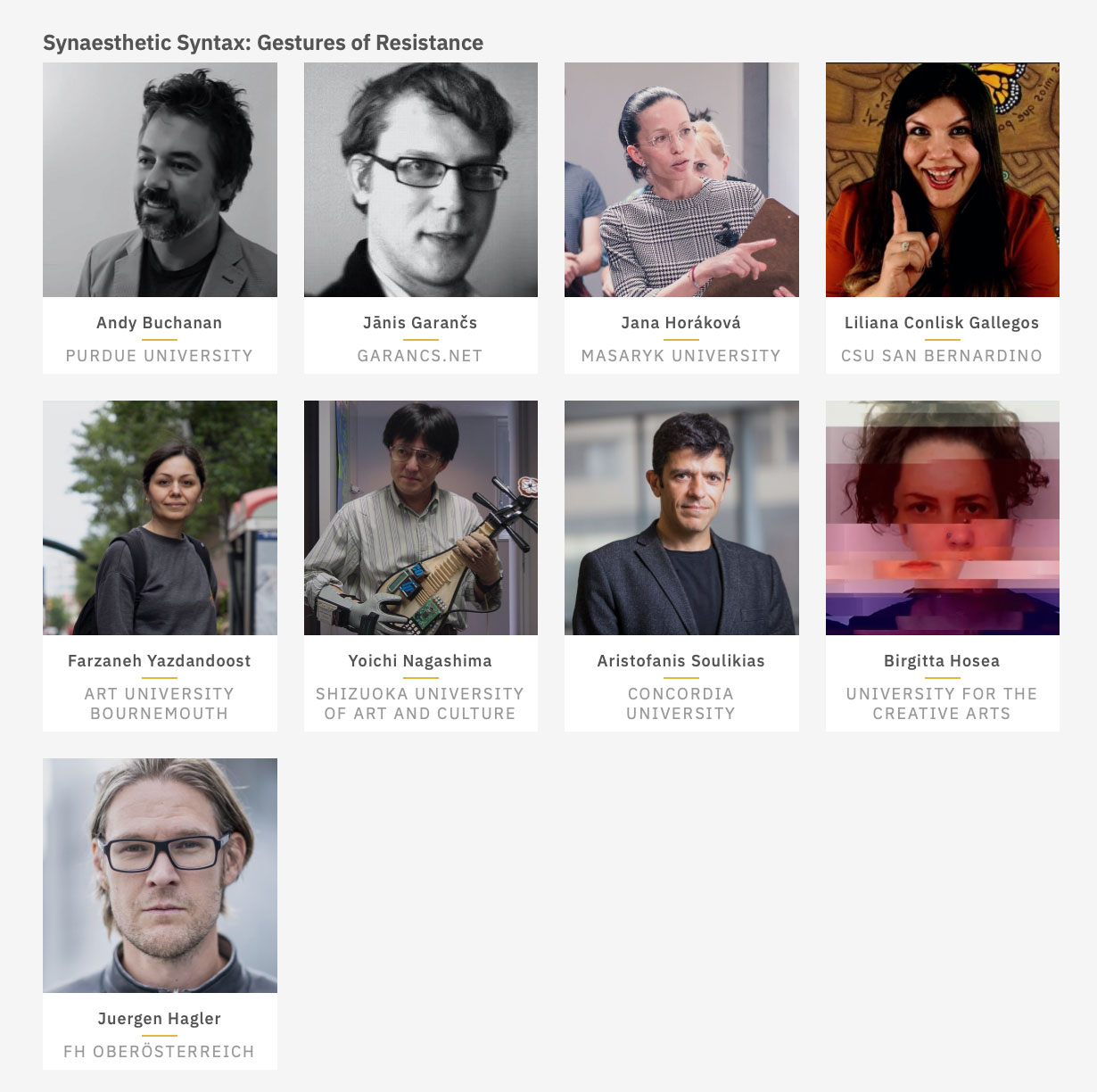
The last of our series of 4 symposiums investigating the sensory dimensions of expanded animation took place at the Ars Electronica Festival in Linz, Austria on 10th September 2023. Jointly organised and hosted by Juergen Hagler and Birgitta Hosea, the speakers were: Camille Baker, Darren Woodland, Tome Sone, Louis-Philippe Demers & Bill Vorn, Friedrich Kirschner, Julian Salhofer & Leoni Voegelin, Max Hattler, Johannes DeYoung, Varvara Guljajeva & Mar Canet Sola and Keynote Speaker Ghislaine Boddington.
All the presentations are archived and can be viewed here:
Panel 1: The Haptic Body in Action
Panel 2: Agency in Performance
Panel 3: Liveness and Procedural Animation
A very big thanks to Ars Electronica and the staff and students of the University of Upper Austria, Hagenburg for all their support and hosting this event for the last 4 years. We are planning a publication to bring together selected presentations from the events.
In this, our fourth symposium at the critical juncture of embodied, sensual perception and the processes and technologies of expanded animation, we turn our attention to kinaesthetic and physical presence. Our human senses of proprioception (detecting our own position in space) and the vestibular system (detecting gravity, movement and balance) allow us to map our surroundings, navigate through space and detect the proximity of others. In an age in which our city streets have become a film studio with our every movement tracked by surveillance cameras and our every thought, memory or social interaction mediated through the camera, GPS, microphone and motion sensors of our smart devices, what does it mean to have a body? In what ways can expanded animation explore the physical presence of the live human body in motion and what is the role of technology in relation to this?
Venue
The conference will be held at the Ars Electronica Festival in Linz, Austria. The media festival will take place on the 6th–10h of September 2023: https://ars.electronica.art/festival/en/.
Call for Papers
We are looking for thought-provoking proposals that present innovative perspectives on working in expanded animation with the live body in motion. The questions we are interested in include, but are not limited to:
How can we critically and creatively use live performance in animation and animation in live performance?
What can the liveness of performance bring to animation in terms of improvisation, participation, spontaneity and unpredictability?
Since ancient times, thousands of years of performance practice have produced many different ways to move a body from stylised forms of dance to exaggerated clowning. What is ‘life-like’ motion and why does psychological realism remain a goal for animated characters who are, after all, not human?
In what new ways can the properties of human kinaesthetics be applied to animation? How can balance, gravity, weight, movement patterns, spatial mapping and proximity detection be re-imagined and creatively explored?
What are the ethics of capturing and re-appropriating a performer’s physical movement signature with mocap? How can we counter the algorithmic biases built into the fabric of motion capture systems and the under-representation of different demographics in motion capture libraries?
How might the technologies of surveillance, motion detection and capture be subverted and used for new artistic purposes?
How can the space in which performance takes place be animated and what impact does this have on performer and audience experience?
Can animation be used in live performance to disrupt theatrical conventions such as the fourth wall and unity of time and space?
How can animation be used to create proximity and communal experience in connected audiences?
How can AI technology revolutionize/change the way we will animate human bodies?
What does it mean to have a body in interactive animated environments (metaverse, games, VR)?
Deadline
Submission deadline: Friday, 26th May 2023
How to Submit
We call for papers, presentations and responses to our themes above.
Abstract (brief summary of your proposed presentation) 500 words (including bibliographic references)
Short Biography – 200 words
Relevant links to moving image work/websites etc.
If the paper is practice-based, it should include reflection and contextualisation in addition to presenting the practice. We will not accept papers that propose to show the practice only.
Finally, we are unable to provide feedback on individual submissions.
Keynote: Ghislaine Boddington, body>data>space
Creative Director, body>data>space / Reader In Digital Immersion, School of Design, University of Greenwich
Ghislaine Boddington is a curator, presenter and researcher, known for her pioneering work placing the body as the interface for digital technologies and exploring telepresence, digital intimacy and virtual physical blending since the early 1990s. Her research led practise, expert direction and curations include “Robots and Avatars” (EU/Nesta 2009-11), “me and my shadow” (National Theatre 2012), Nesta’s FutureFest 2015-18 and the recent exhibition/symposium Extended Senses and Embodying Technologies (UoG/UCA Sept 22). In 2017 Ghislaine was awarded the esteemed IX Immersion Experience International Visionary Pioneer Award for her long-term work on collective embodiment within digital immersion. She is an expert presenter for BBC World Service Digital Planet weekly radio show/podcast, a member of the DCMS College of Experts and a Trustee for Stemette Futures. Her websites can be found at Linktr.ee
Committees
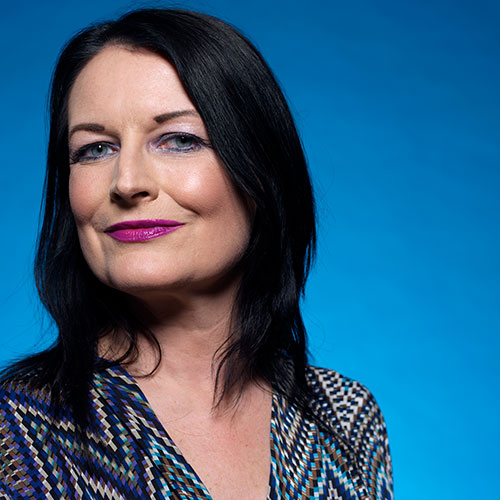
The symposium is jointly organized by Dr. Juergen Hagler, Ars Electronica, University of Applied Sciences Upper Austria, Hagenberg and Professor Dr. Birgitta Hosea, Animation Research Centre, University for the Creative Arts, Farnham, UK.
Scientific committee: Professor Rose Bond, PNCA, USA; Andy Buchanan, independent scholar; Associate Professor Max Hattler, School of Creative Media, CityU, Hong Kong.
Synaesthetic Syntax is a one-day symposium on Sunday 11th September as part of the 10th Expanded Animation section of the Ars Electronica Festival. The event explores the complex relationship between sensory perception and expanded animation. In focussing on the primacy of the senses, the symposium aims to ask questions about the seduction of technology and how to maintain a discourse of what is fundamental about being human. This year’s theme is touch, gesture and physical movement. For more details about the presentations and how to view them online, go to the website for Expanded Animation.
We are delighted to welcome our keynote speaker and winner of a Golden Nica at this years Prix Ars Electronica: Rashaad Newsome. He will be giving his keynote presentation at 14.00 (CET) on Friday 9th Sept.
To be human, to be in a body, is to move and to feel; to move as it feels and to feel itself moving.[1] However, bodies do not exist in isolation. Bodies collide with one another in social contexts. They have the power to affect others or to be affected themselves. Bodies are structured by culture, but they can also resist. Motion and sensation felt in the body leads to change.[2]
At the time of organising the symposium, a line of tanks, armoured vehicles and troops 40 miles long were approaching Kyev: literally illustrating change in motion through technology. How can animation respond to this? How might technologies of gesture, proprioception and motion be used to create animation that goes beyond formalism and is able to reflect upon the forces that seek to contain movements towards change?
The sensation of touch can be brutal and violent or tender and loving. Through ‘haptic visuality’[3], a sense of touch can be evoked in animation by triggering physical memories of smell, touch and taste that engages the viewer bodily to convey cultural experience rather than through a use of language. How can touch be used in animation to create community or share memories?
Presentations:
The presentations respond to the following questions:
How to critically reflect on the tools and technologies of touch and movement used to create animation – motion capture, tablets and pens, sensors – and the data sets and libraries that they create?
How might the capture of motion, gesture and proprioception be used to innovate and tell stories of new communities?
What is the role of touch in conveying memory?
How might touch and biofeedback data be used in new ways to create animation?
[1] Paraphrase from p1. Brian Massumi, Parables for the Virtual: Movement, Affect, Sensation (2002, Duke University Press) [2] Cf. Massumi, op. cit. [3] Laura U Marks, The Skin of the Film: Intercultural Cinema, Embodiment and the Senses (2000, Duke University Press)
My installation, Holes, ran at ASIFAKEIL, Q21, Vienna from 1/12/21 – 20/2/22.
I gave a presentation about the installation at Belvedere 21 Museum of Contemporary Art for the Under_the_Radar festival in Vienna on 27th March 2022.
I’ll be giving an updated version of this talk at Animafest Scanner IX as part of the Zagreb Animation Festival on 7-8th June 2022.
Some stills from the film, that has sound design by Anat Ben-David:
The short film, Holes, that is shown in the installation has just started on the film festival circuit and has so far been shown at:
A version of Holes (the installation) is included in Fission: The New Wave of International Digital Art at Guizhou Provincial Museum from 29th April – 31st August 2022.



































 Expanded Animation