To work with animation is to work with time: in the present we create images at author-time that will be viewed as from the past in the future run-time.
In our performance at the Parasol Unit on Friday 2nd December 2011, MK Palomar and Birgitta Hosea will explore issues of time. Combining spontaneous and pre-recorded sound, we will attempt to inhabit various temporal dimensions simultaneously.
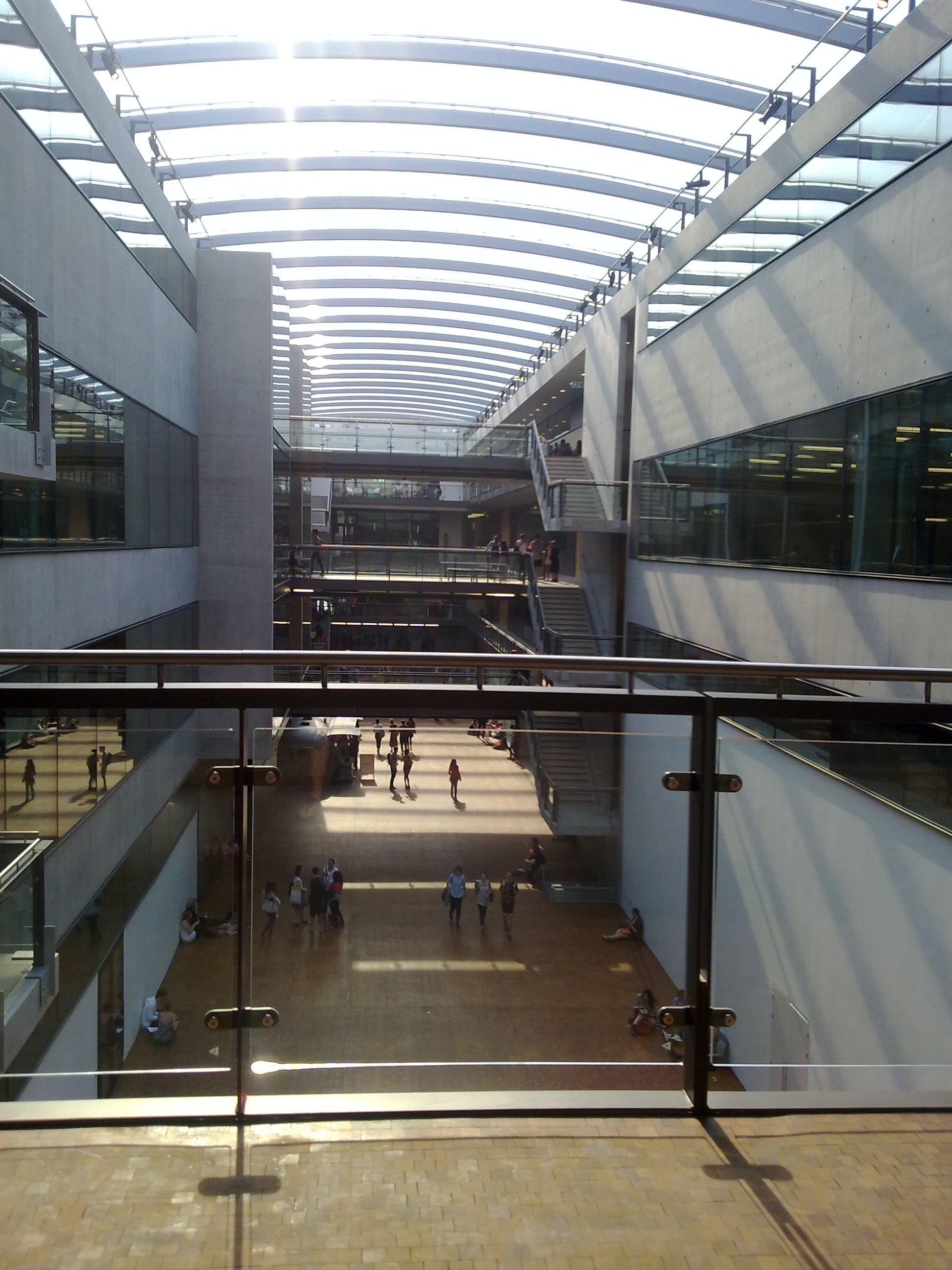
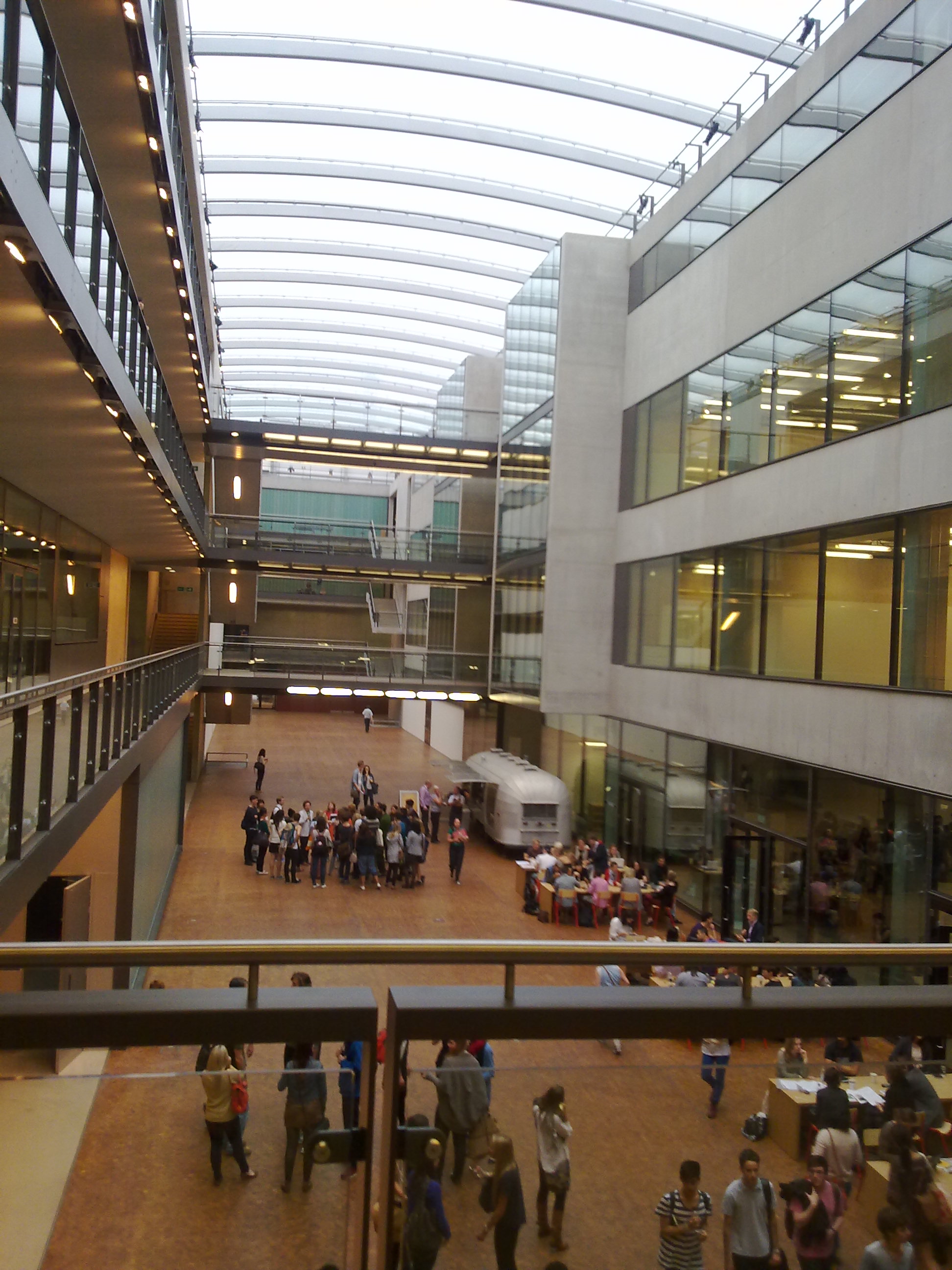
A new building opens, a new course starts and a new group of students start on their journey towards an MA in Character Animation. Here is Day 1: everyone is a little shy on the first day in the brand, spanking new animation studio.
We are all a little overwhelmed by the new building.
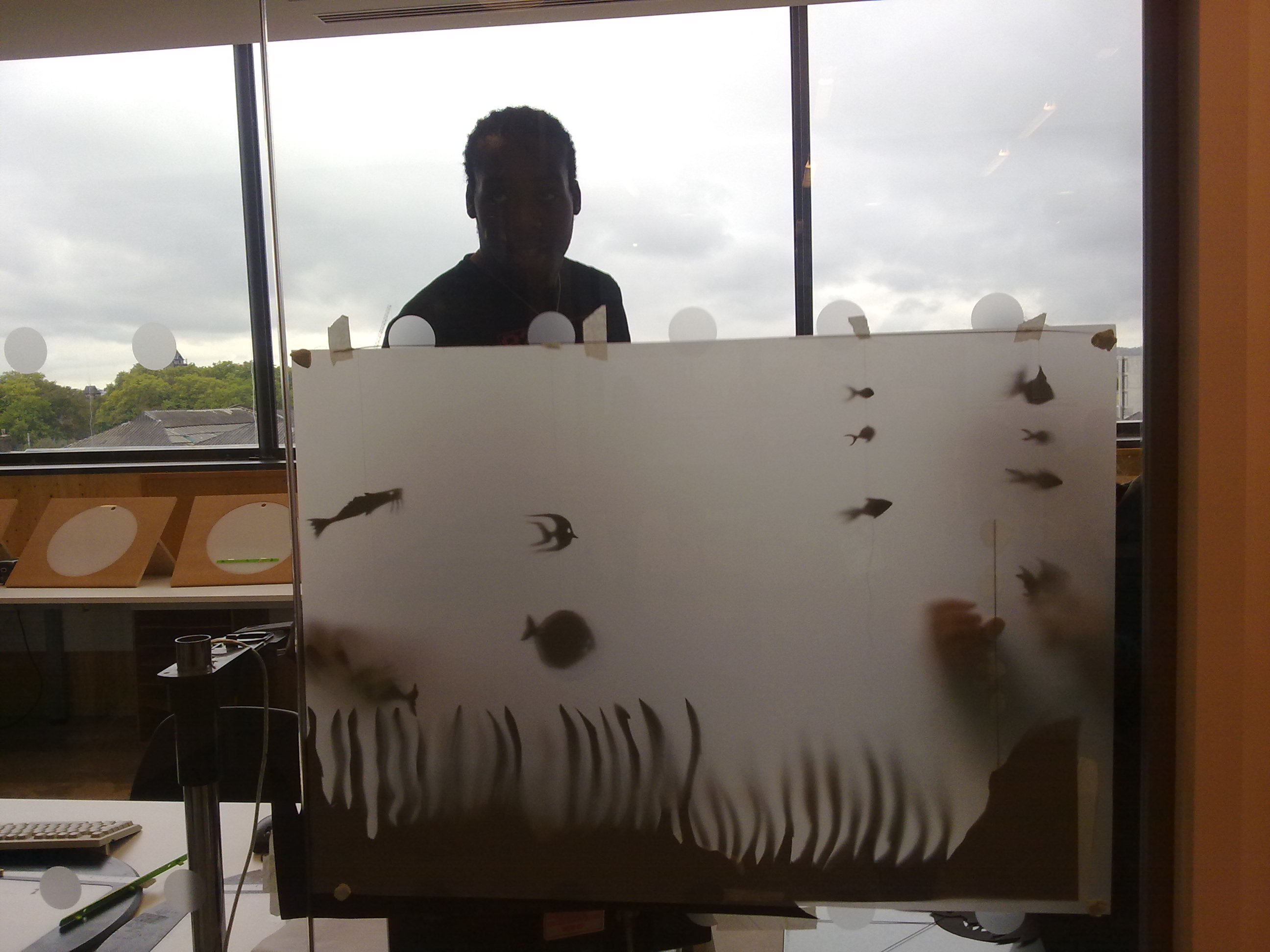
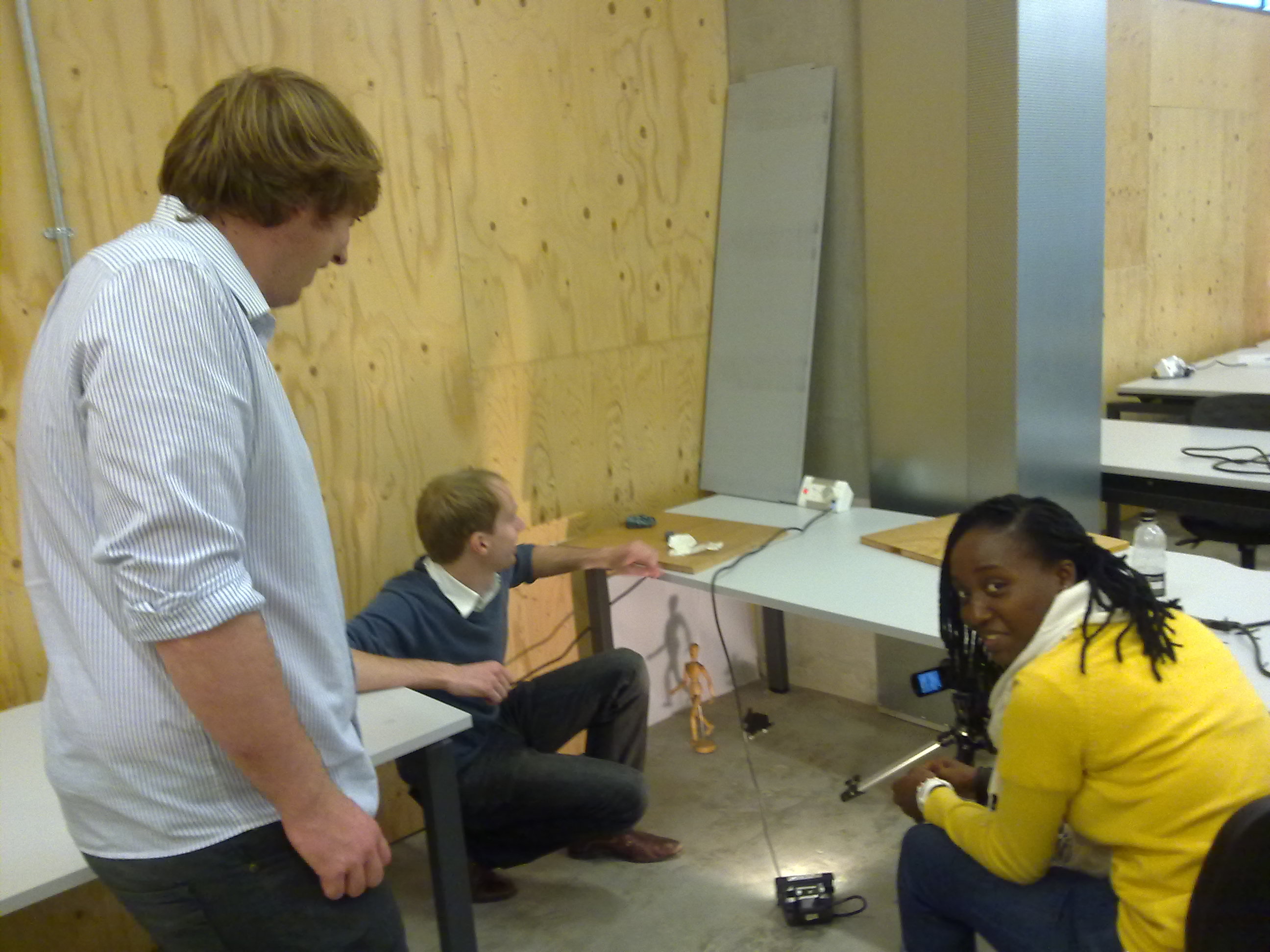
Day 2. Shadow puppets workshops. We started to make a mess and use the windows of the studios for screens to make shadow puppets on.
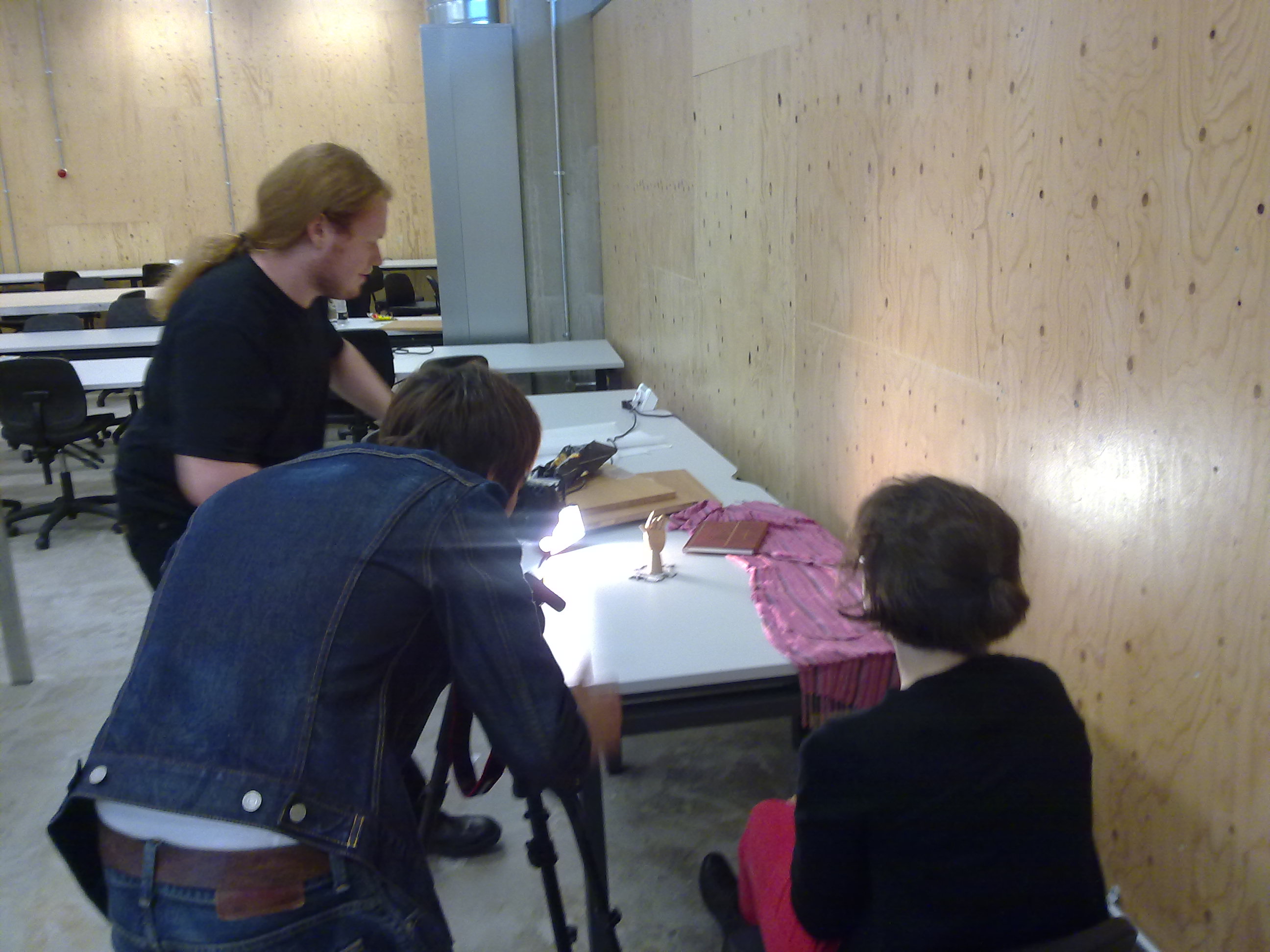
Day 3: By the third day we had started to own the space and took over lots of different areas all over the building in order to make films with found objects.
Tickets are on sale for the next Onedotzero festival at London’s BFI, which runs from 23-27 November 2011. Featuring a feast of innovative, contemporary animation and motion graphics from around the world this festival is a must-see! It’s particularly important to support the festival since it lost its government funding in the recent cuts and may not be so ambitious in scale in future years.
Animated projections are used to activate a popular local building, which is falling into disrepair. Developed with the local community, the projections include ideas for how the building could be used in the future.
I often check out the Character Design Blog, which features interviews and showcases of work from commercial character designers in games, illustration, animation, comics and films.
A source of inspiration for contemporary character design is Pictoplasma, who publish a series of books as well as running events.
American artist, Ray Villafane, carves pumpkins into a variety of character heads. Check out the pictures here. Happy Hallowe’en!
What he may or not realise is that he is following in a very old tradition of folk art. In the past, toys were a luxury that many working people couldn’t afford to pay for – so they made their own. Apples were an ideal medium for carving dolls heads out of and this folk art is still practiced in rural America. I have also seen a British example in the V&A’s Museum of Childhood in Bethnal Green. The Museum of Childhood has an extensive collections of historical toys and is a fantastic resource for ideas for character designs.
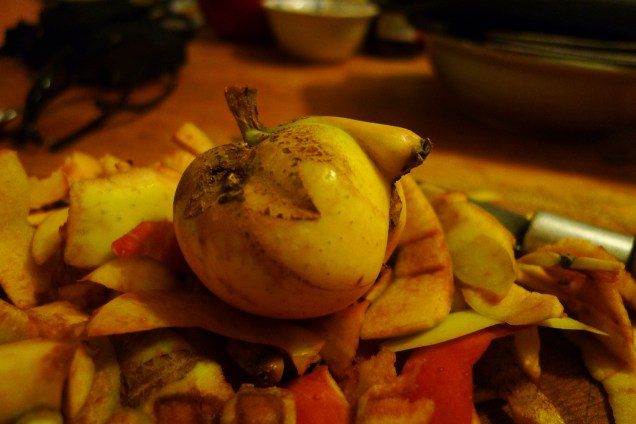
I am currently experimenting with apple heads myself, since finding this wild apple on an isolated tree at the top of a mountain in the Pyrennees when I was on holiday this summer. I call her Mrs Applebaum and am using her as the starting point for developing a new character.
Mat Collishaw’s show Shooting Stars at the Haunch of Venison in 2008 explored the legacy of Victorian imaging technology in our parallel era of rapid technological development. The most powerful presence in the show was Collishaw’s contemporary zoetrope, Throbbing Gristle, featuring small characters created through rapid prototyping that appeared to come to life under the flickering lights of the gallery.
An interdiscplinary background in engineering, photography, sculpture and watercolours proved to be a fertile ground for the innovations in moving image technology developed by Charles-Èmile Reynauld, arguably the first person to create frame-by-frame animation in the classic form that we understand today.
Deriving from a praxinoscope that he had invented in 1876, Reynauld’s patented a Praxinoscope Théâtre in 1879 and then an improved version, the Théâtre Optique, was patented in 1888. This invention was able to project hand-painted, animated, moving images and was adopted commercially by the Museé Grévin in Paris in 1892. The Museé Grévin was a famous museum of waxworks, which also featured a Cabaret Fantastique, a small theatre with shows from magicians. The Théâtre Optique opened there in 1892 – three years before the Lumière Brothers had perfected the first film camera and demonstrated moving, photographic images in 1895. The Théâtre Optique was open until 1900, when it was superseded by cinema and closed down. Before his death in January 1918, in a fit of depression, he smashed the surviving Théâtre Optique mechanism and threw all but two of his picture bands into the Seine.
Here is a reconstruction of Théâtre Optique by the Museum of Cinema in Girona.
Here is a reconstruction of one of the two surviving Pantomimes Lumineuses that were screened at the Théâtre Optique, Pauvre Pierrot from 1892.
A maximalist design style with pastiche from Hindi pop art and political propaganda posters, Capital is an in-your-face anti-imperialist pop video directed by Alexey Terekhov for the band Lyapis Trubetskoy from Minsk, Belarus. Not always easy on the eye, but definitely original and worth a look.