Expanded Animation 2020 –
Synaesthetic Syntax: Sounding Animation / Visualising Audio

[Image from Oregon Symphony Orchestra’s performance of Luciano Berio’s Sinfonia, courtesy of Rose Bond, 2020]
Submission deadline: 17th May 2020
Symposium details: Sunday 13th September 2020, Ars Electronica, Linz, Austria.
Submission link: https://easychair.org/conferences/?conf=ea2020
Faced with the infinite possibilities of faking through digital production, might there be a craving to return to that which is material and sensible: work that is improvised, spontaneous and can be experienced fully with all the senses? A move away from simulated, synthetic perfection to the handcrafted and the imperfect, which evidences the trace of human touch and intimate presence?
This year the Expanded Animation events at Ars Electronica extend into a dialogue about relationships between the senses, in particular the auditory and the visual. What are the rules, principles, and processes that govern correlations between sound and animation? How might these be explored, unpacked and reassembled?
Keynote Speaker
Our Keynote Speaker is media artist, Rose Bond, who produces work at the juncture of cinema, animation and experiential design. She will be presenting her latest animated collaboration with the Oregon Symphony Orchestra on a live performance of Luciano Berio’s Sinfonia.
Submission Guidelines
In response to these themes, we call for academics and artists to propose 20-minute papers that bring the disciplines of music, audio art and animation together from a variety of perspectives: from historical or theoretical analysis to new and surprising practice.
The proposal should include an abstract of no more than 500 words (including references) and a short biography of no more than 200 words.
Submission is via Easy Chair at https://easychair.org/conferences/?conf=ea2020 where you will be prompted to set up a free Easy Chair account.
All selected speakers will be given a free pass to the 2020 Ars Electronica Festival.
List of Topics
Suggested topics include:
Hearing Colour Seeing Sound
Can music become visual? How did pioneers of visual music such as Oskar Fischinger and Mary Ellen Bute translate melody, harmony and rhythm into the form of animation? And can moving drawings become music? Is Oramics, Daphne Oram’s drawn sound machine, a form of animation? How can historic and / or contemporary practice demonstrate synaesthetic syntax?
In front of your eyes and ears
With a perceived disparity between the slow time taken to create animation and the instant time taken to perform music, how can animation be performed live? Can the audio and the visual be combined in improvised performance? How can live, hand scribing or music notation or coding or drawing be used to conjure spontaneous audio-visual performance? What is gained from real-time, instant creation in the present moment?
Rhythmanalysis
Repetition and difference is at the heart of rhythm, at the heart of the algorithm, at the heart of animation, at the heart of lived experience. Rhythm is everywhere. From the natural – visceral, internal rhythms of the body breathing and the heart pumping or the slow changing of the seasons; to the artificial – externally imposed rhythms ordering us through the ticktock of mechanical clock-time or the ebb and flow of economic cycles. How does rhythm connect audio and animation? What might animation learn from audio and music theory and vice versa?
A Return to the Material
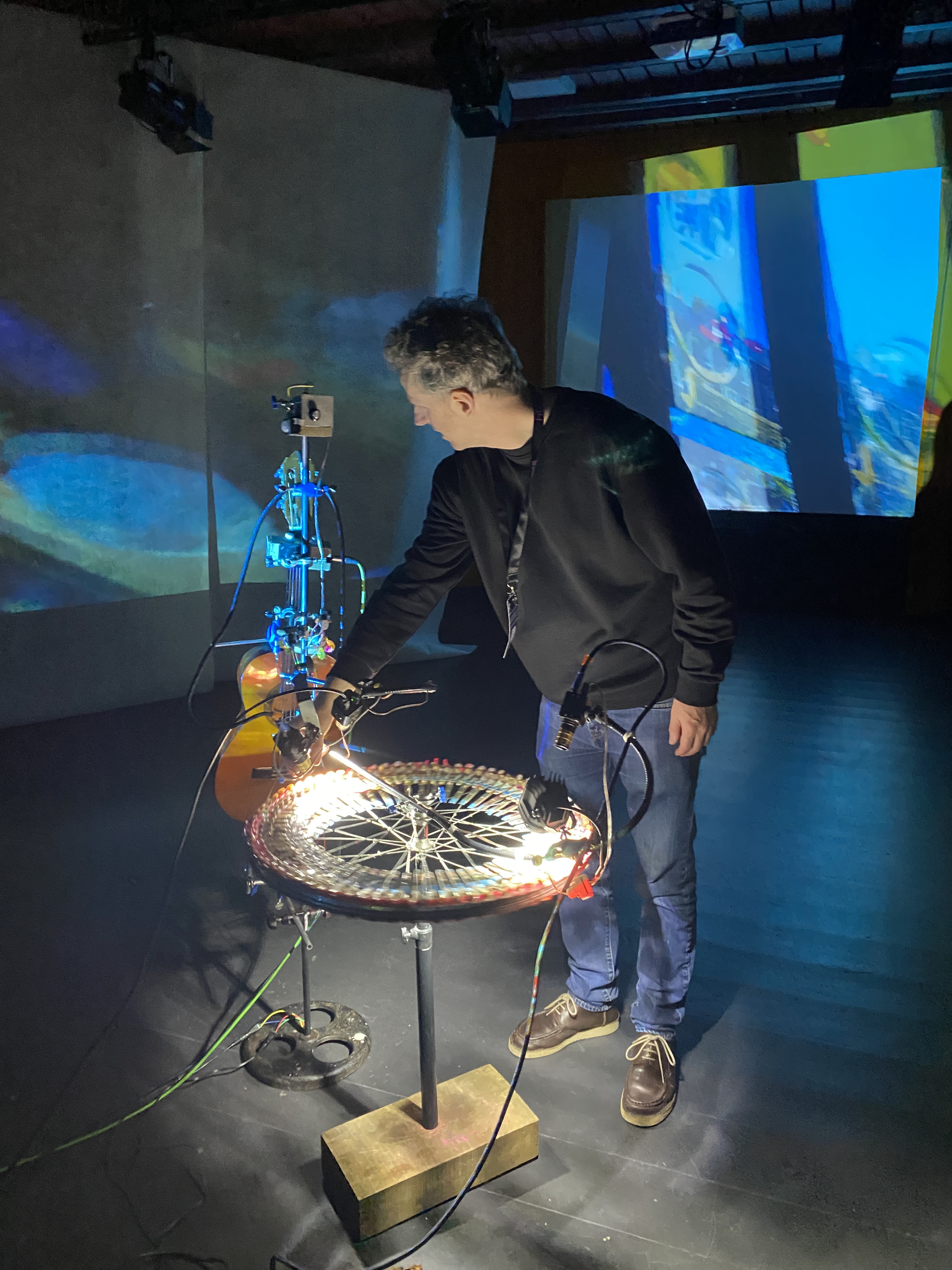
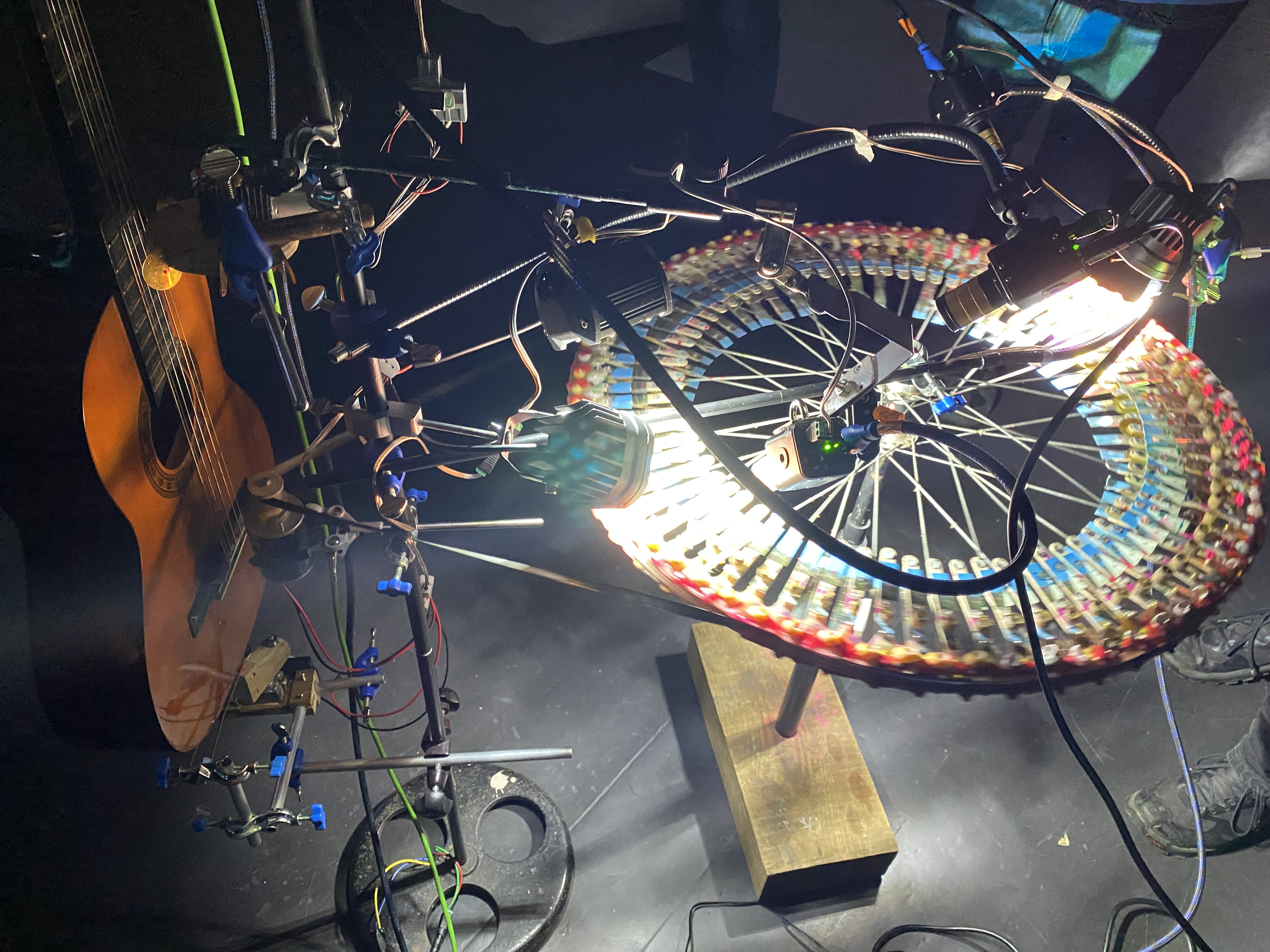
In an age of digital synthesis is there a craving for a return to the material? Do we long for haptic feedback and analogue experience: the touch of guitar strings, the feel of charcoal smearing under the fingers, banging a drum, painting on film? Is this simply a form of nostalgia or might it be thought through in new ways? How can it be brought together in the audio-visual?
Movement and Gesture
Whether performing an instrument or making marks for drawing, the gestural is a core part of human expression. How can kinaesthetic gesture be explored to create new kinds of audio-visual experiences?
Organising Committee
The organisation is a collaboration between:
Venue
The conference will be held as part of Ars Electronica in Linz, Austria.
[Disclaimer – we are operating under the assumption that social distancing will no longer be required in September and ‘normality’ has been restored].
Contact
All questions about submissions should be emailed to <animationresearch@uca.ac.uk>








 Expanded Animation