CFP – Ecstatic Truth X: Animating Hope

Ecstatic Truth X: Animating Hope: Utopias, Uncertainties, Simulation, and Documentary Possibility

In association with UNDER_the_RADAR Festival and University of Applied Arts, Vienna, we are calling for papers for our next symposium on April 27th and 28th, which will take place at the University for the Applied Arts in Vienna

Deadline for proposals is 14th Feb 2026
Submit proposals here via Oxford Abstracts: 
 https://tinyurl.com/3tm6dkc3.

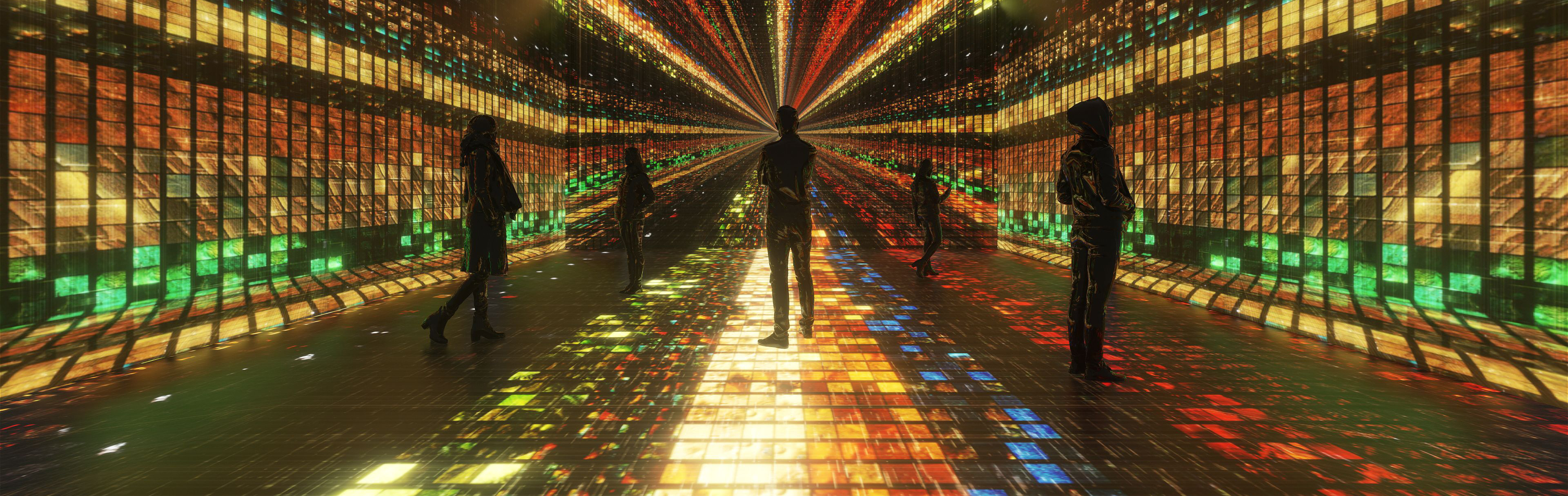
Image by Holger Lang


Ecstatic Truth is an annual symposium on themes arising from documentary animation as framed by Werner Herzog’s notion of a stratum of truth that exceeds the merely factual. In the 1999 Minnesota Declaration, Herzog contrasted the norm-making force of facts with an ‘ecstatic truth’, a deeper illumination, arguing that artifice can be a legitimate pathway to truth.

Documentary animation is uniquely positioned to operate in that register. By design it can render what live-action cannot—memories and dreams, internal states and dispersed timescales—expanding the range and depth of what documentary can show us about the world. In other words, animation openly declares its artifice while still aiming at the real, turning representational constraint into epistemic advantage. Our contemporary situation complicates this task. As Yuval Noah Harari observes, we live in a world ‘deluged by irrelevant information’ and where censorship often means flooding publics with distraction rather than blocking data outright. Animated Documentary’s contribution, then, could be to gain power through clarity, not to mimic the torrent but to compose it—to convert data into meaning, and information into felt knowledge.

Our tenth-anniversary theme – Animating Hope – treats hope, through Ernst Bloch’s perspective; not as naïve uplift but as a resistant orientation toward the “not-yet,” a wager that transformation remains possible even when the present seems unlivable. In this spirit, we welcome work that engages speculative traditions where imagining other worlds is itself a critical method, Afrofuturism reimagines and reclaims past and present through a Black cultural lens to prototype liberatory futures; queer futurity, following José Esteban Muñoz, directs attention to what could be, rather than only what is—treating the horizon of possibility as a guide for both practice and understanding. Alongside situated work from Serbia and Ukraine and Gaza-based initiatives such as Letters to Gaza and animator Haneen’s workshops, bringing hope to communities in practical ways. We also recognise emergent symbolic practices—such as the Gen Z protesters adoption of the One Piece Jolly Roger, as visual tactics of solidarity and hope.

Under the sign of ecstatic truth, we therefore invite practice-based, theoretical, and historical contributions that test how animated documentary can make hope operational—stylistically, ethically, and politically. What techniques (abstraction, rotoscope, collage, data-driven or hand-drawn worlds) help transmute ‘information’ into clarity without forfeiting complexity? How might artists signal invention while safeguarding participants and contexts? In what ways do speculative prototypes—challenges to the rule of AI and technological presets—and the situated practices above—function as forms of research, resistance, and survival? And above all: how can documentary animation shine “hope in the darkest places,” converting the seen and the unseeable into the kind of truth that moves us to act?

References: 

Harari, Yuval Noah. (2018). 21 Lessons for the 21st Century. Spiegel & Grau
Bloch, Ernst. (1995). The Principle of Hope. Cambridge, Mass. :MIT Press,


Themes

We invite practitioners and theorists working in non-fictional animation to consider the following questions:

Animating Hope: Utopias, Resistance, and Futures

  • How can animation embody hope as a form of resistance in times of political, social, or ecological crisis?
  • Is hope enough, or how might it be leveraged against overwhelming powers? (cf. Tolkien’s notion of fighting even when the ‘dragon’ is stronger).
  • What lessons can be drawn from past moments of collective hope, such as 1968, for today’s political and artistic futures?
  • How do Afrofuturism, queer futurity, and speculative practices (e.g., Octavia Butler, José Esteban Muñoz) expand the documentary imagination?

Methods, Media, and Resistance

  • What new methodologies can artists and scholars develop in the age of global capitalism to imagine and document alternative futures?
  • How might animation serve as a counter to despair, protest fatigue, and media-political control?
  • In what ways does the act of creating art itself constitute a conscious form of resistance?

Hope, Politics, and the Public Sphere

  • How does hope function as dialogue, as an antidote to blame culture, and as a means of standing against state or corporate control?
  • What role do economic structures play in shaping, restricting, or enabling documentary animation as a resistant practice?
  • How can language and translation (e.g., English as a dominant mode) shape or constrain documentary storytelling?

Technology, AI, and Documentary Uncertainty

  • How do deepfakes, AI, and algorithmic media complicate questions of authenticity, indexicality, and truth in documentary animation?
  • Can AI meaningfully contribute to documentary practices, or does it collapse difference and risk reducing meaning-making to economic pressures?
  • How do we negotiate between the personal, affective touch of human-made documentary and the commercial, automated logics of AI?

Ecstatic Truth in Dark Times

  • How can documentary animation shine “hope in the darkest places” (John Berger)?
  • What does it mean to create ecstatic truth in the face of apocalypse, collapse, or uncertainty?
  • How might acts of celebration, gathering, or even “partying in the face of the apocalypse” offer alternative modes of resistance, memory, or testimony?

Submission Details

We call for papers, presentations and responses on our themes of animating hope, in all its different manifestations, in relation to non-fiction manipulated moving image and animated documentary, in their most expanded forms. 

Submission is via Oxford Abstracts at this link: https://tinyurl.com/3tm6dkc3. You will be prompted to create a free account with Oxford Abstracts.

Your submission should include:

  • Title of your presentation
  • Abstract Please enter a brief summary of your proposed presentation with at least 2-3 references (max 500 words including bibliographic references)
  • Biography – a short bio of max 200 words, including relevant links to moving image work/websites etc.

If the paper is practice-based, it should include reflection and contextualisation in addition to presenting the practice. We will not accept papers that propose to show the practice only.

Finally, we are unable to provide feedback on individual submissions.


About Ecstatic Truth

Ecstatic Truth is an annual symposium on animated documentary founded in 2016 that explores issues arising from the interface between notions of animation and of documentary (conceptualised very broadly as non-fiction), with a particular interest in questions raised by experimental and practitioner perspectives. 

This year, we are in collaboration with UNDER_the_RADAR Festival and University of Applied Arts, Vienna and are open to proposals for future collaboration with other organisations.

Contact: ecstatic.truth.symposium{at}gmail.com

Ecstatic Truth collective: 

Birgitta Hosea, Animation Research Centre, University for the Creative Arts, Farnham;
Pedro Serrazina, Universidade Lusófona, Lisboa; 
Tereza Stehliková, University of Creative Communication (VŠKK), Prague; 
Natalie Woolf,  Universidade Lusófona, Lisboa.

Ecstatic Truth is supported by: 

CALL FOR PAPERS – Ecstatic Truth VIII

Ecstatic Truth VIII: Animation and Documentary in Times of Artificial Intelligence
19th April 2024, Auditório José Araújo, Universidade Lusófona de Lisboa, Portugal

Close up of little Nemo and Mickey Mouse, walking side by side with Lara Croft in Lisbon City (image generated in collaboration with Deepai.com)

Submission deadline 23-02-2024
Outcome notification 08-03-2024
Submit proposals here: https://app.oxfordabstracts.com/stages/9932/submitter

About Ecstatic Truth

Ecstatic Truth is an annual symposium on animated documentary founded in 2016 that explores issues arising from the interface between notions of animation and of documentary (conceptualised very broadly as non-fiction), with a particular interest in questions raised by experimental and practitioner perspectives. 

An AI Call For Papers

The 8th edition of Ecstatic Truth will be dedicated to the impact of AI in image making, animation and documentary processes. 

To fully immerse us into the context, we worked with an AI interface to produce this year’s Call For Papers: we used a previous description of the Ecstatic Truth symposium framework and had it “improved” by AI; we gave AI the general topics that concern us and would like to address and, through an interesting “dialogue”, came to the following result. The text below is the result of that interaction, between the Ecstatic Truth team and AI. If this is the future, we may face it sooner rather than later:

A generic AI description of Ecstatic Truth:

“In an age where mere facts often give way to the accountant’s reality, the influence of artificial intelligence and manipulated imagery has opened new frontiers in the realm of image-making and documentary practices. As Werner Herzog insightfully stated, it is the ecstatic truth – a poetic reality – that can more faithfully capture the nuanced depths of human experiences. As we navigate this landscape marked by the proliferation of artificial intelligence and the deliberate manipulation of visual content, we find ourselves at the heart of a transformative era in documentary filmmaking. As a reaction to that, we instructed AI to write the following CFP and invite you to join us in Lisbon for a symposium focused on the theme of “Animation and Documentary Practices in times of Artificial Intelligence.”

Animation and Documentary in Times of Artificial Intelligence – CALL FOR PAPERS

“In a world where any image can be artificially generated, questions abound regarding the evolving role of the animator and the definition of the animated image in contemporary filmmaking. Furthermore, how do we navigate the discourse surrounding documentary, especially animation documentary, in the age of AI? Are we witnessing the gradual replacement of the animator by AI? Is AI-driven animation merely an escape from reality, or can it be harnessed to address pressing societal issues? How can animation, especially in the documentary context, grapple with the veracity of the image and the challenges posed by deepfake technology? How do we navigate notions of truth and authenticity in the digital age? 

This symposium, guided by an intersectional perspective, seeks to explore the profound impact of AI and digital manipulation on our understanding of the human experience and the possibilities for alternate realities. Just as colonialism disrupted local and indigenous knowledge systems, AI challenges our perceptions of reality and truth. How can we articulate and navigate the complexities of AI’s influence on our visual culture and society? Can animation, in its various forms, liberate us from the distorted realities created by artificial intelligence? We invite and encourage discussions on form, strategy, and the ethical considerations surrounding AI-generated imagery in our quest to explore “Animation in times of Artificial Intelligence.” 

Call for Papers

The “Animation and Documentary in Times of Artificial Intelligence Symposium” invites scholars, filmmakers, animators, and artists to submit papers and proposals that delve into the multifaceted realm of animation in the age of artificial intelligence. We welcome contributions that explore but are not limited to the following themes:

  • The evolving role of the animator in the context of AI.
  • The definition and significance of the animated image in contemporary filmmaking.
  • Documentary practices and animation in the era of AI.
  • The ethical implications of AI-driven animation and deepfake technology.
  • Narratives and storytelling in AI-generated animation.
  • The challenges and opportunities presented by AI in animation production.
  • The impact of AI on the veracity of the image in documentary practices.
  • Discussions on the intersection of truth, authenticity, and AI in the digital age.
  • Case studies, artistic projects, and innovative approaches related to animation and AI.

Submission Guidelines

Authors are invited to submit their paper abstracts (up to 300 words) along with a brief bio (up to 150 words) via our online submission platform. Deadline for abstract submission is 23 February, 2024.

Important Dates

  • Abstract Submission Deadline: 23-02-2024
  • Notification of Acceptance: 08-03-2024
  • Symposium Date: 19-04-2024

Join us in Lisbon for a symposium that promises to explore the frontiers of animation, documentary, and artificial intelligence. We look forward to engaging in vibrant discussions, sharing insights, and advancing our understanding of “Animation in Times of Artificial Intelligence.”

This comprehensive call for papers [has been created by AI and hopefully it should highlight] the 

symposium’s theme, key topics of interest, submission guidelines, and important dates, offering a clear and engaging invitation to potential contributors.

Is there anything else I can help you with today?”

Submission Details

We call for papers, presentations and responses on our themes of artificial intelligence, in all its different manifestations, in relation to non-fiction manipulated moving image and animated documentary, in their most expanded forms.

Submission should be completed via Oxford Abstracts, at this link: https://app.oxfordabstracts.com/stages/9932/submitter

You will be prompted to create a free account with Oxford Abstracts.

Your submission should include:

  • Title of your presentation
  • Abstract (brief summary of your proposed presentation) 500 words (including bibliographic references)
  • Short Biography – 200 words
  • Relevant links to moving image work/websites etc.

If the paper is practice-based, it should include reflection and contextualisation in addition to presenting the practice. We will not accept papers that propose to show the practice only.

Finally, we are unable to provide feedback on individual submissions.

CFP. Synaesthetic Syntax II : Seeing Sound / Hearing Vision, Expanded Animation symposium for Ars Electronica

Image: Refik Anadol, Machine Memoires: Space

Submission deadline: 30th June 2021
Symposium details: Sunday 12th September 2021, Ars Electronica, Linz, Austria (online)
Submit proposals here: https://easychair.org/conferences/?conf=ea2021

In the age of pandemic, our previously normal experiences of human touch and intimate proximity have become mediated by the screen rather than felt directly. We can no longer hear live music and feel the sonic vibrations; see a painting’s texture in close proximity; become immersed in the events of live theatre or engage in debate: these events are now bounded by the flat rectangular screen and limited by the extent of the pixels in our screen’s resolution.

Under these conditions, how can animation, in combination with music or audio art, re-engage us with bodily sensations received through the senses?

Coming together as a series of online events, this year’s Expanded Animation (http:/ /www.expandedanimation.com)symposium at Ars Electronica continues a dialogue about relationships between the senses, in particular the auditory and the visual. What are the rules, principles, and processes that govern correlations between sound and animation? How might these embodied sensations be explored, unpacked and reassembled in our age of virtual communication intensified by COVID-19?

Keynote Speaker: Refik Anadol

Our Keynote Speaker is media artist, director and pioneer in the aesthetics of data and machine intelligence, Refik Anadol. His body of work locates creativity at the intersection of humans and machines. In taking the data that flows around us as the primary material and the neural network of a computerized mind as a collaborator, Anadol paints with a thinking brush, offering us radical visualizations of our digitized memories and expanding the possibilities of architecture, narrative, and the body in motion. Anadol’s site-specific AI datasculptures, liveaudio/visual performances, and immersive installations take many forms, while encouraging us to rethink our engagement with the physical world, its temporal and spatial dimensions, and the creative potential of machines.

Submission Guidelines

In response to these themes, we call for academics and artists to propose 20-minute papers that bring the disciplines of music, audio art and animation together from a variety of perspectives: from historical, theoretical or critical perspectives to new and surprising practice. If the paper is practice-based, it should include reflection and contextualisation in addition to presenting the practice.

The proposal should include an abstract of no more than 500 words (including references) and a short biography of no more than 200 words. 

Submission is via Easy Chair at https://easychair.org/conferences/?conf=ea2021 where you will be prompted to set up a free Easy Chair account. 

In the field ‘Title and Abstract’ please enter the text for both your abstract and your bio. Do not submit a web link instead of a bio. This information can also be attached as a PDF document.

List of Topics

Suggested topics include:

Hearing Colour Seeing Sound
Can music become visual? How did pioneers of visual music such as Oskar Fischinger and Mary Ellen Bute translate melody, harmony and rhythm into the form of animation? And can moving drawings become music? How can historic and / or contemporary practice demonstrate synaesthetic syntax?

In front of your eyes and ears 
With a perceived disparity between the slow time taken to create animation and the instant time taken to perform music, how can animation be performed live? Can the audio and the visual be combined in improvised performance? How can live, hand scribing or music notation or coding or drawing be used to conjure spontaneous audio-visual performance? What is gained from real-time, instant creation in the present moment? What does it mean for ‘liveness’ to experience this at home through a screen rather than being fully present at the event?

Rhythmanalysis
Repetition and difference is at the heart of rhythm, at the heart of the algorithm, at the heart of animation, at the heart of lived experience. Rhythm is everywhere. From the natural – visceral, internal rhythms of the body breathing and the heart pumping or the slow changing of the seasons; to the artificial – externally imposed rhythms ordering us through the ticktock of mechanical  clock-time or the ebb and flow of economic cycles. How does rhythm connect audio and animation? What might animation learn from audio and music theory and vice versa?

A Return to the Material
In an age of digital synthesis and screen-based connections is there a craving for a return to the material? Do we long for haptic feedback and analogue experience: the touch of guitar strings, the feel of charcoal smearing under the fingers, banging a drum, painting on film? Is this simply a form of nostalgia or might it be thought through in new ways? How can it be brought together in the audio-visual?

Organising Committee

The symposium is jointly organised by Dr Juergen Hagler, Ars Electronica, University of Applied Sciences Upper Austria, Hagenberg and Professor Dr Birgitta Hosea, Animation Research Centre, University for the Creative Arts, Farnham, UK.

Scientific committee:

  • Professor Rose Bond, PNCA, USA
  • Dr Max Hattler, School of Creative Media, CityU, Hong Kong
  • Laura Lee, Audio Research Cluster, UCA
  • Dr Vicky Smith, Animation Research Centre, UCA 
  • Dr Harry Whalley, Audio Research Cluster, UCA

Venue

The conference will be held online as part of Ars Electronica Festival in Linz, Austria. The media festival will take place on 8th-12th of September 2021 under the motto “A New Digital Deal – How the Digital World Could Work” (https://ars.electronica.art/newdigitaldeal/en/).

Contact

All questions about submissions should be emailed to animationresearch@uca.ac.uk.

___________________________________________________________________________________

CFP: Ecstatic Truth IV

Selected papers from this symposium  are published in the International Journal of Film and Media Arts, Feb 2020 issue:
https://revistas.ulusofona.pt/index.php/ijfma

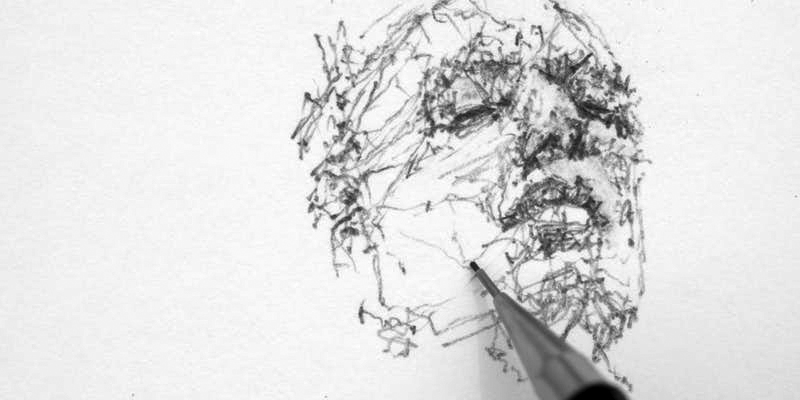
[Image by Dryden Goodwin]

Ecstatic Truth IV. Truth of Matter: process and perception in expanded animation practice – CALL FOR PAPERS

Our 4th Ecstatic Truth symposium will be at the University of Westminster on Thurs 16th May, with Keynote speaker Dryden Goodwin.
We seek proposals for presentations that address the potential of animation, in its most expanded form, to make sense of our realities.
Selected papers will be eligible for publication in a dedicated issue of the peer reviewed International Journal of Film and Media Art.
DEADLINE: 29th MARCH
More information: https://bit.ly/2XyCiOh
Notes from Ecstatic Truth I-III: https://expandedanimation.net/tag/ecstatic-truth
Ecstatic Truth organising committee:
Dr. Tereza Stehlikova, University of Westminster
Dr Birgitta Hosea, Animation Research Centre, UCA
Dr. Pedro Serrazina, Universidade Lusófona

Call for papers: artists and spatial inequality

Symposium_Still_2

MOVING POPULATIONS, SCANT RESOURCES, CHANGING COMMUNITIES: with this one-day symposium we want to have some dialogue about artistic practice that engages with radical and mobile approaches to geography that could include gentrification, colonialism or environmentalism.

Here is the call for papers.

SPATIAL MUTUALITY SYMPOSIUM:
ARTISTS and MIGRATION, MATERIALS and URBAN CHANGE

Date: Thursday 23rd May 2019
Location: University for the Creative Arts, Falkner Road, Farnham, Surrey, GU9 7DS
Times: 10:00 – 19:00

Call for papers: SPATIAL MUTUALITY SYMPOSIUM – ARTISTS and MIGRATION, MATERIALS and URBAN CHANGE
 
Date: Thursday 23rd May 2019
Location: University for the Creative Arts, Falkner Road, Farnham, Surrey, GU9 7DS
Times: 10:00 – 19:00
 

Spatial mobilities of people and materials are emerging as important political and cultural issues (of our time). These mobilities may be related to conflicts, urbanisation, material resource extraction and the pressure of economic inequalities of North and South (all of or in any combination of the above). The work of artists in researching and collecting narratives and accounts of migration, uncovering material processes, and charting urban change is crucial in making our world of spatial mutuality visible.

The late Doreen Massey contended that space is constructed by narrative and the unfolding of personal and community identity. She suggested work foregrounding spatiality and mobility offers new frameworks for understanding the social world and the financial and political forces that shape it. The narrative and analytical potentiality of mobility and our material environment have been particularly of interest to lens based practitioners and those working with socially engaged practice. More recent analyses have explored data and material constitution of spatiality. (cf Faizal & Weizmann 2017, Harvey 2012, Kurgan 2013, Paglen 2018) Artists have used all these approaches and more in their work.

This one day symposium at UCA seeks 20 minute contributions from artists responding to these broad themes of migration, materials and urban change in three panels, with an emphasis on exploring identity and spatiality. We are seeking those working in a diversity of socially engaged practices, contexts and broadly using lens and auditory based media forms. We encourage a diversity of practitioners and presentation forms.
 
The three panels of this symposium are:
 
MIGRATION – artists working with themes of dislocation and place; the dislocation of narratives; and participatory practice.
 
MATERIALS / RESOURCES – artists working with the movement and use of materials in the global economy; issues of resource exploitation; waste; toxicity; exploitation of labour; de/re-colonisation.
 
COMMUNITY CHANGE – artists working with gentrification; social and spatial segregation.
 
Keynote speakers:
 
Christine Molloy, Desperate Optimists
Professor Alison Blunt & Dr Olivia Sheringham, Queen Mary University of London
Call for papers:
 
This one-day symposium at UCA seeks 20-minute contributions from artists and filmmakers responding to the above broad panel themes. We encourage a diversity of practices and presentation forms.
 
If you would like to present at this symposium, please send abstracts of 250 words maximum for 20-minute presentations; a biography of 100 words maximum; and any technical requirements for the presentation to:
 
Stephen Connolly stephen.connolly@uca.ac.uk
David Rule drule2@uca.ac.uk
 
Deadline for abstract submission: 31st March 12:00 (UK time)
 
Presentations to be confirmed: 12th April


Call for Papers: Animation in Virtual and Augmented Environments

Paper Submission Deadline: January 7 2019

The overall goal of this event is to identify the opportunities and challenges for animated content in AVR environments.

Topics of interest include (but are not limited to):

  • Animated reality vs. mixed reality content
  • Animation techniques in AVR environments
  • Hardware/Software support for animation in AVR
  • Interdisciplinary and intermedia approaches (e.g. games, film, theatre, fine arts etc.)
  • Motion and/or performance capture
  • Tools/methods/use cases for Interactive dissemination of animated AVR content
  • Use Cases and Applications of animated content in AVR environments
  • User Acceptance of animated AVR contents

For more information go to: https://anivae.fhstp.ac.at/call-for-papers/


CFP: Experimental and Expanded Animation

Lilly  Husbands wrote up a review of this conference here with lots of information about what was discussed: https://www.fantasy-animation.org/current-posts/review-experimental-amp-expanded-animation

Call for papers: Experimental & Expanded Animation: Current Perspectives & New Directions

Proposals are invited for an interdisciplinary one-day conference with an evening reception, screening and exhibition.

At the University for the Creative Arts, Farnham, Surrey, UK.

Conference date: February 13th, 2019.

E&EAniCover

THEME

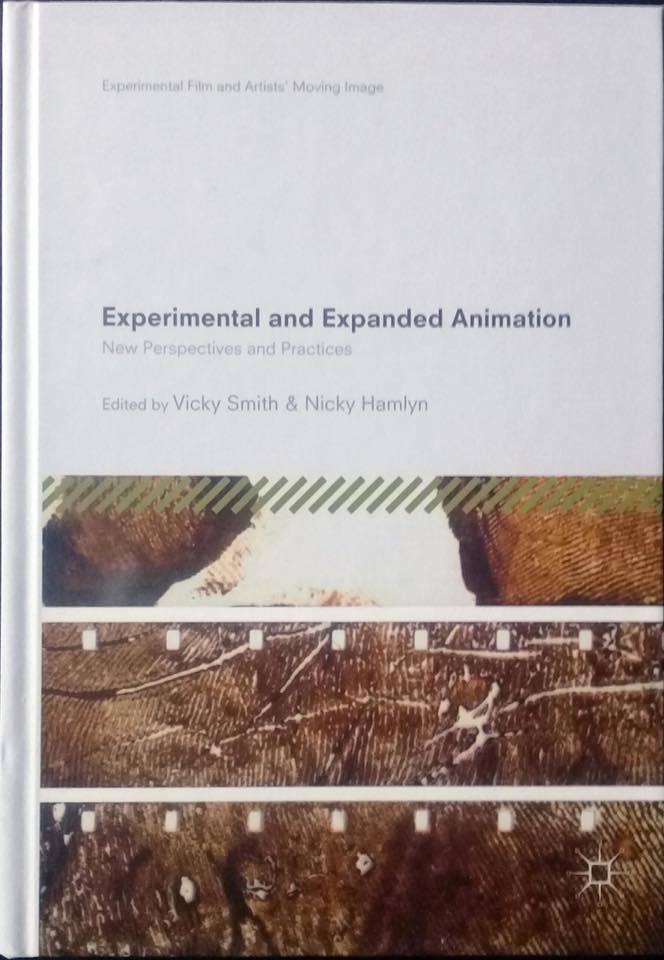
With their recent volume: Experimental and Expanded Animation: Current Perspectives & New Directions, Hamlyn and Smith aimed to reach further into understandings of what experimental animation is, and has been,  since Robert Russett and Cecile Starr defined it in 1976. This conference aims to further focus our project and to develop findings from the publication through more immediate methods of open dialogue and/or film practice. The prompts listed below have been condensed from themes emerging in the volume. However we welcome proposals that respond to these areas and also those that pursue other lines of enquiry. A range of disciplinary approaches is encouraged and the conference aims to include papers from practitioners, practitioner/scholars and scholars. As well as traditional 20 min papers we encourage alternative methods for sharing ideas and materials through, for example, performed presentations, artistic works, mini-workshops and lightning talks.

PROMPTS

Craft/ materiality

Transparency of process and use of materials has been central to experimental/ materialist film practice and theory. To what extent has the homogenization of media today prompted a rise in more recent craft theory? How do Marxist materialist theories relate to post-human and new materialist discourse and in which ways do these more recent methodologies impact upon our understandings of experimental expanded animation?

Feminism/women in experimental animation

It’s understood that the privacy of animation production conditions facilitates exploration into issues relating to feminism.  Female animators today are translating concerns, such as the domestic, sexuality and the body, into large scale, expanded and performed animation.  Does such work, installed in spaces beyond the gallery/cinema, and in which the female animator is visible on stage, impact upon expression of the female experience, or has this become less crucial to articulate, and how does feminist theory offer insights into this area?

Industry/ independent

Critically reworked commercial animation is occurring today within the purview of experimental film. Outwardly appearing as traditional cartoons, how does this material sit within a field that has tended to emphasise the auteur and has avoided the graphic, the narrative and the popular? 

Inter-disciplinary

Increasingly we see interdisciplinary approaches employed to analyse animation, including for example post-humanist scholarship; aesthetics; phenomenology; feminism and critical theory. To what extent do these methods cast light on animated texts, or do they detract from fundamental questions concerning form and the medium?

Medium/ context

Media including photography, dance, and performance for example have been central to animation since vaudeville, and then through the expanded cinema of the 60s.  How is experimental animation advanced through media ‘impurity’, and to what extent are theories such as inter-mediality, which suggests that individual qualities of distinct media are enhanced through their interlocking, of value?

Perception/reception

Animation that is articulated beyond the single screen could be said to emphasise a perceptual and phenomenological engagement. Flicker for example, is located in the physiology of the viewer, while animated installation demands a mobile spectator.  Both modes of spectatorship are contingent and situated in the present of their apprehension. How is animation in the expanded field continuing to elicit new modes of spectatorship? 

Representation/ technologies 

3D-CG and internet animation has the capacity to invent and manipulate the extant world in myriad ways.  How is CG being used in the context of experimental expanded animated film?

Utopia/ ecology

Gene Youngblood hailed expanded cinema as reflecting a utopian expansion of both consciousness and technology.  Today much experimental expanded animation, made through contracted means of found or old materials, can be regarded as a response to resources made scarce through either forced obsolescence, unsustainable practice and/or as a creative resistance to media acceleration. How does the trend toward a careful ecology of materials impact on experimental animation languages?

SUBMISSION

Please submit an abstract (up to 500 words), 3–5 bibliographical sources, 3-5 keywords as well as a short bio by 15th of November 2018 to:

vsmith9@ucreative.ac.uk

with the subject heading: ‘Experimental Animation Conference’. The selected abstracts for the conference will be announced by late November 2018.

Call for Papers: The Crafty Animator

The Crafty Animator: A Conference on Handmade and Craft-based Animation

Proposals are invited for an interdisciplinary one-day conference at Rich Mix Cinema, Shoreditch, London, on Thursday 7th September 2017

Animation is famously diverse, incorporating as it does a range of production methods, techniques and practices. This one-day conference focuses on any technique that could be considered to be handmade or craft-based, from cut outs to models and puppets, from sand-on-glass to ink-on-glass, and beyond. The role of the animator is key to such techniques where we can often see her/his imprints or finger marks etc. or even hands in the animation; the ‘presence of the artist’ is often highly visible in such craft-based practices and is a presence this conference seeks to explore from numerous perspectives. The conference aims to consider: the kinds of animation techniques that might fall into the category of the handmade; the ways that handmade and craft-based animation might be framed as gendered practices, or not; the kinds of cultural value that handmade and craft-based might animation carry. A range of disciplinary approaches is encouraged and the conference aims to include papers from practitioners, practitioner/scholars and scholars.

I am delighted to confirm Dr Birgitta Hosea, Head of Animation at the RCA, as our Keynote Speaker.

Possible approaches include but are not limited to:

  • Historical examples of handmade animation`
  • Contemporary practices
  • Gender politics and production practices
  • Audience engagement
  • Spectacle and visual effects
  • Space and place
  • Production cultures
  • Narrative and storytelling
  • Children’s television animation
  • Digitising the handmade
  • The cultural value of craft-based/handmade animation
  • Craft-based practices and the community
  • The ‘presence of the artist’
  • Craft-based/handmade animation and advertising

The conference will be held at the Rich Mix Cinema in Shoreditch, London on Thursday 7 September 2017. Please send abstracts of 300 words plus 100-word bio by Friday 23 June 2017 to:

Dr Caroline Ruddell (caroline.ruddell@brunel.ac.uk)

Dr Caroline Ruddell
Lecturer in Film and TV Studies
Department of Social Sciences, Media and Communications
College of Business, Arts and Social Sciences
Brunel University London

Associate Editor Animation: An Interdisciplinary Journal
animation: an Interdisciplinary journal is the first cohesive international refereed publishing platform for animation that unites contributions from a wide range of research agendas and creative practice.
http://anm.sagepub.com

Call for Papers: Ecstatic Truth II

16195135_1334857879869577_3950120346909842332_n

Ecstatic Truth II: Lessons of Darkness and Light

“Fact creates norms, and truth illumination” Werner Herzog 

Date: Saturday 27th May, 2017
Location: Stevens building, Royal College of Art, Kensington Gore

The second animated documentary symposium at the RCA is back!

We want to continue with the examination of how animation can contribute to, challenge and push the boundaries of what documentary film can be. We will consider animation in the most expanded sense and are interested in proposals that may challenge and redefine the boundary of animation itself. We can also confirm that Annabelle Honess Roe, author of ‘Animated Documentary’, will be one of our keynote speakers.

In the last symposium, one of the themes that emerged was one of archaeology and excavation. According to Herzog: “There are deeper strata of truth in cinema, and there is such a thing as poetic, ecstatic truth. It is mysterious and elusive, and can be reached only through fabrication and imagination and stylization.”

We invite speakers to present projects that roam the landscape (whether real or imagined), dig through the sediments of reality, explore vertical time of poetry, examine hidden histories, project visions of future, or trace new connections between concepts, use fabrication and imagination to touch upon vital issues: whether these are social, political, philosophical, or personal.

At a time of polarised political views and a deep sense of division, it seems to be a relevant moment to question the concept of darkness and light, aesthetically, politically, ethically, imaginatively. How can our work be of relevance, help us understand where we have been, where we are, and where we might go? How can the notion of ecstatic truth cast light on the shadowy concept of post-truth and what contribution can animated documentary bring to this debate? How can animation documentary, in its most expanded form, illuminate us?

We are opening this call for paper to PhD students, researchers (within animation but also beyond), filmmakers and other practitioners, who use animation as part of their methodology, their way of trying to understand the world.

Proposals should be for either:

  • a 20 minute conference paper;
  • an alternative discussion/presentation format as appropriate for practice-based research (this can include practice based work in a form of short films, images etc.)


Proposed themes:

Deeper Strata

Vertical time and poetic image, landscape and memory, shared or personal history, embodiment

Visions of Future

Imagination and fabrication, science-fiction, art & science dialogue, role of technology

Lessons of Darkness and Light

Human condition, social issues, society, social commentary, religious or spiritual, re-contextualizing documentary footage, post-truth/ecstatic truth/animated form


To submit your proposal or any related questions please contact dr Tereza Stehlikova:

tereza.stehlikova@network.rca.ac.uk

The deadline for submissions is 7th April 2017

Facebook event: https://www.facebook.com/events/1326409527421972/

Call for Papers: ANIMATION AND MEMORY

International Conference at Radboud University, Nijmegen, 22-23 June 2017

Confirmed keynote speakers

• Dr. Annabelle Honess Roe, University of Surrey
• Professor Suzanne Buchan, Middlesex University London

Invited artist

• Ülo Pikkov, animator and PhD candidate at the Estonian Academy of Arts

Call for Papers

The past thirty years have witnessed the emergence of memory studies as a field that has yielded a rich body of research into practices of remembering and forgetting in art, popular culture, and everyday life. While live action cinema and documentary films have been studied extensively, the interrelation between animation and memory has so far received much less attention. This lacuna in scholarship is particularly pertinent in light of the increasing number of animation films dealing with various forms, methods, and contexts of remembering and forgetting.

Our conference seeks to address this lacuna. We use the word animation in the broadest possible sense, from stop motion to computer animation and gif files, from cell animated cartoons to painted animation. Cognizant of the medium’s inherent differences from (as well as similarities to) live action cinema, we are particularly interested in the ways in which animation can operate as a medium and a technology of memory and forgetting.

The main questions we will explore are as follows: How do animation films bring forth personal and collective pasts, as well as traumatic, repressed or tabooed memories? What role does the materiality (or immateriality) of the medium play in representing the past and processes of remembering and forgetting? What is the role of found footage, objects, and sound in animation? What role does animation play in disseminating information about the past and how does it serve political ends?

We welcome proposals for 20-minute papers, as well as three-paper panels. Although the conference focuses on animation and memory in a broad sense, we especially seek contributions that address animation in relation to:

Ø documentary
Ø reenactment
Ø recollection
Ø adaptation
Ø the archive
Ø aide mémoire
Ø lieux de mémoire
Ø communicative / cultural memory
Ø postmemory
Ø multidirectional memory
Ø prosthetic memory
Ø performances of memory
Ø real and imagined pasts
Ø commemoration, memorials and monuments
Ø personal and collective trauma
Ø forgetting and amnesia
Ø found footage / objects
Ø tabooed and repressed memories
Ø affect, nostalgia and melancholia
Ø materiality and new materialism(s)
Ø worldmaking
Ø theories of memory studies
Ø the history of the medium
Ø museums, exhibitions, education
Ø miniaturization and enlargement
Ø festivals and distribution of films

Please send an abstract of about 250 words and a bio of 100 words to the organisers at <animationandmemory@let.ru.nl> by February 15, 2017.

Conference website: www.ru.nl/animationandmemory

Selected papers will be considered for publication.

Conference committee Maarten van Gageldonk, László Munteán, Ali Shobeiri, Cansu Soyupak, Josette Wolthuis