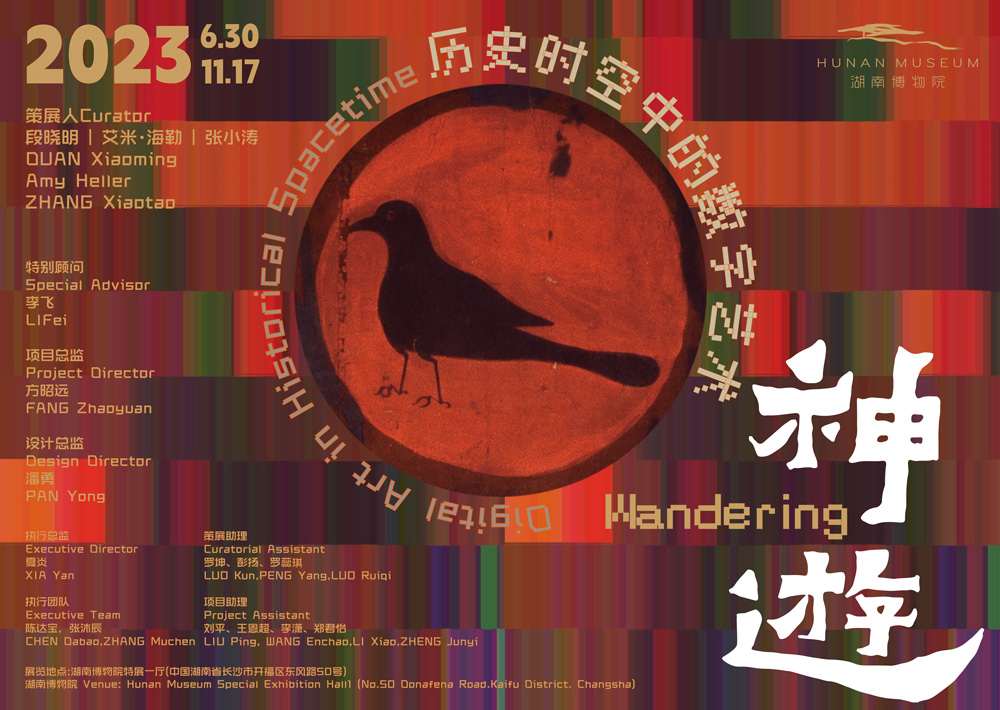
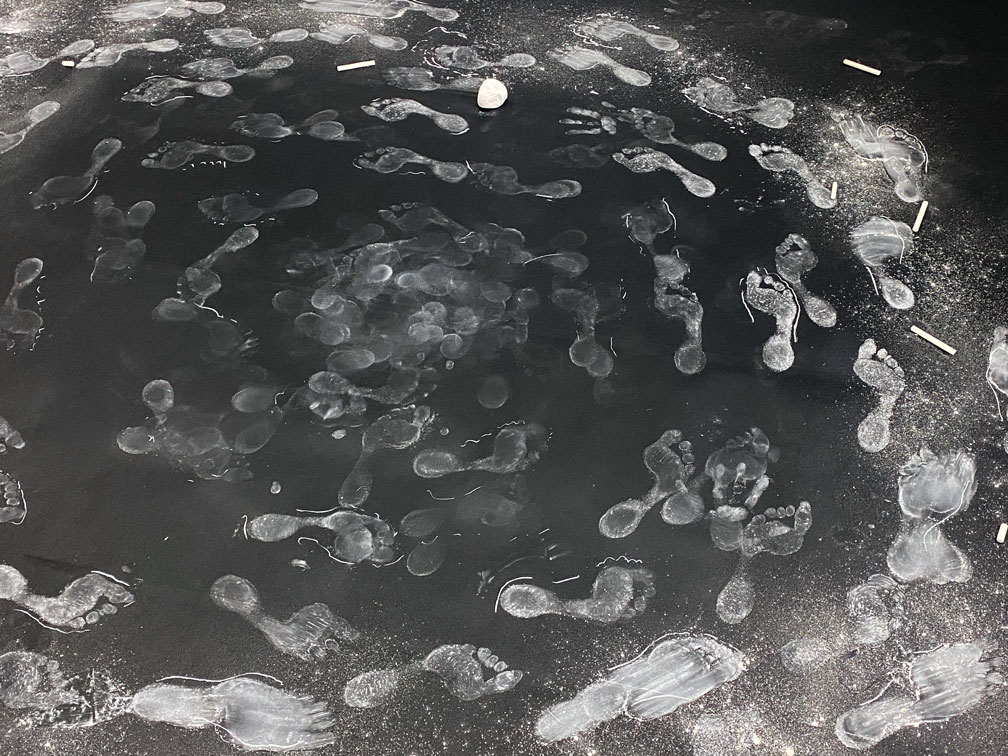
In this installation originally commissioned by Hunan Museum, an animated series of chalk footprints are projected downwards on a slate surface.
The exhibition, Wandering: Digital Art in Historical Space Time, was themed around contemporary artists responding to ancient, historical artworks. [Download catalogue essay]
This installation was subsequently included in Animation as Art: A Multi-Sensory Experience, an exhibition about the materiality of animation curated by Jorgelina Orfila, Francisco Ortega, Christine Veras for the Museum of Texas Tech, Lubbock, Texas, USA.
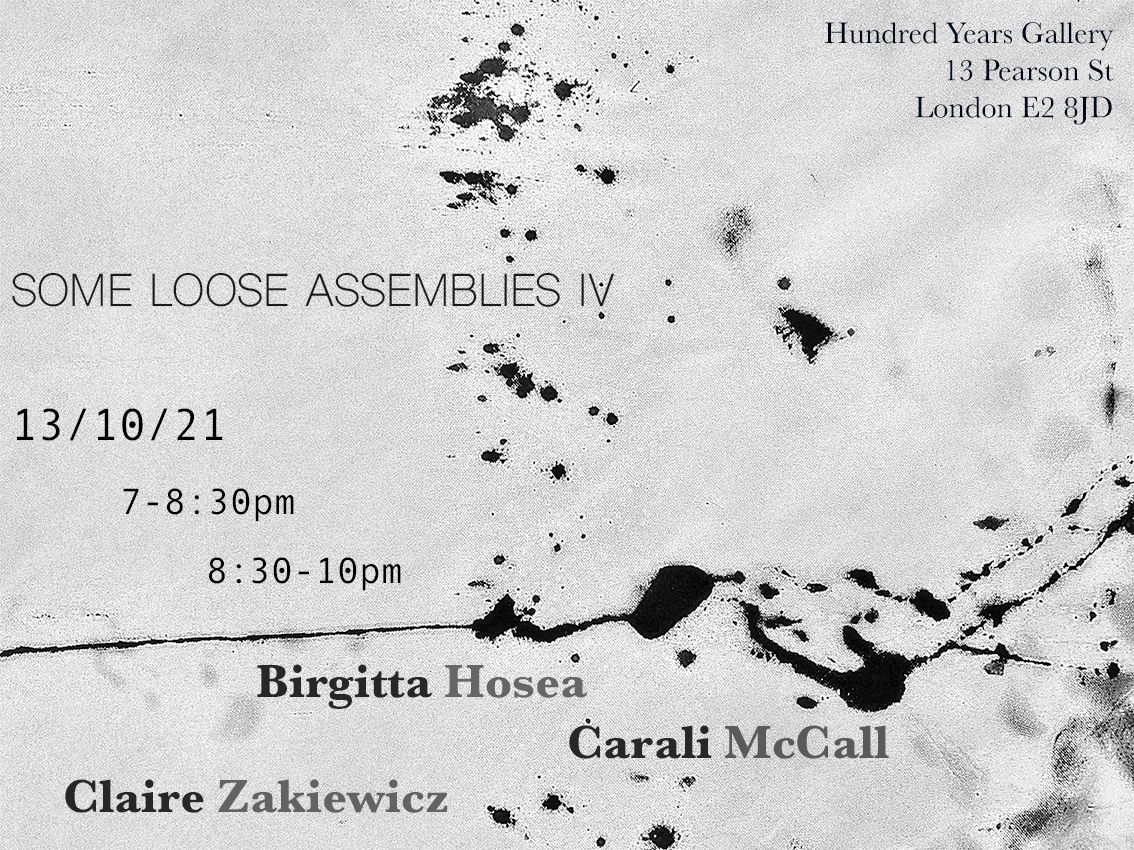
Performance by Birgitta Hosea at Hundred Years Gallery as part of her exploration of chalk as a material during her residency at the Centre for Recent Drawing (as part of the Performance Drawing 2021 exhibition events).
Preface written by: Anna Furse. Foreword written by: Bonnie Marranca
Part of the Drawing In series, edited by Russell Marshall, Marsha Meskimmon and Phil Sawdon.
The first book to be published on performance drawing, Performance Drawing: New Practices Since 1945establishes a vibrant art movement that has been progressively burgeoning since 1945 and contextualises today’s contemporary approaches while questioning what is drawing and what is performance. Each chapter focuses on a different perspective of performance drawing. Embracing the different voices and various lenses, the authors combine individual yet critical methodologies. While embedded in ephemerality and immediacy, the themes encompass body and energy; time and motion; light and space; imagined and observed, demonstrating how drawing can act as a performative tool. The dynamic interaction leads to a collective understanding of the term performance drawing and addresses the key developments and future directions of this applied drawing process.
The book includes a consideration of drawing with a number of technologies; of live animation; of the lightning sketch stage act and recontextualises a number of expanded cinema works as acts of drawing.
Endorsements:
“Performance Drawing represents a highly developed record of practice-based research, tracing the developments in contemporary drawing, building on precedents that have led to emerging trends. It analyzes the radical departure from the acceptance of drawing as a canonical medium based on mark-making on two-dimensional surfaces, into real space towards performance, light projections, film and the use of new technologies. The texts brilliantly place all these developments into a clearly articulated context.” – Therese Bolliger, artist, Canada
“While narrative forms of drawing have found favor through numerous exhibitions and publications world-wide, drawing as an inherently process-driven performative event is still lacking accessible comprehensive theoretical research. Bridging two centuries of contemporary practice, Performance Drawing will fill a huge gap for artists, teachers, scholars and art publics.” – François Morelli, Concordia University, Canada
“A valuable historical primer that examines key examples of performance drawing from the last half-century and challenges established definitions and categorisations. The authors draw a picture of the changing boundaries between art forms, showing how the blurred lines between artistic disciplines are the product of an active performative process. In addition to practitioners, this should be read by anyone interested in emerging art practices.” – Malcom Cook, Associate Professor in Film, University of Southampton
This year I am one of the keynote speakers at the 7th CONFIA conference on illustration and animation in Viana do Castelo in Portugal.
My presentation is about artists who make drawings in front of a live audience using projection technologies to illuminate their mark making process, work that complicates the boundaries between drawing, performance and animation. On my way to CONFIA very soon with Rose Bond. Excited and honoured to be doing a keynote. It includes historical contextualisation of Lightning Sketch artists (thanks to Malcolm Cook) and contemporary artists like Lisa Gornick, Harald Smykla, Bahman Panahi, Paul Sharits, Takahito Iiumura, Vicky Smith, Pierre Hébert, Kellie O’Dempsey and myself. Here is a link to the live stream video of the presentation from CONFIA’s Facebook page
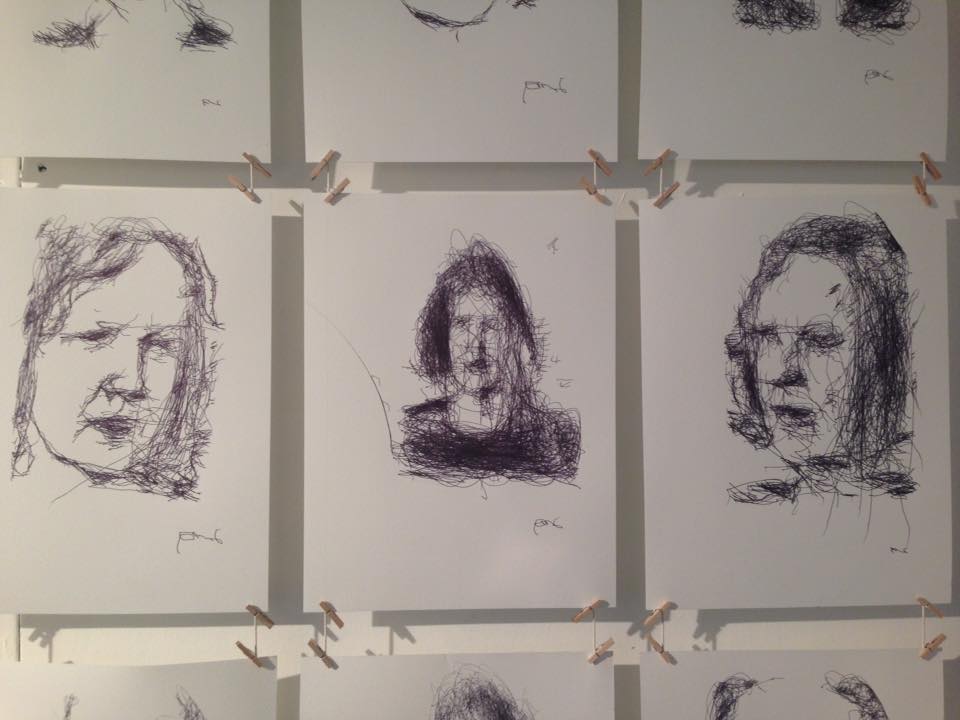
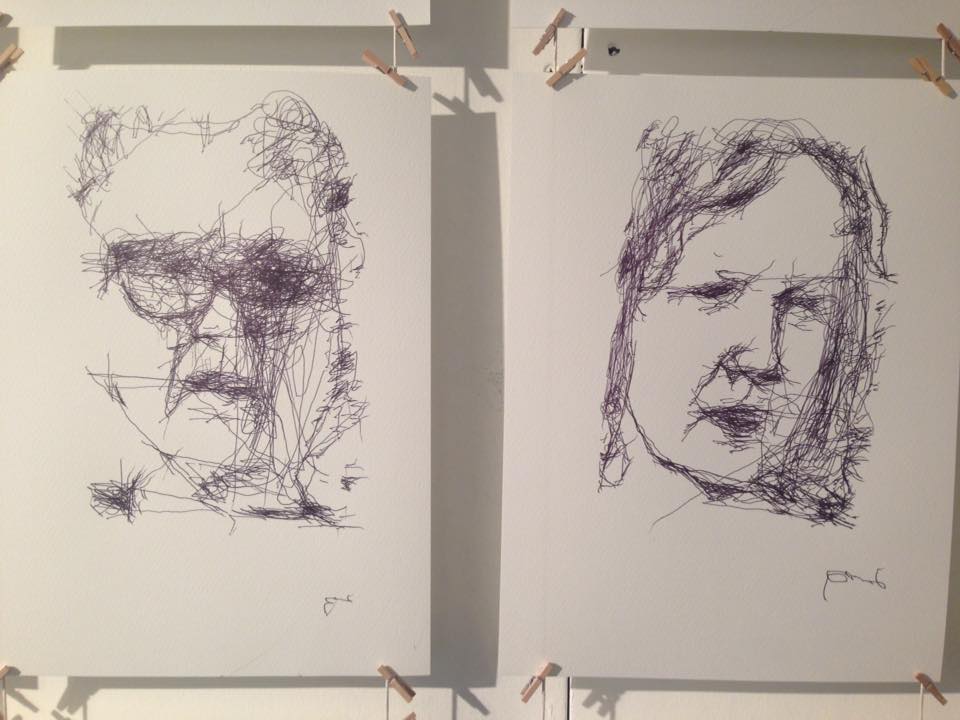
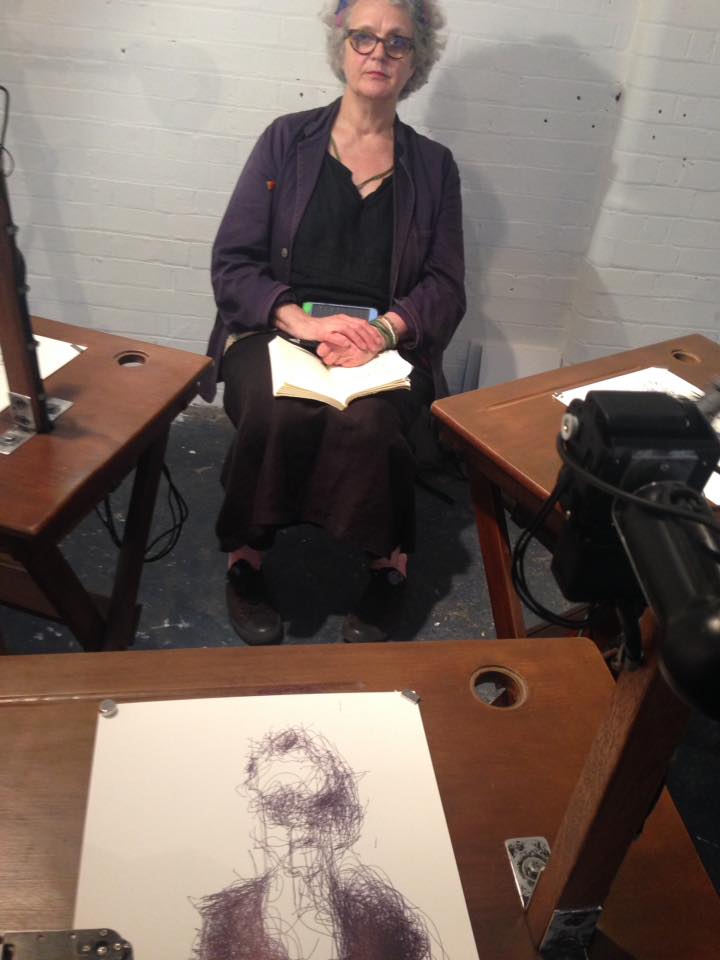
I recently had a fascinating evening with Maryclare Foa getting our portraits drawn by Patrick Tresset‘s robots at Platform Southwark, part of the Merge Festival.
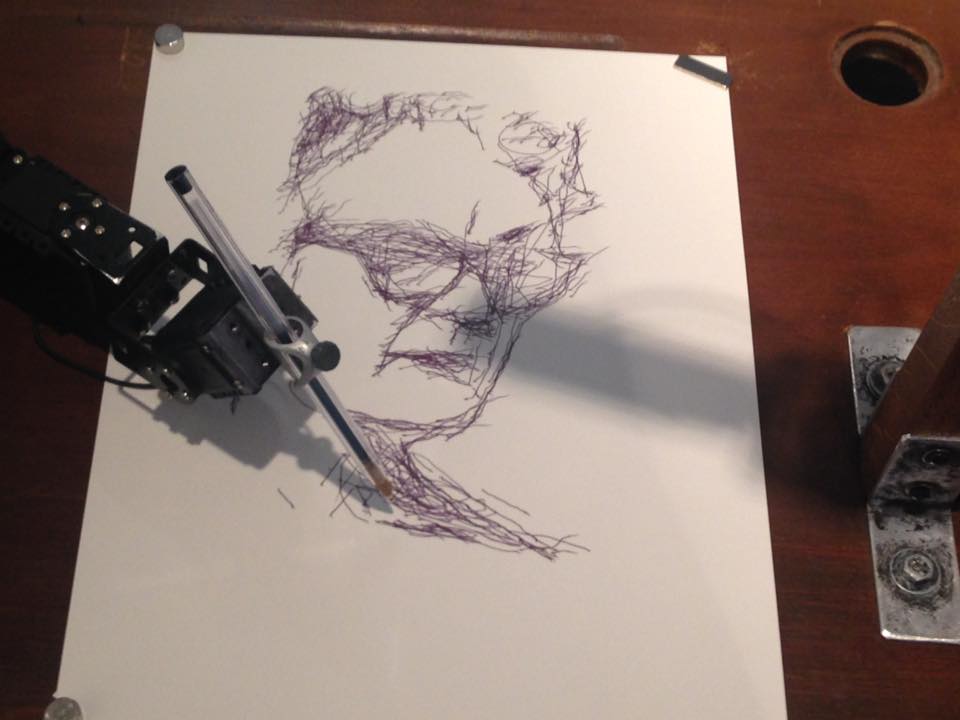
A camera looks at you then down at the drawing.
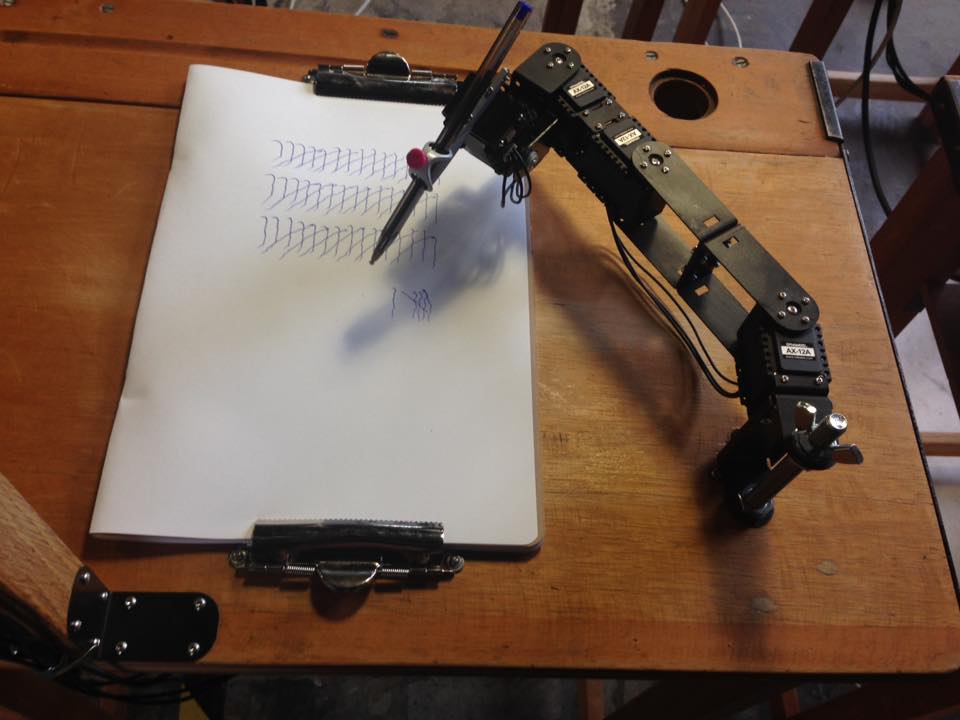
The programming is based on Patrick Tresset’s own left-handed drawing style. Interesting to see the variations. The angle of the pen makes a difference, so do light levels. The lines are gestural because of being drawn by robot arms. The signatures are taken from a random, unintended mark that one of his robots once made.
Me and Maryclare Foa drawn by the same robot. We both look very suspicious!
Maryclare Foa confronts the robot and draws it back!
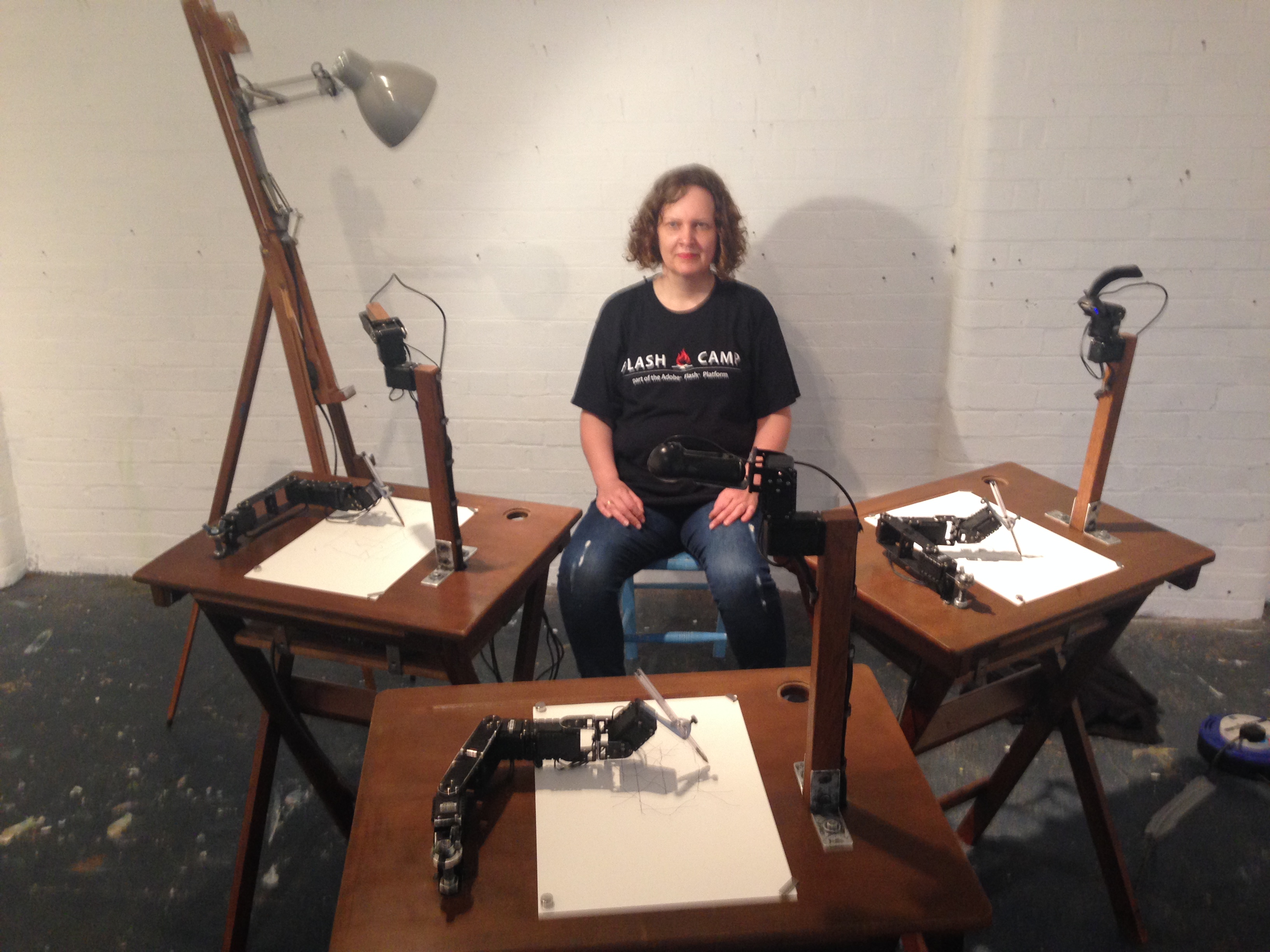
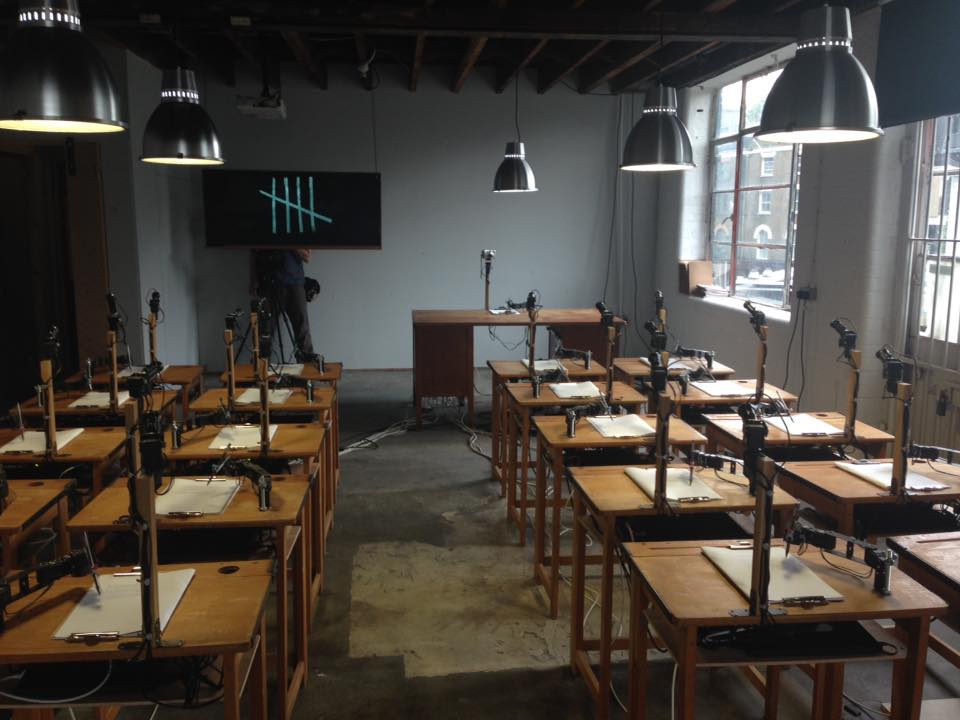
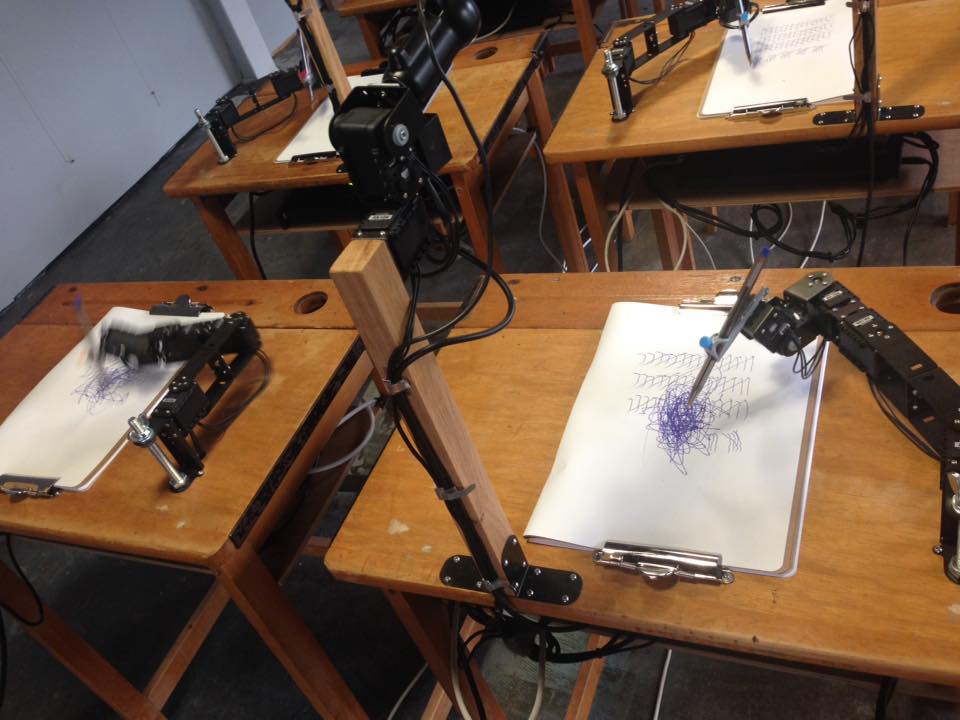
In the installation upstairs, Human Study #4, there is a classroom of performing robots. A camera at the front desk seems to communicate to the robot arms at the desks in morse code.
The robot arms mark time along with the instructions on the video blackboard.
Finally, all but two start scribbling over their previous marks. The sound of the servo motors and the bleeps of morse code sound incredible. The whole set up brought back uncanny memories of my primary school.
Taking place in a former waiting room for the Folkestone ferry, SEeAFAR features six artists – Foa + Hosea, Carali McCall, Anne Robinson, Sarah Sparkes, Thurle Wright – whose work manifests absence. Through drawing, painting, installation, performance and moving image, these artworks recall the perspective of generations of women living in a state of unknowing as they wait for news or the return of loved ones from overseas and explore the tensions between anticipation and memory, separation and speculation.






 Expanded Animation