Onedotzero: Adventures in Motion 2011

Tickets are on sale for the next Onedotzero festival at London’s BFI, which runs from 23-27 November 2011. Featuring a feast of innovative, contemporary animation and motion graphics from around the world this festival is a must-see! It’s particularly important to support the festival since it lost its government funding in the recent cuts and may not be so ambitious in scale in future years.

For more information check out the Onedotzero website.

onedotzero_adventures in motion 2011 preview from onedotzero on Vimeo.
Animating Buildings

A compilation of different examples of animation projected onto the exterior of buildings.

LG Optimus Projections by Facade Mapping Image Show, Berlin, 2010

Technically extremely impressive, yet somehow vacuous, these 3D projections distort, explode and transform the Kulturbrauerei building in Berlin.


Contrex Commercial

In this commercial, female pedal power is used to generate the electricity to power a giant projection of an animated male stripper.


Hollywood in Cambodia sessions, Buenos Aires, 2007

Using the Tagtool, an instrument for drawing and animating with light in real time, artists create ephemeral graffitti out of projected light.


Shared Space and Light’s Tower of Dreams, Brighton, 2011.

Animated projections are used to activate a popular local building, which is falling into disrepair. Developed with the local community, the projections include ideas for how the building could be used in the future.

Tower of Dreams BN2 from Shared Space and Light on Vimeo.

Character Design: Pumpkin Heads and Apple Heads

American artist, Ray Villafane, carves pumpkins into a variety of character heads. Check out the pictures here. Happy Hallowe’en!

What he may or not realise is that he is following in a very old tradition of folk art. In the past, toys were a luxury that many working people couldn’t afford to pay for – so they made their own. Apples were an ideal medium for carving dolls heads out of and this folk art is still practiced in rural America. I have also seen a British example in the V&A’s Museum of Childhood in Bethnal Green. The Museum of Childhood has an extensive collections of historical toys and is a fantastic resource for ideas for character designs.

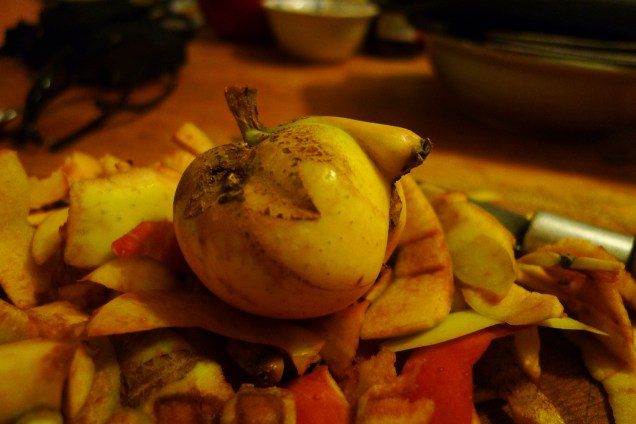
I am currently experimenting with apple heads myself, since finding this wild apple on an isolated tree at the top of a mountain in the Pyrennees when I was on holiday this summer. I call her Mrs Applebaum and am using her as the starting point for developing a new character.

P1020206

Mat Collishaw, Throbbing Gristle, 2008

Mat Collishaw’s show Shooting Stars at the Haunch of Venison in 2008 explored the legacy of Victorian imaging technology in our parallel era of rapid technological development. The most powerful presence in the show was Collishaw’s contemporary zoetrope, Throbbing Gristle, featuring small  characters created through rapid prototyping that appeared to come to life under the flickering lights of the gallery.

Charles-Èmile Reynauld’s Théâtre Optique, 1892

An interdiscplinary background in engineering, photography, sculpture and watercolours proved to be a fertile ground for the innovations in moving image technology developed by Charles-Èmile Reynauld, arguably the first person to create frame-by-frame animation in the classic form that we understand today.

Deriving from a praxinoscope that he had invented in 1876, Reynauld’s patented a Praxinoscope Théâtre in 1879 and then an improved version, the Théâtre Optique, was patented in 1888. This invention was able to project hand-painted, animated, moving images and was adopted commercially by the Museé Grévin in Paris in 1892. The Museé Grévin was a famous museum of waxworks, which also featured a Cabaret Fantastique, a small theatre with shows from magicians. The Théâtre Optique opened there in 1892 – three years before the Lumière Brothers had perfected the first film camera and demonstrated moving, photographic images in 1895. The Théâtre Optique was open until 1900, when it was superseded by cinema and closed down. Before his death in January 1918, in a fit of depression, he smashed the surviving Théâtre Optique mechanism and threw all but two of his picture bands into the Seine.

Here is a reconstruction of Théâtre Optique by the Museum of Cinema in Girona.

Here is a reconstruction of one of the two surviving Pantomimes Lumineuses that were screened at the Théâtre Optique, Pauvre Pierrot from 1892.

Less is More: Motomichi Nakamura

Strong visual storytelling, iconic, minimalistic design style and faintly disturbing, Motomichi Nakamura is a perfect example of less is more. Here is We Share Our Mother’s Health with music by the Knife (2006).

We Share Our Mothers Health » By Motomichi Nakamura from The Knife on Vimeo.

Here is an example of Nakamura’s expanded animation work with projections on Manhattan Bridge as part of Bright Nights in 2010.

“Bright Nights” outdoor projection at Manhattan Bridge from Motomichi Studio on Vimeo.

RSA Animate: The Divided Brain

The RSA Animate films have become one of the most popular channels on You Tube. A powerful example of how animated drawings can be used to convey complex ideas, the films use animation to illustrate RSA lectures. Not only does this make the lectures more understandable, but it has brought a whole new audience to these ideas. The latest in the series is ‘The Divided Brain’.

Check out the RSA Short Film Competition. Deadline December 19th.