CFP – Ecstatic Truth X: Animating Hope

Ecstatic Truth X: Animating Hope: Utopias, Uncertainties, Simulation, and Documentary Possibility

In association with UNDER_the_RADAR Festival and University of Applied Arts, Vienna, we are calling for papers for our next symposium on April 27th and 28th, which will take place at the University for the Applied Arts in Vienna

Deadline for proposals is 14th Feb 2026
Submit proposals here via Oxford Abstracts: 
 https://tinyurl.com/3tm6dkc3.

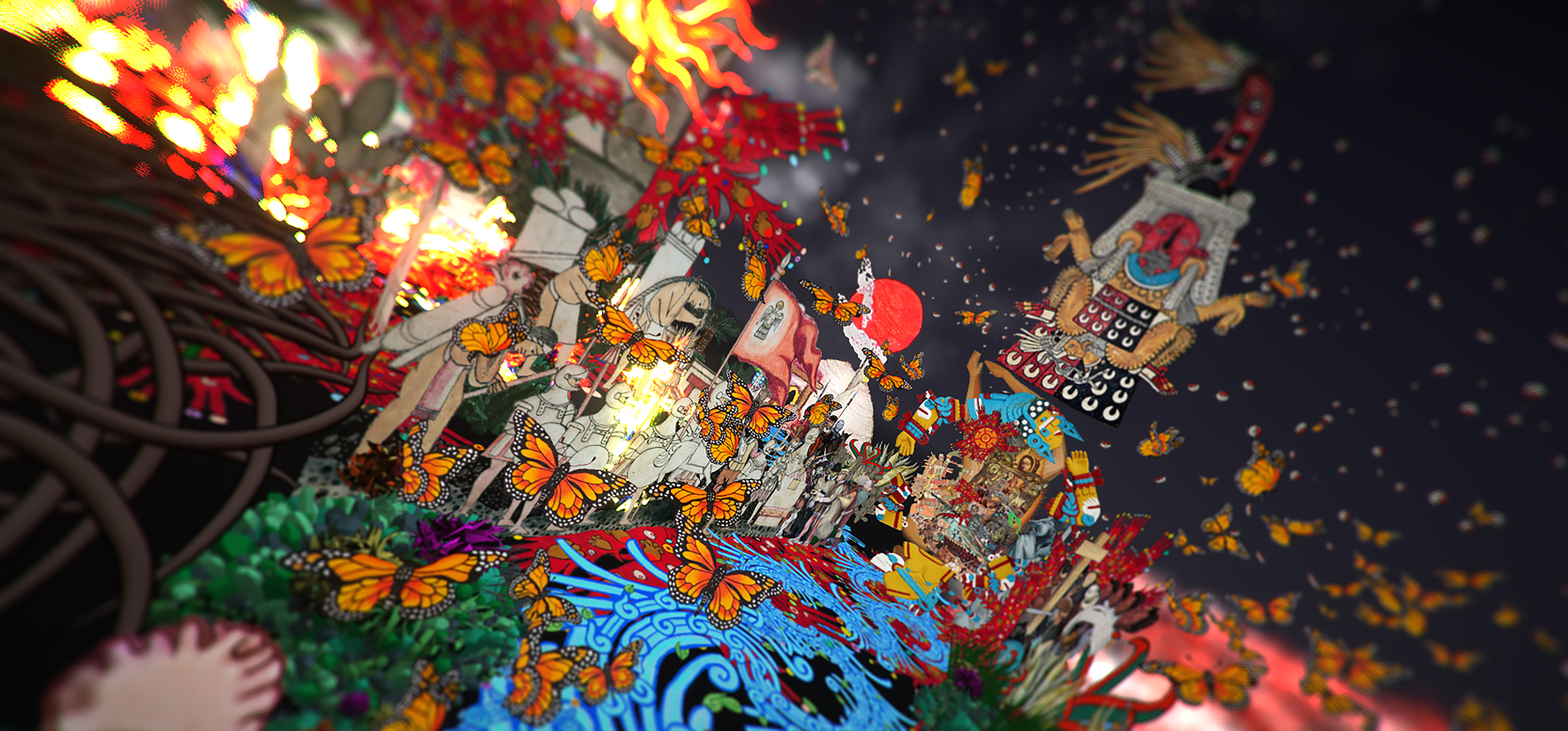
Image by Holger Lang


Ecstatic Truth is an annual symposium on themes arising from documentary animation as framed by Werner Herzog’s notion of a stratum of truth that exceeds the merely factual. In the 1999 Minnesota Declaration, Herzog contrasted the norm-making force of facts with an ‘ecstatic truth’, a deeper illumination, arguing that artifice can be a legitimate pathway to truth.

Documentary animation is uniquely positioned to operate in that register. By design it can render what live-action cannot—memories and dreams, internal states and dispersed timescales—expanding the range and depth of what documentary can show us about the world. In other words, animation openly declares its artifice while still aiming at the real, turning representational constraint into epistemic advantage. Our contemporary situation complicates this task. As Yuval Noah Harari observes, we live in a world ‘deluged by irrelevant information’ and where censorship often means flooding publics with distraction rather than blocking data outright. Animated Documentary’s contribution, then, could be to gain power through clarity, not to mimic the torrent but to compose it—to convert data into meaning, and information into felt knowledge.

Our tenth-anniversary theme – Animating Hope – treats hope, through Ernst Bloch’s perspective; not as naïve uplift but as a resistant orientation toward the “not-yet,” a wager that transformation remains possible even when the present seems unlivable. In this spirit, we welcome work that engages speculative traditions where imagining other worlds is itself a critical method, Afrofuturism reimagines and reclaims past and present through a Black cultural lens to prototype liberatory futures; queer futurity, following José Esteban Muñoz, directs attention to what could be, rather than only what is—treating the horizon of possibility as a guide for both practice and understanding. Alongside situated work from Serbia and Ukraine and Gaza-based initiatives such as Letters to Gaza and animator Haneen’s workshops, bringing hope to communities in practical ways. We also recognise emergent symbolic practices—such as the Gen Z protesters adoption of the One Piece Jolly Roger, as visual tactics of solidarity and hope.

Under the sign of ecstatic truth, we therefore invite practice-based, theoretical, and historical contributions that test how animated documentary can make hope operational—stylistically, ethically, and politically. What techniques (abstraction, rotoscope, collage, data-driven or hand-drawn worlds) help transmute ‘information’ into clarity without forfeiting complexity? How might artists signal invention while safeguarding participants and contexts? In what ways do speculative prototypes—challenges to the rule of AI and technological presets—and the situated practices above—function as forms of research, resistance, and survival? And above all: how can documentary animation shine “hope in the darkest places,” converting the seen and the unseeable into the kind of truth that moves us to act?

References: 

Harari, Yuval Noah. (2018). 21 Lessons for the 21st Century. Spiegel & Grau
Bloch, Ernst. (1995). The Principle of Hope. Cambridge, Mass. :MIT Press,


Themes

We invite practitioners and theorists working in non-fictional animation to consider the following questions:

Animating Hope: Utopias, Resistance, and Futures

  • How can animation embody hope as a form of resistance in times of political, social, or ecological crisis?
  • Is hope enough, or how might it be leveraged against overwhelming powers? (cf. Tolkien’s notion of fighting even when the ‘dragon’ is stronger).
  • What lessons can be drawn from past moments of collective hope, such as 1968, for today’s political and artistic futures?
  • How do Afrofuturism, queer futurity, and speculative practices (e.g., Octavia Butler, José Esteban Muñoz) expand the documentary imagination?

Methods, Media, and Resistance

  • What new methodologies can artists and scholars develop in the age of global capitalism to imagine and document alternative futures?
  • How might animation serve as a counter to despair, protest fatigue, and media-political control?
  • In what ways does the act of creating art itself constitute a conscious form of resistance?

Hope, Politics, and the Public Sphere

  • How does hope function as dialogue, as an antidote to blame culture, and as a means of standing against state or corporate control?
  • What role do economic structures play in shaping, restricting, or enabling documentary animation as a resistant practice?
  • How can language and translation (e.g., English as a dominant mode) shape or constrain documentary storytelling?

Technology, AI, and Documentary Uncertainty

  • How do deepfakes, AI, and algorithmic media complicate questions of authenticity, indexicality, and truth in documentary animation?
  • Can AI meaningfully contribute to documentary practices, or does it collapse difference and risk reducing meaning-making to economic pressures?
  • How do we negotiate between the personal, affective touch of human-made documentary and the commercial, automated logics of AI?

Ecstatic Truth in Dark Times

  • How can documentary animation shine “hope in the darkest places” (John Berger)?
  • What does it mean to create ecstatic truth in the face of apocalypse, collapse, or uncertainty?
  • How might acts of celebration, gathering, or even “partying in the face of the apocalypse” offer alternative modes of resistance, memory, or testimony?

Submission Details

We call for papers, presentations and responses on our themes of animating hope, in all its different manifestations, in relation to non-fiction manipulated moving image and animated documentary, in their most expanded forms. 

Submission is via Oxford Abstracts at this link: https://tinyurl.com/3tm6dkc3. You will be prompted to create a free account with Oxford Abstracts.

Your submission should include:

  • Title of your presentation
  • Abstract Please enter a brief summary of your proposed presentation with at least 2-3 references (max 500 words including bibliographic references)
  • Biography – a short bio of max 200 words, including relevant links to moving image work/websites etc.

If the paper is practice-based, it should include reflection and contextualisation in addition to presenting the practice. We will not accept papers that propose to show the practice only.

Finally, we are unable to provide feedback on individual submissions.


About Ecstatic Truth

Ecstatic Truth is an annual symposium on animated documentary founded in 2016 that explores issues arising from the interface between notions of animation and of documentary (conceptualised very broadly as non-fiction), with a particular interest in questions raised by experimental and practitioner perspectives. 

This year, we are in collaboration with UNDER_the_RADAR Festival and University of Applied Arts, Vienna and are open to proposals for future collaboration with other organisations.

Contact: ecstatic.truth.symposium{at}gmail.com

Ecstatic Truth collective: 

Birgitta Hosea, Animation Research Centre, University for the Creative Arts, Farnham;
Pedro Serrazina, Universidade Lusófona, Lisboa; 
Tereza Stehliková, University of Creative Communication (VŠKK), Prague; 
Natalie Woolf,  Universidade Lusófona, Lisboa.

Ecstatic Truth is supported by: 

AP3: Decolonising Animation

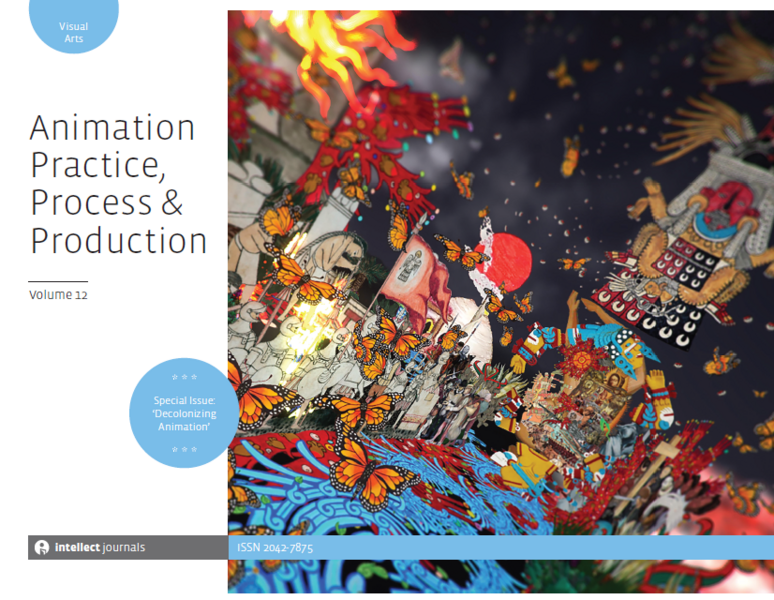
The latest issue of Animation Practice, Process and Production on the theme of Decolonising Animation is now out through Intellect. Co-edited by Birgitta Hosea, Helen Starr, Pedro Serrazina, Natalie Woolf and Tereza Stehlikova with contributions from Diwas Bisht, Paula Callus, Mark Chavez, Ina Conradi, Tara Douglas, Nairy Eivazy, Liliana Conlisk Gallegos, Maybelle Peters, Susan Sloan, Helen Starr and Yijing Wang.

In their editorial article ‘Decolonizing Animation’, Birgitta Hosea and Helen Starr provide an introduction to key ideas from the decolonial thinkers who form the theoretical framework for this issue and how these ideas might enliven the thinking and making of animation.

This edition of the journal is based on the symposium Ecstatic Truth VII: Decolonising Animation, which was held at the University for the Creative Arts in Farnham in 2023. Thanks to all the contributors, the publications team at Intellect, my colleagues at UCA who supported the event and also to the executive editors of the AP3 journal. Cover art courtesy of Liliana Conlisk Gallegos.

To view a live streamed webcast from Thurs 18th May 2023 of all the original presentations at Ecstatic Truth VII: Decolonizing Animationclick here

CALL FOR PAPERS – Ecstatic Truth VIII

Ecstatic Truth VIII: Animation and Documentary in Times of Artificial Intelligence
19th April 2024, Auditório José Araújo, Universidade Lusófona de Lisboa, Portugal

Close up of little Nemo and Mickey Mouse, walking side by side with Lara Croft in Lisbon City (image generated in collaboration with Deepai.com)

Submission deadline 23-02-2024
Outcome notification 08-03-2024
Submit proposals here: https://app.oxfordabstracts.com/stages/9932/submitter

About Ecstatic Truth

Ecstatic Truth is an annual symposium on animated documentary founded in 2016 that explores issues arising from the interface between notions of animation and of documentary (conceptualised very broadly as non-fiction), with a particular interest in questions raised by experimental and practitioner perspectives. 

An AI Call For Papers

The 8th edition of Ecstatic Truth will be dedicated to the impact of AI in image making, animation and documentary processes. 

To fully immerse us into the context, we worked with an AI interface to produce this year’s Call For Papers: we used a previous description of the Ecstatic Truth symposium framework and had it “improved” by AI; we gave AI the general topics that concern us and would like to address and, through an interesting “dialogue”, came to the following result. The text below is the result of that interaction, between the Ecstatic Truth team and AI. If this is the future, we may face it sooner rather than later:

A generic AI description of Ecstatic Truth:

“In an age where mere facts often give way to the accountant’s reality, the influence of artificial intelligence and manipulated imagery has opened new frontiers in the realm of image-making and documentary practices. As Werner Herzog insightfully stated, it is the ecstatic truth – a poetic reality – that can more faithfully capture the nuanced depths of human experiences. As we navigate this landscape marked by the proliferation of artificial intelligence and the deliberate manipulation of visual content, we find ourselves at the heart of a transformative era in documentary filmmaking. As a reaction to that, we instructed AI to write the following CFP and invite you to join us in Lisbon for a symposium focused on the theme of “Animation and Documentary Practices in times of Artificial Intelligence.”

Animation and Documentary in Times of Artificial Intelligence – CALL FOR PAPERS

“In a world where any image can be artificially generated, questions abound regarding the evolving role of the animator and the definition of the animated image in contemporary filmmaking. Furthermore, how do we navigate the discourse surrounding documentary, especially animation documentary, in the age of AI? Are we witnessing the gradual replacement of the animator by AI? Is AI-driven animation merely an escape from reality, or can it be harnessed to address pressing societal issues? How can animation, especially in the documentary context, grapple with the veracity of the image and the challenges posed by deepfake technology? How do we navigate notions of truth and authenticity in the digital age? 

This symposium, guided by an intersectional perspective, seeks to explore the profound impact of AI and digital manipulation on our understanding of the human experience and the possibilities for alternate realities. Just as colonialism disrupted local and indigenous knowledge systems, AI challenges our perceptions of reality and truth. How can we articulate and navigate the complexities of AI’s influence on our visual culture and society? Can animation, in its various forms, liberate us from the distorted realities created by artificial intelligence? We invite and encourage discussions on form, strategy, and the ethical considerations surrounding AI-generated imagery in our quest to explore “Animation in times of Artificial Intelligence.” 

Call for Papers

The “Animation and Documentary in Times of Artificial Intelligence Symposium” invites scholars, filmmakers, animators, and artists to submit papers and proposals that delve into the multifaceted realm of animation in the age of artificial intelligence. We welcome contributions that explore but are not limited to the following themes:

  • The evolving role of the animator in the context of AI.
  • The definition and significance of the animated image in contemporary filmmaking.
  • Documentary practices and animation in the era of AI.
  • The ethical implications of AI-driven animation and deepfake technology.
  • Narratives and storytelling in AI-generated animation.
  • The challenges and opportunities presented by AI in animation production.
  • The impact of AI on the veracity of the image in documentary practices.
  • Discussions on the intersection of truth, authenticity, and AI in the digital age.
  • Case studies, artistic projects, and innovative approaches related to animation and AI.

Submission Guidelines

Authors are invited to submit their paper abstracts (up to 300 words) along with a brief bio (up to 150 words) via our online submission platform. Deadline for abstract submission is 23 February, 2024.

Important Dates

  • Abstract Submission Deadline: 23-02-2024
  • Notification of Acceptance: 08-03-2024
  • Symposium Date: 19-04-2024

Join us in Lisbon for a symposium that promises to explore the frontiers of animation, documentary, and artificial intelligence. We look forward to engaging in vibrant discussions, sharing insights, and advancing our understanding of “Animation in Times of Artificial Intelligence.”

This comprehensive call for papers [has been created by AI and hopefully it should highlight] the 

symposium’s theme, key topics of interest, submission guidelines, and important dates, offering a clear and engaging invitation to potential contributors.

Is there anything else I can help you with today?”

Submission Details

We call for papers, presentations and responses on our themes of artificial intelligence, in all its different manifestations, in relation to non-fiction manipulated moving image and animated documentary, in their most expanded forms.

Submission should be completed via Oxford Abstracts, at this link: https://app.oxfordabstracts.com/stages/9932/submitter

You will be prompted to create a free account with Oxford Abstracts.

Your submission should include:

  • Title of your presentation
  • Abstract (brief summary of your proposed presentation) 500 words (including bibliographic references)
  • Short Biography – 200 words
  • Relevant links to moving image work/websites etc.

If the paper is practice-based, it should include reflection and contextualisation in addition to presenting the practice. We will not accept papers that propose to show the practice only.

Finally, we are unable to provide feedback on individual submissions.

Ecstatic Truth VII: Decolonising Animation

To view a live streamed webcast from Thurs 18th May of all presentations – click here

Birgitta Hosea, Pedro Serrazina, Helen Starr, Tereza Stehlikova and Natalie Woolf are currently editing a guest edition of the the Animation Practice, Process and Production journal (AP3) for IntellectBooks with written versions of the papers given at this symposium.

09:30 – 19:00 (GMT), 18 May 2023 

 UCA Farnham Campus, Room RG21, Falkner Road, Farnham, Surrey, GU9 7DS

Ecstatic Truth is an annual symposium on animated documentary that takes place in a different country every year. We are interested in what animators and artists have to say about the work they make. This year, in conjunction with the Animation programme, it’s coming to Farnham! We have a different topic every year and this year’s theme is decolonisation. 

What is decolonisation? In a nutshell, it is the idea that it might be possible to ‘unplug from the Matrix’ and find new ways to learn, think and act that are not imposed by dominant power structures. 

How does that apply to animation? Our speakers will look at issues such as how to work collaboratively to tell stories of conflict or underrepresented peoples, how to counter bias in technology and whether animation can be used to express the voice and culture of indigenous peoples. There will be a range of approaches to making animation shown – from traditional drawn animation to the use of VR, AR, game engines, data and motion capture. 

For more info about the schedule and to book: https://www.uca.ac.uk/events/research/ecstatictruthvii/

Farnham is a short train ride of one hour from London. Although there will be industrial action on the rail network 15-20th May, SW Rail trains should have no cancellations, although there may be minor delays.


Call for papers – Ecstatic Truth VII: Decolonising Animation

EXTENDED Submission deadline: Tues 7th March 2023 (midnight)
Symposium details: Thurs 18th May 2023, University for the Creative Arts, Farnham, Surrey, UK 
Submit proposals here via Oxford Abstracts: https://tinyurl.com/mr32u3rj

Keynote:  Liliana Conlisk-Gallegos, The Coyolxauhqui Imperative (VR, 2020)

About Ecstatic Truth

Ecstatic Truth is an annual symposium on animated documentary founded in 2016 that explores issues arising from the interface between notions of animation and of documentary (conceptualised very broadly as non-fiction), with a particular interest in questions raised by experimental and practitioner perspectives. According to Werner Herzog, mere facts constitute an accountant’s reality, but it is the ecstatic truth (a poetic reality) that can capture more faithfully the nuances and depths of human experiences. Given that animation (or manipulated moving image in all of its expanded forms) has the freedom to represent, stylize or reimagine the world, it lends itself well to this aspirational form of documentary filmmaking. This year’s symposium will be held at UCA in Farnham, Surrey and its theme of decolonising animation has been developed in collaboration with our Keynote Speaker, curator, producer and cultural activist, Helen Starr. 

Decolonising Animation 

Foregrounding subjective experience and freed from adherence to the physical, medical and scientific norms of photo-reality, just what is animation capable of? After a disappointing trip to Hollywood in 1930, Sergei Eisenstein travelled to Mexico where he socialised with Frida Kahlo and Diego Rivera, absorbing non-Western ideas from a subaltern culture he very much admired and that clearly influenced his evolving thoughts on animation. In his writing on Disney, Eisenstein considers animation as a subversive form of shapeshifting that resists Western rationalism and binary thinking in its appeal to ancient, evolutionary memories of being formless protoplasm; to the limitless imaginative freedom of childhood and to a joyous return to a state of animism in which all aspects of nature are interconnected. He points out that animated figures squash and stretch with plasmatic elasticity; these unstable forms can change shape, species, gender or any other imposed boundary; can perform impossible tasks or survive death. 

Despite all of its potential, Eisenstein asserts that animated film ultimately lacks consequence and is an escapist, golden daydream: “Disney is a marvellous lullaby for the suffering and unfortunate, the oppressed and deprived.”[1]But could animation be more than escapism and be made to matter? How might animation engage with notions of the human, of possible worlds, of post-, anti- and de-colonialism? 

Coming from an intersectional perspective, this symposium seeks to listen to, unite, engage with and extend notions of opposition to ideologies of colonialism as applied to the practice and analysis of animation. All forms of colonialism, whether settler colonialism, exploitation colonialism, surrogate colonialism or internal colonialism, have one thing in common: the destruction of local and indigenous knowledge systems. Colonialism leaves in its wake extractive, material-based and non-sustainable cultures. How can we articulate and process these complex histories and struggles? Can animation liberate us from internalised empires of the mind? We are interested in debates around form and strategy as well as subject matter. 

Call for Papers

We invite practitioners and theorists working in non-fictional animation to consider the following questions:

  • What happens if we rethink animation as a visioning and performance ritual with the ability for transportation into a poetic reality?
  • What are the implications of animation’s capacity for world building and worlding? Could animation be used to represent non-Western knowledge traditions?
  • As an artform in which the conventional rules of science, space and time cease to function, can animation be used as speculative fabulation to evoke a magical and poetic state that excavates Western anthropocentric worldviews?
  • How can animation and animation studies have a dialogue with the work of post-, anti- and de-colonial theory?
  • What epistemological strategies can be used in animation to interrogate complex histories of injustice and contested land rights?
  • What processes and methods of participatory production and co-design might be used to tell many stories while resisting possibly extractivist/exploitative tendencies of production that may otherwise be prevalent in animation practices?
  • What colonial legacies do the tools and technologies of animation structure into our usage of them? Do the tools and technologies of animation practice reflect the interests of colonial legacies? In what ways might we be vigilant of these in order to question them and imagine technologies that work to counter such interests?
  • How can we rethink reductive notions of ‘primitive thought’ and ‘atavism’, as expressed in historic texts such as that by Eisenstein, and use animation to articulate indigenous knowledge and culture?

Submission Details

We call for papers, presentations and responses on our themes of decolonisation, in all its different manifestations, in relation to non-fiction manipulated moving image and animated documentary, in their most expanded forms. 

Submission is via Oxford Abstracts at this link: https://tinyurl.com/mr32u3rj. You will be prompted to create a free account with Oxford Abstracts.

Your submission should include:

  • Title of your presentation
  • Abstract (brief summary of your proposed presentation) 500 words (including bibliographic references)
  • Short Biography – 200 words
  • Relevant links to moving image work/websites etc.

If the paper is practice-based, it should include reflection and contextualisation in addition to presenting the practice. We will not accept papers that propose to show the practice only.

Finally, we are unable to provide feedback on individual submissions.

Keynote Speakers: Helen Starr and Liliana Conlisk Gallegos

Helen Starr, Founder @ The Mechatronic Library

Helen Starr (TT) is an Afro-Carib curator, producer and cultural activist from Trinidad, WI. She began curating exhibitions with artists such as Susan Hiller, Cindy Sherman and Marcel Duchamp in 1995. Helen founded The Mechatronic Library in 2010, to give marginalised artists access to technologies such as Game Engines, Virtual Reality (VR), Augmented Reality (AR). Helen has worked with many public institutions such as Wysing Art Centre, FACT, Liverpool and QUAD in Derby. Being Indigenous-American Helen is interested in how digital artforms transform our understanding of reality by world-building narratives through storytelling and counter-storytelling. How, by “naming one’s own reality” we can experience the Other. Helen is on the board of QUAD, Derby and on the Computer Animation Jury for Ars Electronica, Linz. In 2020 she developed the concept of a Fluid or DAAD Futurism with Amrita Dhallu and Salma Noor.

Liliana Conlisk-Gallegos

Liliana Conlisk-Gallegos aka. Dr. Machete or Mystic Machete is from the Tijuana-San Diego border region in Southern California. With the goal of advancing the certain decolonial turn, her live, interactive media art production and border rasquache new media art pieces and performances generate culturally specific, collective, technocultural creative spaces of production that reconnect Chicana/o/x “Mestiza” Indigenous wisdom/conocimiento to their ongoing technological and scientific contributions, still “overlooked” through the logic of the decaying Eurocentric project of Modernity. In her Tijuana-San Ysidro transfronteriza (perpetual border crosser) perspective, the current limited perceptions of what research, media, and technology can be are like a yonke (junkyard), from which pieces are upcycled and repurposed to amplify individual and collective expression, community healing, and social justice. She has organized and curated over 14 community-centered, interactive, decolonial, community building, and environmentalist, research-based multimedia artivism and critical intervention performances and her work has been exhibited at ACM|SIGGRAPH, The García Center for the Arts in San Bernardino, Human Resources Art Museum in Los Angeles, the PAMLA Arts Matter of the Pacific Ancient and Modern Language Association, and the Guizhou Provincial Museum in China. Her most recent curation was The Future Past v. Coloniality: Decolonial Media Art Beyond 530 Years, supported by the Digital Arts Community for ACM SIGGRAPH (https://decolonial-media-art.siggraph.org)

She is Associate Professor of Decolonial Media and Communication Studies at CSU San Bernardino and a member of the ACM SIGGRAPH Digital Arts Committee. Her writings have appeared in Critical Storytelling from Global Borderlands: En la línea, Vol. 8, 2022 (Brill Publishers), Re-Activating Critical Thinking amidst Necropolitical Realities: Politics, Theory, Arts and Political Economy for a Radical Change, 2022 (Cambridge Scholars Publishing), A Love Letter to This Bridge Called My Back, 2022 (The University of Arizona Press), Departures in Critical Qualitative Research 3 Vol. 10, 2021 (UC Press), and Journal of Latinos in Education Vol. 20, 2018 (Taylor and Francis).

Organising Committee

This symposium is jointly organised by Professor Birgitta Hosea, Anna de Guia-Eriksson and Nikki Brough, Animation Research Centre, University for the Creative Arts, UK; Helen Starr; Dr Tereza Stehlikova, University of Creative Communication, Czech Republic; Tangible Territory Journal; Dr Pedro Serrazina, Lusófona University of Lisbon, Portugal.

Scientific committee also includes:

Balvinder Mudan, UCA; Dr Will Bishops Stevens, UCA; Jane Cheadle, UCA; Dr Yingying Jiang, BUCT

Contact

All questions about submissions should be emailed to ecstatic.truth.symposium@gmail.com

Ecstatic Truth is supported by: 

[1] Sergei Eisenstein, On Disney, trans. Alan Upchurch (London; New York; Calcutta: Seagull Books, 2017).

Birgitta Hosea: Inaugural Professorial Lecture

Here is ‘Expanding Animation and Other Queer Goings On’, my inaugural professorial lecture at the University for the Creative Arts in which I relate how I developed a post-medium approach to animation and much more besides.

Cartoon Animation: Satire and Subversion – presentations online!

All presentations from this one-day symposium that drew upon the legacy of acclaimed animator, Bob Godfrey, to examine the politics of comedy in cartoon animation are now online and publicly available to view free of charge!

Links below

We were also thrilled with this review of the day’s events by Dr Christopher Holliday for the Fantasy Animation blog

Opening Remarks: Tom Lowe / Dr Birgitta Hosea

Keynote 1: Dr Sharon Lockyer, Brunel University London, ‘Contextualizing Comedy Studies’

Panel 1: Performing Satire (whole panel chaired by Professor Paul Ward includes the presentations by Dr Maggie Gray, Pierre Floquet and Kate Jessop plus Q&A)

Dr Maggie Gray, Kingston School of Art, ‘Cartooning and Performance: Cartoon Style Alternative Theatre’

Kate Jessop, University of Brighton, ‘The Politics of Comedy: How has adult animation used satire as a vehicle for feminist cultural commentary’

Pierre Floquet, Bordeaux INP, France, ‘Tex Avery as the Noah Webster of Cartoon’

Panel 2. Absurdity and the Destabilisation of Authority (whole panel chaired by Jim Walker includes presentations by Professor Fran Lloyd, Sarah Tehan and David Wischer plus Q&A)

Sarah Tehan, Belfast School of Art, Ulster University, ‘Captain Phineas May. War Cartoons 1940-1946′

Prof. Fran Lloyd, Kingston School of Art, ‘Humour and the Subversion of Authority. The Animated Internment Drawings of Peter Sachs’

David Wischer, University of Kentucky, USA, ‘Prints in Motion: Amplified Absurdity’

Keynote 2: Steve Bell, The Guardian

Panel 3. Politics and Propaganda from Print to Pixel (whole panel chaired by Dr Birgitta Hosea includes presentations by Professor Paul ward and Dr José L. Valhondo-Crego plus Q&A)

Professor Paul Ward, Arts University Bournemouth, ‘Satire and Subversion in the work of Han Hoogerbrugge’

Dr José L. Valhondo-Crego, Universidad de Extremadura, Spain, ‘Subverting the myths of Francoism in the Spanish satirical press’

Closing Panel

Thanks to the University for the Creative Arts for supporting this event

Animation Research Centre: https://www.uca.ac.uk/research/arc

Ecstatic Truth V: A Journal and A Postponement

Dear All,

we wanted to share the good news that selected papers from Ecstatic Truth IV – Truth of Matter: process and perception in expanded animation practice (2019) have now been published in The International Journal of Film and Media Arts, Vol 4 No 2 and are available here: https://revistas.ulusofona.pt/index.php/ijfma/issue/view/746.

We are looking forward to compiling a new issue of the journal with papers from the next Ecstatic Truth at a future date, however, as it stands, Ecstatic Truth V: The Age of the Absurd will no longer be taking place in Vienna in April 2020 nor will the Under_the_Radar Festival that is hosting it. We were so excited about the quality of the proposals that we received this year and the cross currents and dialogue that could be generated from the programme that we are determined for the event to still go ahead at a later date and are working at finding an alternative time once international travel has normalised.

Best wishes for good health to you and your loved ones

Birgitta Hosea, Pedro Serrazina, Tereza Stehlikova (on behalf of Ecstatic Truth)

Holger Lang (on behalf of Under_the_Radar)

Cartoon Animation: Satire and Subversion Full Programme

SteveBellGuardian13-2-20
[Keynote speaker Steve Bell ©Steve Bell/The Guardian, 13/2/2020]

Delighted to announce that we will be live streaming this event at:
https://estream.ucreative.ac.uk/View.aspx?e=G15_RG21
Please note that the link will not be live until Monday morning.

Schedule for the day:

9.30-10.00 Registration/Coffee

10.00-10.05 Opening Remarks Tom Lowe / Dr Birgitta Hosea

10.05-10.50 Keynote 1 Dr Sharon Lockyer (Brunel University London)

10.50-12.00 Panel 1: Performing satire

Dr Maggie Gray( Kingston School of Art), Pierre Floquet (Bordeaux INP, France), Kate Jessop (University of Brighton)

12.00-12.20 Coffee Break

12.20-13.30 Panel 2: Absurdity and the destabilisation of authority 

Prof. Fran Lloyd (Kingston School of Art), Sarah Tehan (Belfast School of Art, Ulster University) David Wischer (University of Kentucky, USA)

13.30-14.30 Lunch Break

14.30-15.30 Keynote 2 Steve Bell 

15.30-16.00 Coffee Break

16.00-17.10 Panel 3: Politics and propaganda from print to the pixel

Dr. Driss Faddouli (Chouaib Doukkali University, El Jadida, Morocco) Prof. Paul Ward (Arts University Bournemouth) Dr. José L. Valhondo-Creg (Universidad de Extremadura, Spain)

17.10-17.40     Closing discussion with all panellists

17.40-18.00     Curator introduction to exhibition Jim Walker (UCA)

18.00-20.00    Bob Godfrey: A Collaborative Act Exhibition opens with drinks in James Hockey Gallery

06-GifVersion400

Presenter Details and Abstracts

croppedSharon Lockyer Social and Political Sciences 1

Keynote 1: Dr Sharon Lockyer

Sharon Lockyer is a Reader in Sociology and Communications and the founding director of the Centre for Comedy Studies Research (CCSR) at Brunel University London, UK. Her research interests include critical comedy studies, identity politics and comic media representations and the sociology of popular culture, and she is widely published in these areas in books, journal articles and blogs. Recent work in these areas has been published in Feminist Media StudiesInternational Journal of CommunicationDisability & Society and The Journal of Popular Television. She is the founding co-editor of the Palgrave Studies in Comedy book series and was executive board member-at-large for the International Society for Humor Studies (ISHS) from 2016-2019.

Dr Maggie Gray, ‘Cartooning and Performance: ‘Cartoon Style’ Alternative Theatre’

Experimental alternative theatre groups of the 1970s and 80s developed a form of performance that came to be known as ‘cartoon theatre’. This meant not only drawing on cartoon characters, conventions and imagery, but developing a distinctive ‘cartoon style’ mode of presentation – a stripped-down, fast-paced, surreal and stylised approach to narrative, abbreviated characterisation, and emphasis on breaks and movement between action. As an approach this was seen to match wider political aims to create rebellious, dynamic, anti-naturalist forms of theatre that could radically deconstruct and transform the world. In connection with the way alternative theatre drew on traditions of popular performance like music hall, cartooning was also seen as a carnivalesque visual mode appropriate to the non-traditional performance spaces like the street, pub, club, trade union hall, arts lab, picket line and community centre in which these groups performed, and attuned to the working class, countercultural and marginalised audiences they wanted to engage.

This paper will explore how and why these theatre collectives appropriated cartooning for the purposes of artistic and political subversion and what this suggests about the politics and aesthetics of cartooning. Drawing on archival research, it focuses on the work of C.A.S.T. (Cartoon Archetypical Slogan Theatre), a working-class socialist theatre ‘gang’ who pioneered this kind of performance. C.A.S.T. produced a series of short, improvised plays centred on iterations of an ‘Arch-typical’ Muggins character, and developed an anarchic, condensed, quick-fire and highly physical style of production. Described as ‘presentationalism’, this was designed to grab the attention of audiences in the way pop cultural forms like rock’n’roll, and comic books did, and to hold a subversive satirical mirror to social reality that attested to the possibilities of its radical alteration.

Bio: Maggie Gray lectures in Critical and Historical Studies at Kingston University, UK. Her research has focused on the history of British comics, in particular, the work of Alan Moore. Her book, Alan Moore, Out from the Underground: Cartooning, Performance and Dissent, which looked at Moore’s early work as a cartoonist in relation to his wider practice as a musician, poet, playwright and illustrator, was published by Palgrave in 2017. She is particularly interested in the performative aspects of comics, and the politics of performance thereby invoked. She is currently researching the intersections of the alternative theatre and alternative comics movements in the UK (1968-1990).

Pierre Floquet ‘Tex Avery as the Noah Webster of Cartoons’

A selection of iconic and more remote characters, of various cultural and moral issues are looked upon as as many telling examples of what Avery brought forward and played with over his twenty years or so of creation, as he developed his own style both in storytelling and aesthetics.

This analysis is both centripetal and centrifugal. What inspired him? The chronology of his cartoons both claims a very strong bound with US culture at large, and reflects the evolution of the latter. Meanwhile, as in a give-and-take momentum, Avery would interact with contemporary animators (Disney, the Fleischers, UPA artists), and with fellow artists from Hollywood studios. As a result Avery would participate in an informal creative pool, beyond and within his own team of animators, he would inspire with his own vision of the craft (C Jones, B Clampett, UPA, among others).

Consequently, Avery triggered out some original artistic standards in animation, which still prevail today. This was made possible as his films can hardly ever be considered as “one-offs”; beyond themes and characters, they follow a fairly strict set of recurrent codes of narration and representation. Avery simultaneously suggests cultural and moral subversion, and yet celebrates and abides by mainstream Hollywood / US social expectations (the issue of satire is to be discussed). As it is, one may speak of a cinematic comic language. Actually, in the long run, spectators are able to watch and spot / read and decrypt a given situation with its corresponding sound-effects, its iconographic denotation, its narrative offset. From there on Avery establishes a privileged pragmatic relation with them, and then plays with their expectations, either satisfying or – comically – frustrating them before he may carry them away into one further gag.

Bio: Pierre Floquet teaches English, and is associate professor at Bordeaux INP. He wrote on linguistics applied to animation film, organized Avery retrospectives and conferences, and was a juror at animation festivals in France and abroad. He has extended his focus to live action, participating in French and international books and journals. He edited CinémAnimationS (2007), and published Le Langage comique de Tex Avery (2009). His recent works and articles deal with film aesthetics, movement in animation film, the interactions between content and form in animation film.

Kate Jessop ‘The politics of comedy – how has adult animation used satire as a vehicle for feminist cultural commentary?’

The recent #TimesUp and #MeToo movements have brought notions of inequality and sexual harassment to the forefront of cultural discussion. Because animation is such an engaging and accessible medium it can render itself to be a valuable tool for addressing both challenging and abstract topics, often through the genre of documentary but also through satirical comedy. Contemporary adult animation series’ such as Tuca and Bertie and Bojack Horseman have been at the forefront of examining both the female perspective and societies treatment of women through use of satirical humour.

I will examine how adult animation has documented and presented these often complex female experiences. How successful or authentic can animation be in highlighting what has traditionally been feminist issues. And how is that a political act within itself?

Bio: Kate Jessop is a multi award-winning animation filmmaker whose work spans across narrative shorts, artists’ film and comedy. She represented the UK in the Best of Women in Film and TV, was a Virgin Media Shorts Finalist and a Berlinale Talents 2019 participant both as director & with her comedy series Tales From Pussy Willow in the Project Lab. She has exhibited extensively internationally, undertaking artist residencies in Berlin, Istanbul and Reykjavik. She is a Senior Lecturer in Animation & has taught in China. Her paper on Animation as Activism has been presented at Goldsmiths College & Queering Animation the first ever conference on Queer Animation.

Prof. Fran Lloyd ‘Humour and the Subversion of  Authority: The Animated Internment Drawings of Peter Sachs’

In interview for BBC 4’s ‘Animation Nation’ broadcast in April 2005, Bob Godfrey refers to the ‘enthusiasms’ of the Weimar-trained Berlin animator Peter Sachs (1912-1990) who led the Larkins Studio in London where Godfrey trained in the early 1950s alongside Keith Learner before setting up Biographic Cartoons Ltd. in 1955.

The son of a Jewish architect father and Lutheran mother, Sachs had worked with Berlin’s most highly-regarded experimental film animators: the Hungarian-born George Pal (born György Pál Marczincsak, 1908–1980) and the German artist and filmmaker Oskar W. Fischinger (1900–1967) in the early 1930s, experimenting with hand drawn cartoon animation and innovative stop-motion techniques. With the rise of Hitler, Sachs first fled to Eindhoven in Holland in 1934 where he worked on the famous animated advertisements produced by Pal’s studio for Philips Radio and Horlicks. After the invasion of Holland in May 1939, at the height of the refugee crisis, Sachs eventually secured a permit to enter Britain in June 1939 to work as a domestic servant, aged 27.

This paper focuses on Sachs’ hitherto overlooked contributions to the ‘The Onchan Pioneer’ camp magazine during his internment as a German speaking ‘enemy alien’ on the Isle of Man from 1940 to 1941.  Within the restrictive space of internment, with limited material resources, Sachs produced a series of wordless vignette drawings for the weekly magazine where he used his skills as an animator and graphic designer to induce laughter among fellow internees and to subvert the camp’s authority. The black and white drawing panels, based on the everyday activities of the internment camp – the laundry, growing crops and raising farm animals – employ an economy of line that capture the sonic aspects of the camp and simultaneously humorously undermine such commands as ‘Get Ready for the Inspection’. Unable to produce film animations in the camp, Sachs’ drawings directly reference animation devices while pointing to the absurdities of camp life and were to have a profound influence on fellow German internee Kurt Weiler who later trained with Sachs before returning to the GDR in 1956.

Bio: Fran Lloyd is Professor of Art History and Co-Director of Kingston University’s Visual and Material Culture Research Centre. She has published widely on émigré artists/collectors in Britain, including the Latvian-born sculptor Dora Gordine and the American collector Stanley Picker. Recent essays on German-speaking refugee artists and their networks include: “Making Animation Matter: Peter Sachs Comes to Britain’ (2019); “Becoming Artists: Ernst Eisenmayer, Kurt Weiler and Refugee Support Networks in wartime Oxford” (2015) and “Kurt Schwitters: Responses to Place” (2013).  She has also curated exhibitions on Kurt Schwitters at The Sayle Gallery on the Isle of Man to mark the 65th anniversary of his death and to commemorate his internment on the island (2013) and Art beyond exile: the first retrospective in the UK of Viennese-born artist Ernst Eisenmayer (2012). 

Sarah Tehan ‘Captain Phineas May – War Cartoons 1940-1946’ ‘Prints in Motion’

The Cartoon within the Second World War was a vital element in the fight for the hearts and minds of the people. It was also used by combatants to send stories home of life at the front. Phineas May, like many, spent his war years’ miles away from family in a new and distant land. The main means of communication to home was the airgraph letter. For Phineas this was an opportunity to amuse his wife Vivienne with Cartoons, depicting life in the Garrison. The Cartoons presented an often satirical examination of life within the army. Serving in the Pioneers Corps in Egypt with African Garrison Companies, several of Phineas’ cartoons depict British African Soldiers during a time of change within the Empire. The Cartoons depict cultural differences between the British Officers and their African Soldiers, as well as the Arab Locals.

This presentation, will discuss the works of Phineas May and the representation of the African Soldiers serving in the British Army. May’s work used racial stereotypes and language to promote humour. Elements of the work seen through the contemporary lens would be considered offensive. Could the work still be seen as a moment of discovery, of different cultures for combatants during that period; whose experience of other cultures would be little to non existent? May’s work taken as a whole, shows both affection for the African Soldiers and amusement in their lack of understanding of British ways. The work presents questions of British humour in the face of war, representation of the colonised and stereotyping within Cartoons.

Bio: Sarah Tehan is a visual artist and researcher based in Belfast. Tehan is a PhD Researcher at Belfast School of Art, Ulster University and an Associate Lecturer at the University for the Creative Arts, Farnham. Her research is focused on the representation of conflict and the archive. Sarah holds an MA from the University of Westminster.

David Wischer ‘Prints in Motion’

The absurdity of the world that we live in can be rejected or it can be embraced. Many aspects of popular culture and media have embraced the absurd and amplified it, creating nonsense while commenting on the current state of confusion where we all reside. My work as a printmaker and animation artist focuses on my idea of amplified absurdity. This paper will begin with the definition of absurdity and will discuss absurdism as a theme in existentialist philosophy, as well as the humorous exaggeration of absurdity. This paper will then examine how certain paradoxes or contradictions can create nonsense that is rooted in reality. The first paradox or contradiction involves the difference between being connected and disconnected. Much like images posted on social media networking sites and blogs, visual art can connect to specific groups of people, however, creating private humor may alienate or disconnect some others. The second paradox discussed is the visual merging of serious situations with humorous imagery. There is a substantial body of work in art and media that is created with parody, satire, irony, and caricature. And the third paradox is the fusion of digital reality with analog reality. The world has become more digital and less human, and the merging or fusion of these worlds is an important part of my visual work, both conceptually and through the processes I choose. I will examine notions of absurdity and nonsense in the works of related artists. Several series of my works in silkscreen printmaking and stop-motion animation will be discussed. This paper will conclude by explaining the tactical use of these paradoxes in my own visual art and the effect of amplified absurdity on the artist and the art viewer.

Bio: David Wischer was born in Henderson, Kentucky. He received his B.F.A. in Graphic Design from Northern Kentucky University and his M.F.A. in Fine Art from Purdue University. He is currently an Assistant Professor of Digital and Print Media at University of Kentucky. His work has recently been exhibited at the Center for Book Arts in New York, the Four Rivers Print Biennial at Southern Illinois University, International Print Center New York, and AIRD Gallery in Toronto, Canada.

Wischer’s work is heavily influenced by his personal observations of The Absurd. The internet, social media, and celebrity are a current source of that inspiration. David uses printmaking, animation, and drawing as a vehicle for the mixing and matching of incongruous images. Because these images are a fusion of personal and appropriated imagery, viewers may understand part of the work and be confused by others. This public and private information mirrors our own encounter with images in popular culture and mass media that we see every day. 
SteveBellGuardian6-2-20
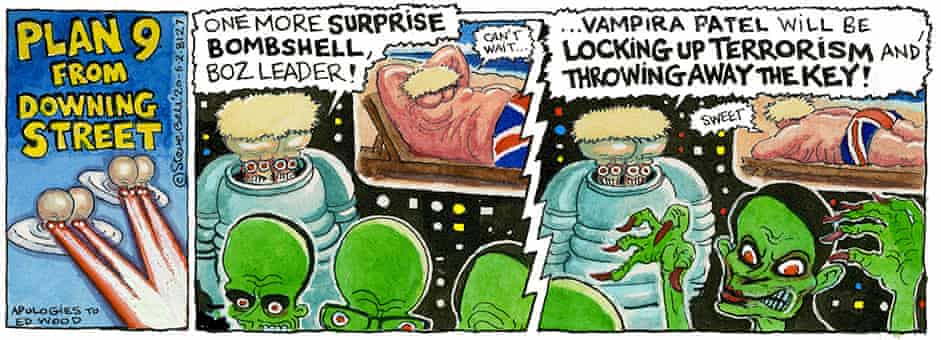
[Keynote speaker Steve Bell ©Steve Bell/The Guardian, 06/2/2020]

Keynote 2: Steve Bell

Steve Bell is an award-winning cartoonist for the Guardian since 1981 and has also produced cartoons for Private Eye, New Statesman and many other popular publications. Graduated in Fine Art from Leeds University in 1974, he taught art before becoming a freelance cartoonist.

With Bob Godfrey he made a number of animated cartoons for TV, including a cartoon biography, Margaret Thatcher — Where Am I Now? broadcast on Channel 4. He has had thirty books published, including a cartoon autobiography of George Bush called Apes of Wrath, numerous anthologies of the If strip If Marches On and, more recently a Tony Blair self-help guide titled My Vision For a New You, published by Methuen. A collection of the past four years If strips and other cartoons, Corbyn – the Resurrection was published by Guardian Faber books in Autumn 2018.

His work has been published all over the world and he has won numerous awards, including the What the Papers Say Cartoonist of the Year in 1993, the XXI Premio Satira Politica (Grafica estera) Forte Dei Marmi, Italy 1993, the Political Cartoon Society Cartoon of the Year Award in 2001 and 2008 and Cartoonist of the Year in 2005 and 2007, the British Press Awards Cartoonist of the Year in 2002, the Cartoon Arts Trust Award eight times, the Channel 4 Political Humour Award in 2005 and the Political Studies Association Best Political Satire Award in 2005. He has also received honorary degrees from the Universities of Sussex, Teesside, Loughborough, Leeds and Brighton.

His cartoon website is Belltoons.co.uk

Dr Driss Faddouli ‘Moroccan Facebookers and the Visual Rhetoric of Political Negation’

My presentation will attempt to unravel the underlying dialectics of subversion that gives rise to a counter-hegemonic political consciousness in the Moroccan Facebookers’ visual narratives (notably comics) about Moroccan politics. It will argue that these comics construct and articulate a rhetorically counter-hegemonic discourse of political negation through generating ideographs that, in turn, animate a variety of antagonisms dismantling the state’s discourse (the public transcript). I will base my analysis on the assumption that the emergence of a political counter-hegemony basically translates an actual change in reality wherein stronger changes in political discourse are constantly sustained and fostered. First, I will initiate my presentation with a short introduction on the dynamics of contemporary Moroccan networked public sphere and the daily practices of Moroccan Facebookers in relation to several socio-cultural controversies. Second, I will contextualize my talk in light of the politics and poetics of transgression as conceptualized by major thinkers. Third, I will offer some sample visual narratives pertinent to my talk along with an elaboration of these. Finally, I will sum up my talk by delineating some concluding thoughts and opening up horizons for future research.

Bio: Dr Driss Faddouli is a professor of English at Chouaib Doukkali University, El Jadida, Morocco. He obtained his Doctorate degree in 2018 from Ibn Tofail University, Kenitra, Morocco. His fields of interest include Visual Culture, Media Studies, Cultural Studies, and Literature. He has researched and published on contemporary socio-cultural dynamics of Moroccan society. His publications include Online Maghreb Arab Social Movements and Facebook: A Case Study of Morocco, Egypt, and Tunisia, Is Mohamed Choukri’s For Bread Alone a Picaresque Narrative and Moroccan Facebook Visual Narratives and Cultural Production.

Prof. Paul Ward ‘Satire and subversion in the work of Han Hoogerbrugge’

Hoogerbrugge’s works often hinge on subversive takes on real-world events and figures using bizarre animated imagery. For example, What’s Up Doc? (2013) offers a looped animated reinterpretation of the assassination of Colonel Gaddafi, featuring Bugs Bunny. Hoogerbrugge routinely plays with loops, gifs and animated repetitions to communicate his messages.

Based around repetitions and fissures – aspects where we might not be sure exactly ‘what is going on’ – these works have an intense but enigmatic power. In order to understand this, I refer to Lamarque and Olsen’s (1994) notion of ‘topical’ and ‘perennial’ themes in literature, alongside Robbins’ (1996) concept of the ‘rheterolect’. ‘Topical’ themes are very specific to an historical and cultural context and address their audiences in a narrow and focused way; ‘perennial’ themes, on the other hand, can be understood as resonating across different historical and cultural contexts.

Satire and the subverting of cultural, political or social ‘norms’ relies on an implicit understanding of the specificity of ‘topical’ themes – in short, we need to know who or what is being satirised in order for the satire to work. This raises questions for those who view satirical works outside of the historical or cultural contexts in which they were made. This is where Robbins’ concept is useful: the idea of ‘rhetorolects’ is that there are certain recognisable ‘rhetorical dialects’ that have evolved and hybridised – they are “a distinctive configuration of themes, topics, reasonings and argumentations” (1996: 356) – and satirical and subversive visual language is a key part of this, in the ways it takes, transforms and animates ‘topical’ material.

References
Lamarque, P. and Olsen, S. H. (1994) Truth, Fiction and Literature: A Philosophical Perspective. Oxford: Clarendon Press.
Robbins, V. (1996) ‘The Dialectical Nature of Early Christian Discourse’, Scriptura 59, pp. 353-362.

Bio: Paul’s main research interests are in the fields of animation and documentary film and television, animation pedagogy, production cultures, communities of practice and film and media historiography.

Published work includes articles for the journals animation: an interdisciplinary journal, Animation Journal, and the Historical Journal for Film, Radio and Television, as well as numerous anthology essays. He was also the President of the Society for Animation Studies from 2010 to 2015 and the inaugural Fellow of the Holland Animated Film Festival (HAFF) in 2012. He was a Visiting Professor in the Design School at the Politecnico di Milano in November 2013. His work has been translated into German, Czech, Korean, Farsi and Japanese.

Paul Ward is Series Co-Editor (with Caroline Ruddell) for the book series Palgrave Animation.

Dr. José L. Valhondo-Crego ‘Subverting the myths of Francoism in the Spanish satirical press’

The Spanish humorous weekly El Jueves (Thursday), which first appeared in May 1977, just a month before the first elections of the transition has endured to the present day.     The aim of this text is to analyse the way in which El Jueves dealt with the exhuming of the remains of Franco, a recent event which took place on 24th October, 2019. Although those nostalgic for the Francoism are politically residual in Spain, a great deal of myths still pervades more than 40 years after the end of the dictatorship. It is what the political experts point out as the Sociological Francoism. These myths have gathered momentum in the public sphere with the rise of the new ultra-right populist party Vox. In popular culture, the catch phrase unfolded by the supporters of this party is that “Franco también hizo cosas buenas” (“Franco also did good things”). In this respect, this kind of arguments are operating as a way to whiten a corrupt and supremacist political regime in order to gain support for an extreme-right party. Trying to counteract these myths, El Jueves published a special section devoted to subvert the most common stereotypes about Francoism, such as that Franco established the Spanish Social Security or that corruption hardly ever existed under the regime.

Bio: José L. Valhondo-Crego works as a Lecturer at the Faculty of Documentation and Communication Sciences of the University of Extremadura. He received his Communication Ph.D. in the Rey Juan Carlos University (Madrid) in 2008. He also studied a Bachelor’s Degree in Psychology in the University of Salamanca and further training a Master’s in Journalism in the University of the Basque Country. His line of research is related to Political Communication, Satire and Film Studies.

Acknowledgments

This conference was organised by the Animation Research Centre at UCA with support from UCA Internal Research Funding. We would like to thank Emma Reyes, Felicity Croyden, Leigh Garrett, Lesley Adams, Bradley McGinty, Amy Owen, Emma Cook, Lisa Chadwick, Tom Lowe, Claire Godfrey, Lorna McColl, Kris Bercsenyi and all the students who helped.

Animation Research Centre, UCA

Founded in 1998, the Animation Research Centre at the University for the Creative Arts, Farnham is a centre for innovation, doctoral study, debate and dialogue, interdisciplinary and practice-based research into animation in all its most expanded forms. Our current work ranges from archival research, conference organisation, exhibition curation and academic publication to investigations in immersive technology, block chain and movement capture.

For more information, contact <animationresearch@uca.ac.uk>

Free tickets available up until the last minute. Book here: http://satireandsubversion.eventbrite.co.uk

Animated GIF          Print

Call for papers: Ecstatic Truth V

2338F399-5A55-4CA9-80D9-9A31F8A5AC49

We are extremely happy to confirm our first guest speakers for this year’s Ecstatic Truth: Dr. Lilly Husbands, animation lecturer and researcher, and Marcin Gizycki, art historian, critic and filmmaker.

Ecstatic Truth is the annual symposium dedicated to the intersections of animation and documentary in its multiple formats. The Call for Papers is open until Friday the 16th of February – please read below for more info. The next one will take place in Vienna, 27-28 April, in conjunction with Under_the_Radar 2020.

This year we invite speakers to respond to the age of the absurd we seem to be living in:
How can we respond to the absurdity of a world being run to continuously make profit regardless of its sustainability? How can we use animation and filmmaking for activism? How can we creatively challenge the current assault on reliable information? What is the role of humour, surrealism, the historic strategies of the Absurd and Central European Existentialism, to respond to these contemporary issues?

We welcome proposals for 20-minute presentations, speculations, poetic reflections, rigorous questioning, even fierce creative opposition, from both academic and practitioner-led perspectives. Selected papers will be published in a specially themed issue of the International Journal of Film and Media Arts.

The proposal should include an abstract of not more than 500 words and a short biography of no more than 200 words.

Please send it to: ecstatic.truth.symposium@gmail.com
Call for papers deadline: 16th February 2020

For more information about the call for papers go to: https://ecstatictruth5.eventbrite.co.uk

[Image: George Grosz, ‘The Voice of the People is the Voice of God from The Face of the Ruling Class’ (1920)]